



Bilge Qaghan is the best-known ruler of the Second Turkic (Göktürk) Khaganate. His father, Ilterish Qaghan, had restored Göktürk independence from Tang China in 682. Bilge took the throne in 716 after the death of his uncle, Qapaghan Qaghan.
Restoring the state
His closest supporters were his brother Kül Tigin and the seasoned statesman Tonyukuk. Kül Tigin led the army to many victories, while Tonyukuk played a key role in government and diplomacy. The khaganate brought rebellious tribes back under control and reached a more balanced relationship with Tang China.
The Orkhon Inscriptions
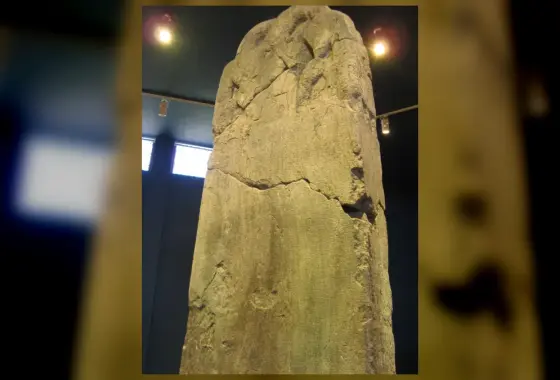
Bilge Qaghan’s lasting fame comes from the stone monuments raised in the Orkhon Valley in Mongolia: the Kül Tigin inscription in 732 and the Bilge Qaghan inscription in 735. They are written as if Bilge himself were addressing his people, recounting the Turks’ past, the disasters that followed disunity and the unity needed for the state to survive. His nephew Yollug Tigin is named as the author of the texts.
The inscriptions were introduced to scholars in 1889 by the Russian explorer N. M. Yadrintsev, and the Danish linguist Vilhelm Thomsen deciphered the script at the end of 1893; the first words he read were “Tengri” (Heaven/God) and “Türk”.
Death
Bilge Qaghan was poisoned in 734; according to the inscriptions he punished those responsible before he died. After his death the khaganate fell into turmoil and was overthrown in 744 by the Uyghurs, Basmyls and Karluks.
Accession: the turmoil of 716
His uncle Qapaghan Qaghan was ambushed and killed in 716 while returning from a campaign against the Bayirku. His son Inel Qaghan then took the throne, but this did not last long. Kül Tigin moved against Qapaghan's son and the officials around him, eliminated them and left the throne to his elder brother Bilge. Bilge Qaghan thus brought the direct line of the dynasty founded by his father Ilterish back to power. The strong bond between the brothers is frequently stressed in the inscriptions.
Tonyukuk's advice and peace with the Tang
Chinese sources relate that Bilge Qaghan considered settling the Göktürk people in walled cities and founding Buddhist temples. The aged adviser Tonyukuk opposed this: he said that the strength of the Turks came from mobile life on the steppe and that settling in cities would leave the people weak in the face of China. Bilge Qaghan listened to this advice. In the 720s the border with Tang China calmed down, and a regular trade developed between the two sides in which the Turks gave horses and received silk.
Where are the inscriptions today?
The Kül Tigin and Bilge Qaghan inscriptions stand at Khoshoo Tsaidam in the Orkhon River valley in Mongolia. The area was added to the UNESCO World Heritage List in 2004 as the "Orkhon Valley Cultural Landscape". Fragments of statues found beside the inscriptions and finds from excavations are now kept in a museum built nearby. One face of the stones bears a Turkic text in Old Turkic script and another a Chinese text; this bilingual form also reflects the relationship of Bilge Qaghan's era with Tang China.
Frequently asked questions
Why do the Orkhon Inscriptions matter? They are among the oldest long texts in a Turkic language and among the first major documents in which a Turkic state told its own history in its own language.
Where are they today? In the Orkhon Valley in Mongolia, part of the UNESCO World Heritage site “Orkhon Valley Cultural Landscape”.
Sources and further reading
- Talat Tekin, Orhon Yazıtları (Orkhon Inscriptions), Turkish Language Association.
- Türkiye Diyanet Vakfı İslâm Ansiklopedisi, “Bilge Kağan” and “Köktürkler”.
- UNESCO World Heritage Centre, “Orkhon Valley Cultural Landscape”.
- Encyclopaedia Britannica, “Orkhon inscriptions”.
- UNESCO World Heritage Centre – Orkhon Valley Cultural Landscape, inscribed 2004
- Talat Tekin – A Grammar of Orkhon Turkic (Indiana University, 1968)
People also ask
Who was Bilge Qaghan? Bilge Qaghan ruled the Second Turkic (Göktürk) Khaganate from 716 to 734.
When did Bilge Qaghan reign? Reign: 716 – 734.
Who was Bilge Qaghan’s father? Father: Ilterish Qaghan.
Leave a comment
Your email address will not be published. Required fields are marked *