



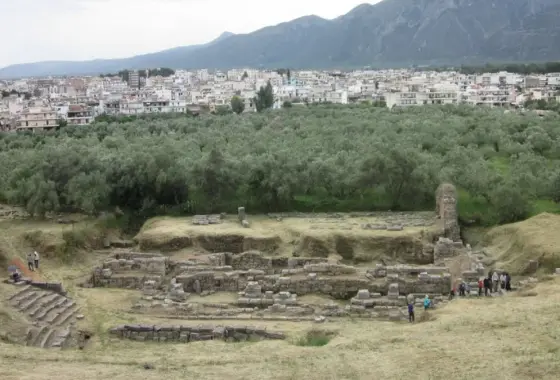
Sparta was founded by the Dorians in the Eurotas valley in the early 1st millennium BC. In the 8th and 7th centuries BC it conquered neighbouring Messenia, turning its people into a class of serfs bound to the land, the helots. Spartan citizens were far outnumbered by the helots, which helped give the state its military character.
Society and education
In the system traditionally attributed to the lawgiver Lycurgus, Spartan boys were taken from their families at seven and put through a harsh training called the agoge. Adult men devoted their lives to soldiering. Spartan women, by contrast, enjoyed more rights and freedoms than in other Greek cities; they could own property and take part in sport.
Thermopylae and the Persian Wars
In 480 BC King Leonidas defended the pass of Thermopylae with a small Greek force against the army of the Persian king Xerxes; the force, which included 300 Spartans, fought to the last man. The following year the Spartans played a key role in defeating the Persian army at Plataea.
The Peloponnesian War and decline
As leader of the Peloponnesian League, Sparta fought Athens in 431–404 BC and won with the naval victory of its commander Lysander. But in 371 BC it was defeated by Thebes at Leuctra and lost Messenia. Sparta never regained its former strength; in 192 BC it was forced into the Achaean League and later came under Roman rule.
Sources and further reading
- Plutarch, Parallel Lives: Lycurgus.
- Herodotus, Histories, book VII.
- Encyclopaedia Britannica, “Sparta”.
People also ask
What was Ancient Sparta? Sparta was a Greek city-state in Laconia, in the southern Peloponnese, known for its harsh system of military training.






Leave a comment
Your email address will not be published. Required fields are marked *