



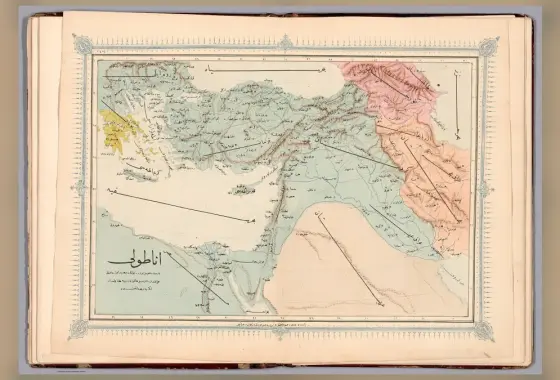
The Ottoman state was founded at the end of the 13th century around Söğüt, on the Byzantine frontier, under Osman I. His son Orhan took Bursa, made it the capital and opened the way into the Balkans.
Rise
- The Balkans: Edirne was taken under Murad I, and in 1389 a Serbian-led coalition was defeated at Kosovo.
- Interregnum: after Bayezid I’s defeat by Timur at Ankara in 1402, the state was divided among princes until Mehmed I reunited it.
- Istanbul: in 1453 Mehmed II conquered Constantinople, which became the capital.
- East and south: Selim I defeated the Safavids at Chaldiran in 1514 and took Syria and Egypt in 1516–1517.
The classical peak
Under Suleiman the Magnificent (1520–1566) the empire stretched from Buda to Baghdad and from Algiers to Yemen. Sinan’s architecture, law codes and a powerful navy symbolise the age.
Change and reform
From the 17th century long wars, economic problems and changes in Europe strained the empire; the Treaty of Karlowitz in 1699 brought its first major territorial losses. Selim III and Mahmud II carried out military and administrative reforms, and the Tanzimat Edict of 1839 and the Constitution of 1876 opened an era of modernisation and constitutional rule.
The end
After defeats in the Balkan Wars and the First World War, the country was occupied. Following the victory of the National Struggle led by Mustafa Kemal Atatürk, the Grand National Assembly abolished the sultanate on 1 November 1922, and the Republic of Türkiye was proclaimed on 29 October 1923.
State organisation: the Imperial Council and the timar
The heart of Ottoman central government was the Imperial Council (Divan-ı Hümayun). It included the grand vizier and the viziers, the kadiaskers who oversaw justice, the defterdars responsible for finance and the nişancı who drew the sultan's tughra. In the provinces the timar system was used: the tax revenue of a given area was assigned to sipahis who served as cavalry in war. For this system to work, the population and revenues of each area were recorded in detail in tahrir registers.
Governing a multi-religious society
Alongside Muslims, Orthodox, Armenian and Jewish communities lived in Ottoman lands. Non-Muslims paid the jizya tax and, in matters of marriage, inheritance and religion within their communities, remained largely under their own religious leaders. This arrangement later came to be called the "millet system"; historians point out that the term was not used so systematically before the 19th century. Some of the Sephardic Jews expelled from Spain in 1492 settled in Ottoman lands during the reign of Bayezid II.
Economy: the akçe, guilds and capitulations
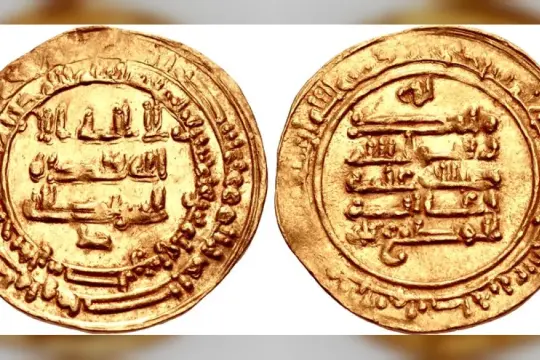
The basic Ottoman currency was the akçe, a silver coin. In the cities, craftsmen were organised into guilds that supervised the quality of goods and prices. The commercial privileges granted to European states are called capitulations; those granted to France in 1569 are among the important examples. In the 19th century the Treaty of Balta Liman of 1838 liberalised foreign trade, and after a debt crisis the Ottoman Public Debt Administration was set up in 1881.
How do we know the Ottomans today?
The most important sources for Ottoman history are the state's own archives. The State Archives in Istanbul hold millions of documents and registers: the mühimme registers containing the decisions of the Imperial Council and the tahrir registers recording population and taxes are chief among them. The sharia court registers kept by the kadi courts show everyday life, trade and family relations. The archive and library of the Topkapı Palace Museum complement these sources.
Frequently asked questions
How long did the Ottoman Empire last? About 623 years, from 1299 to 1922.
How many sultans were there? 36, from Osman I to Mehmed VI.
Sources and further reading
- Halil İnalcık, The Ottoman Empire: The Classical Age 1300–1600.
- Türkiye Diyanet Vakfı İslâm Ansiklopedisi, “Osmanlılar”.
- Encyclopaedia Britannica, “Ottoman Empire”.
- Halil İnalcık – The Ottoman Empire: The Classical Age 1300–1600 (Weidenfeld & Nicolson, 1973)
- Suraiya Faroqhi – Approaching Ottoman History: An Introduction to the Sources (Cambridge UP, 1999)
- Presidency of the Republic of Türkiye, Directorate of State Archives – Ottoman Archives
People also ask
What was the Ottoman Empire? The Ottoman Empire began in 1299 as Osman I’s small frontier principality and by the 16th century had become a world power ruling vast lands in Europe, Asia and Africa.
When was the Ottoman Empire founded? Founded: 1299 (traditional date), Osman I.
What was the Ottoman Empire’s capital? Capitals: Söğüt, Bursa, Edirne, Istanbul (after 1453).
When was the Ottoman Empire at its height? Height: 16th century, reign of Suleiman the Magnificent.
Leave a comment
Your email address will not be published. Required fields are marked *