



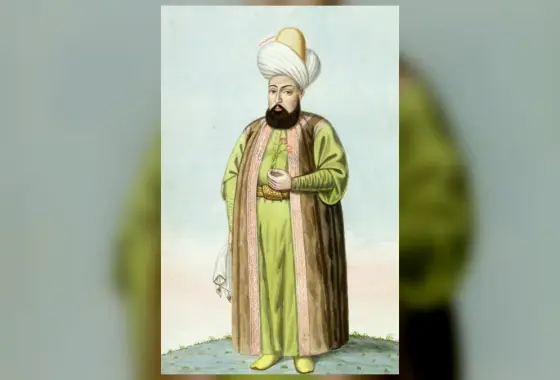
Osman was the son of Ertuğrul Gazi of the Kayı tribe, leader of a Turkmen community living around Söğüt on the Byzantine frontier at the western edge of the Seljuk Sultanate of Rum. After Ertuğrul’s death Osman became the community’s leader.
From frontier principality to state
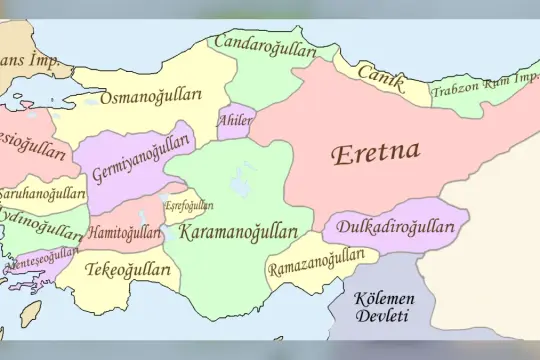
As Seljuk power weakened and Mongol (Ilkhanid) pressure grew, many principalities emerged in Anatolia. Osman waged war against the Byzantine lords of Bithynia and took places such as Bilecik, Yarhisar and İnegöl. The founding of the Ottoman state is traditionally dated to 1299, though some historians note the date is symbolic.
The Battle of Bapheus
In 1302 Osman defeated a Byzantine army at Bapheus near Nicaea (İznik). This victory, also described by the Byzantine historian George Pachymeres, spread his fame and drew many warriors to his principality.
Sheikh Edebali and the dream
Ottoman sources say Osman married Malhun (or Rabia Bala) Hatun, daughter of Sheikh Edebali. The dream Osman is said to have had, interpreted as foretelling his state’s greatness, is a famous story told by later Ottoman chroniclers.
Death
Osman died around 1324. His son Orhan conquered Bursa in 1326 and buried his father there; his tomb in Bursa is still visited today.
From what sources do we know Osman Bey?
Most of what we know about Osman Bey rests on the works of Ottoman historians such as Asikpasazade and Nesri, written about a century and a half after him. Because these works also include oral tradition and legends, historians use them with care. The most important outside source that mentions Osman as a contemporary is the Byzantine historian George Pachymeres. A coin claimed to have been struck in Osman's name, meanwhile, remains a subject of debate among researchers.
Relations with the Byzantine lords
Osman Bey did not only fight the Byzantine local lords around him; he also cooperated with some of them. Kose Mihal, the lord of Harmankaya, became one of his closest companions and later converted to Islam. His descendants, the Mihaloglu family, played an important role for centuries as Ottoman raider commanders. Ottoman chronicles relate that the lord of Bilecik intended to set a trap for Osman during a wedding, and that Osman learned of it and took Bilecik; this is a traditional story.
The beginning of the siege of Bursa
In the last years of his life, Osman Bey set his sights on capturing Bursa, the most important city of Bithynia. Since it was difficult to take the city by direct assault, he had fortresses built around it to cut its links; Ottoman tradition names the Balabancik and Aktimur forts among them. This blockade, which lasted for many years, narrowed the city's trade with the outside world and its supply routes. Bursa surrendered to Orhan in 1326, shortly after Osman's death.
The sword of Osman Gazi
Osman Gazi's name lived on as a symbol of the Ottoman dynasty in later centuries as well. After taking the throne, new sultans girded on one of the swords attributed to him at the girding-of-the-sword ceremony held at Eyup Sultan in Istanbul. This ceremony was an important ritual showing that the sultanate was built on loyalty to the founder and on the tradition of holy war. The very name "Ottoman" also reflects the place of this founding figure in the memory of the state.
Sogut and the commemoration of the founding
Sogut, where the Ottoman state was born, is today a district of Bilecik province. The tomb of Osman Gazi's father, Ertugrul Gazi, stands there. The tomb became a place of pilgrimage that Ottoman sultans continued to restore in later centuries. Every year in September, Sogut holds a commemoration of Ertugrul Gazi and Yoruk festivities. These ceremonies show that the founding period is still kept alive in popular memory today.
Frequently asked questions
Where does the name “Ottoman” come from? From Osman; “Osmanlı” means “belonging to Osman”, and “Ottoman” is its European form.
Sources and further reading
- Türkiye Diyanet Vakfı İslâm Ansiklopedisi, “Osman Gazi”.
- Halil İnalcık, The Ottoman Empire: The Classical Age.
- Aşıkpaşazade, Tevarih-i Al-i Osman.
- Encyclopaedia Britannica, “Osman I”.
- Cemal Kafadar – Between Two Worlds: The Construction of the Ottoman State (University of California Press, 1995)
- Rudi Paul Lindner – Explorations in Ottoman Prehistory (University of Michigan Press, 2007)
People also ask
Who was Osman I? Osman I led a small frontier principality around Söğüt and Domaniç in north-western Anatolia at the end of the 13th century and expanded it into Byzantine lands, laying the foundations of the Ottoman state.
When did Osman I die? Died: c. 1324.
Who was Osman I’s father? Father: Ertuğrul Gazi.
What was Osman I’s key battle? Key battle: Battle of Bapheus, 1302.




Leave a comment
Your email address will not be published. Required fields are marked *