



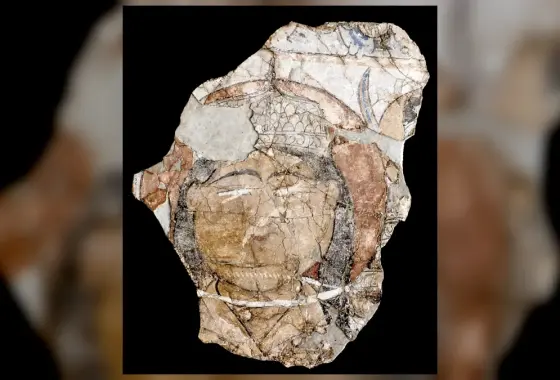
The Kara-Khanids emerged after the fall of the Uyghur Khaganate in 840 from a union of Turkic tribes such as the Karluks, Yaghma and Chigil in Central Asia. The dynasty’s name comes from the title “Kara Khan” used by its rulers; it was first applied by 19th-century European scholars.
Adopting Islam
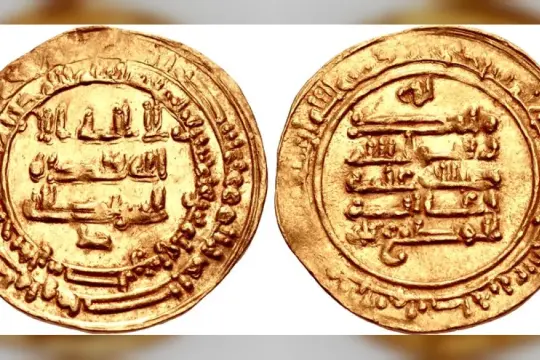
A member of the dynasty, Satuq Bughra Khan, converted to Islam in the first half of the 10th century and established his rule in Kashgar. According to Ibn al-Athir, a Turkic community of 200,000 tents embraced Islam in 960. The Kara-Khanids thus became the first Turkic dynasty to adopt Islam at the level of the state.
The fall of the Samanids and division
In 999 the Kara-Khanids took Bukhara, ending the Samanid state and becoming masters of Transoxiana. Around 1042 the state split into the Eastern Kara-Khanids, centred on Balasagun and Kashgar, and the Western Kara-Khanids, centred on Samarkand. At the end of the 11th century the western branch came under the Great Seljuks, and after the Battle of Qatwan in 1141 both branches came under the Qara Khitai.
Turkic language and culture
Under the Kara-Khanids, Turkic developed as a written language together with Islamic culture. The Kutadgu Bilig, written by Yusuf Khass Hajib in 1069–1070, is the first great work of Turkic-Islamic literature. The Diwan Lughat al-Turk, compiled in Baghdad by Mahmud al-Kashgari between 1072 and 1077, is the first great dictionary written to teach Turkic to Arabs. The Kalyan Minaret in Bukhara (1127) is among the architectural works of the period.
End
The Western Kara-Khanids were eliminated in 1212 by the Khwarazmshah Ala al-Din Muhammad, while the Eastern Kara-Khanids ended in 1211 with an attack by the Naiman leader Küchlüg.
Administration: dual khanate and territorial shares
The Kara-Khanid state had a structure in which territory was shared among members of the ruling family. At the top there were two main rulers bearing titles such as “Arslan Khan” and “Bugra Khan”; one of these titles generally represented the eastern branch and the other the western. Family members governed the regions assigned to them while remaining subordinate to the senior khan.
This arrangement is linked to the Turkic state tradition in which the realm belonged to the dynasty as a whole. Some practices influenced by the Samanid state, such as assigning land revenues in return for service, are also said to have appeared among the Kara-Khanids. Because the sources of the period are limited, researchers speak cautiously about the details.
Cities, trade and the economy
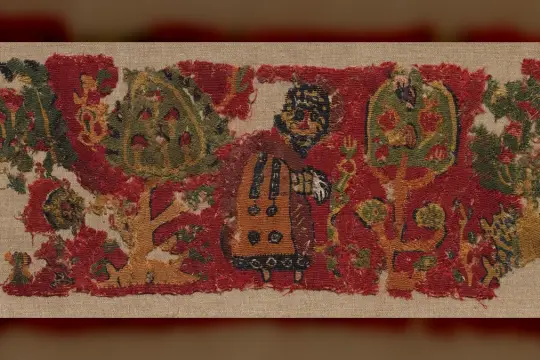
Kara-Khanid lands covered the Central Asian stretch of the Silk Road. Cities such as Kashgar, Balasagun, Samarkand, Bukhara and Fergana were centers of trade, crafts and learning. In these cities silk, cotton cloth, paper, metalwork and horses were traded. Horses and animal products supplied by the nomadic tribes of the steppe were exchanged for the farm and craft products of the settled regions.
The coexistence of nomadic and settled populations formed both the strength and the difficulty of the state. Steppe tribes supplied military power to the army, while cities brought tax and trade revenue. Rulers supported the growth of cities by building mosques, caravanserais and madrasas.
Kutadgu Bilig: a work on state and happiness
Yusuf Khass Hajib wrote the Kutadgu Bilig in Balasagun and presented it to the Kara-Khanid ruler in Kashgar. The verse work, of about six thousand seven hundred couplets, means “the knowledge that brings happiness”. In it four characters represent four basic concepts: Kün Togdı stands for the ruler and justice, Ay Toldı for the vizierate and the state, Ögdülmiş for intellect, and Odgurmış for the end of life and death.
The book discusses the qualities needed in a ruler, the idea of justice, relations with the people and ethics. In this respect it is counted among the first great works of political advice written in the Turkic world. Three copies, in Uyghur and Arabic scripts, have survived: the Vienna copy written in Herat, the Fergana copy and the Cairo copy.
Diwan Lughat al-Turk and the recording of Turkic
Mahmud al-Kashgari wrote the Diwan Lughat al-Turk in Baghdad and presented it to the Abbasid caliph al-Muqtadi. The work is a Turkic dictionary with Arabic explanations; besides thousands of words it contains proverbs, verse fragments and examples of folk literature. Al-Kashgari states that he traveled through the regions where Turkic tribes lived to collect this material.
The world map in the work is cited as the first map showing the settlement areas of Turkic tribes. The dictionary is an indispensable source for the history of language because it records the vocabulary and tribal dialects of 11th-century Turkic. In the Kara-Khanid sphere, Edib Ahmed Yükneki’s book of advice, the Atabetü’l-Hakayık, was also written; and Ahmad Yasawi was an important Sufi who grew up in this geography.
Religious diversity and legacy
Even after the adoption of Islam, traces of Buddhist, Manichaean and Nestorian Christian communities continued in Kara-Khanid lands, and elements of traditional Turkic beliefs also survived in the culture. This layered structure shows how Turkic and Islamic culture were intertwined in the works of the period.
The Kara-Khanids laid the ground for the development of the first Islamic Turkic written language, called “Khaqani Turkic”. In later centuries this literary language left an accumulation that reached Khwarazmian and Chagatai literature and the administrative and cultural traditions of the Seljuks and other Turkic states. The legacy of the Kara-Khanids lives on today in the remains at places such as Kashgar, Uzgen and Balasagun and in works of language history.
Relations with the Ghaznavids and Seljuks
The southwestern neighbor of the Kara-Khanids was the Ghaznavid state, which was rising in Khorasan. After the fall of the Samanids the Amu Darya became the border between the two states. The Kara-Khanid ruler Ilig Khan and Mahmud of Ghazni first drew close through marriage ties; but in the early 11th century, after Kara-Khanid raids into Khorasan, Mahmud defeated the Kara-Khanid army and kept his upper hand in the region.
The next new power, coming from the east, was the Seljuks. The Great Seljuk Sultan Malik-Shah reached Samarkand at the end of the 11th century and made the Western Kara-Khanids his vassals. The eastern branch stayed independent for a while but weakened because of internal rivalries and Qara Khitai pressure. These developments show that the Kara-Khanid state met different fates in two separate regions.
Sources and further reading
- Türkiye Diyanet Vakfı İslâm Ansiklopedisi, “Karahanlılar”.
- Ibn al-Athir, al-Kamil fi’l-tarikh.
- Encyclopaedia Britannica, “Kara-Khanid khanate”.
- Yusuf Khass Hajib – Kutadgu Bilig (translation by Reşit Rahmeti Arat)
- Mahmud al-Kashgari – Diwan Lughat al-Turk (translation by Besim Atalay)
- Türkiye Diyanet Foundation Encyclopaedia of Islam – “Karahanlılar” entry
People also ask
What was the Kara-Khanids? The Kara-Khanid Khanate was founded in Central Asia in the mid-9th century by a union of the Karluks and other Turkic tribes.
When was the Kara-Khanids founded? Founded: c. 840.
When did the Kara-Khanids end? End: 1212, attacks by the Khwarazmshahs and Küchlüg.

Leave a comment
Your email address will not be published. Required fields are marked *