



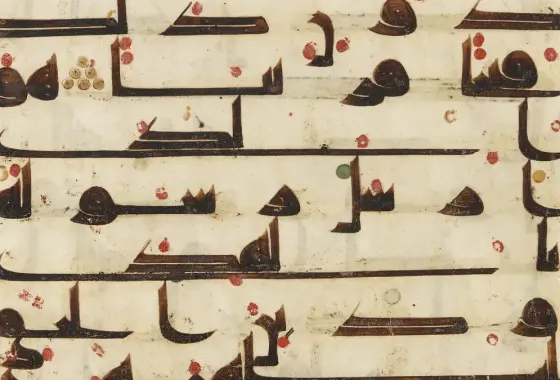
The Abbasids descended from al-Abbas, an uncle of the Prophet Muhammad. A movement against Umayyad rule that began in Khurasan, led by Abu Muslim, overthrew the Umayyads at the Battle of the Zab in 750, and al-Saffah became the first Abbasid caliph.
Baghdad and the golden age
The second caliph, al-Mansur, founded Baghdad on the Tigris in 762 as “Madinat al-Salam”, the City of Peace. Under Harun al-Rashid and his son al-Ma’mun, Baghdad became a great centre of learning where works on medicine, astronomy, mathematics and philosophy were written and Greek, Persian, Syriac and Indian works were translated into Arabic. Scholars such as al-Khwarizmi worked in this setting.
The rise of the Turks
Caliph al-Mu‘tasim (833–842) built his army largely from Turkish soldiers and moved the capital for a time to Samarra. Turkish commanders gradually gained great influence in government. In the 10th century the Buyids, and in the 11th century the Seljuks, took political power in Baghdad, while the caliph kept his religious and symbolic authority.
Fall
In 1258 the Mongol ruler Hulagu besieged and took Baghdad and killed the last caliph, al-Musta‘sim. After 1261 the caliphate continued symbolically in Cairo under the Mamluks, ending in 1517 when the Ottoman sultan Selim I conquered Egypt.
The black banners and the Abbasid revolution
For many years the Abbasid movement worked as a secret mission, calling for "one who is acceptable from the family of the Prophet". In 747 Abu Muslim rose openly in the Merv region of Khorasan; his followers carried black banners and wore black. Black therefore became the colour of the Abbasids. Abu Muslim, the revolution's most important commander, was killed in 755 by the caliph al-Mansur, who feared his great power.
State organisation: the vizierate, the diwans and the post
The Abbasids turned the vizierate, the office that ran the caliph's affairs, into a permanent institution. Government business was carried out by departments called "diwans": among them were the kharaj diwan dealing with taxes, the jund diwan keeping soldiers' records and pay, and the chancery for correspondence. The postal service known as the barid used relay stations along the roads to carry news quickly to the capital, and also kept the caliph informed about the conduct of governors.
Talas and the spread of paper
In 751 an Abbasid army met the army of China's Tang dynasty at Talas, near today's border between Kyrgyzstan and Kazakhstan; the Karluks changing sides turned the battle in the Abbasids' favour. According to the traditional account, Chinese prisoners brought papermaking to Samarkand; historians stress that paper may have reached the region earlier. Paper production began in Baghdad at the end of the 8th century, and cheaper paper helped the booksellers' market and the translation movement to grow.
Samarra: a short-lived capital on the Tigris
In 836 the caliph al-Mu'tasim founded Samarra north of Baghdad and settled his Turkish soldiers in the new city. Samarra remained the caliphs' capital until 892. The Great Mosque built by the caliph al-Mutawakkil between 848 and 852, with its spiral "Malwiya" minaret, is the city's best-known monument. The Samarra Archaeological City was added to the UNESCO World Heritage List in 2007.
The rise of regional dynasties
From the 9th century onwards, distant provinces came to be ruled by dynasties that nominally kept their allegiance to the caliph but were independent in practice. In 800 Harun al-Rashid granted the governorship of Ifriqiya (the area of today's Tunisia) to Ibrahim ibn al-Aghlab on a hereditary basis, beginning the Aghlabid period. In 868 the Turkish commander Ahmad ibn Tulun, sent to Egypt as deputy governor, founded the Tulunid dynasty; the Mosque of Ibn Tulun in Cairo dates from his time.
Frequently asked questions
How long did the Abbasids rule? About 500 years in Baghdad (750–1258), and until 1517 including the symbolic period in Cairo.
What was the House of Wisdom? A library and translation centre in Baghdad, prominent especially under al-Ma’mun.
Sources and further reading
- Türkiye Diyanet Vakfı İslâm Ansiklopedisi, “Abbâsîler”.
- Hugh Kennedy, When Baghdad Ruled the Muslim World.
- Encyclopaedia Britannica, “Abbasid caliphate”.
- Hugh Kennedy – The Early Abbasid Caliphate: A Political History (Croom Helm, 1981)
- Jonathan Bloom – Paper Before Print: The History and Impact of Paper in the Islamic World (Yale UP, 2001)
- UNESCO World Heritage Centre – Samarra Archaeological City (2007)
- Encyclopaedia Britannica – "Aghlabid dynasty" and "Ṭūlūnid dynasty"
People also ask
What was the Abbasid Caliphate? The Abbasid Caliphate was founded in 750 by overthrowing the Umayyads and lasted until the Mongols took Baghdad in 1258.
When was the Abbasid Caliphate founded? Founded: 750, fall of the Umayyads.
What was the Abbasid Caliphate’s capital? Capital: Baghdad (founded 762); for a time Samarra.
When was the Abbasid Caliphate’s golden age? Golden age: Reigns of Harun al-Rashid and al-Ma’mun.




Leave a comment
Your email address will not be published. Required fields are marked *