



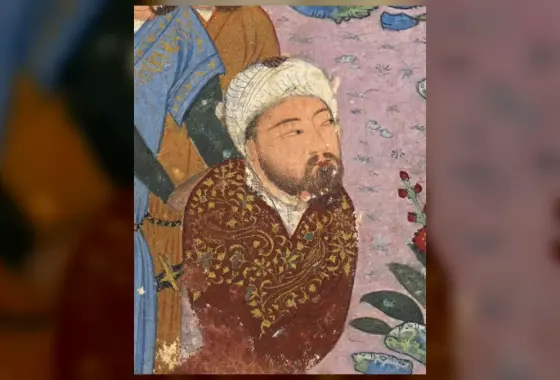
Al-Musta‘sim was the son of the caliph al-Mustansir and succeeded his father in 1242. By then the Abbasid caliphs’ authority was largely limited to Iraq, while in the east the Mongols were rapidly growing stronger.
The Mongol threat
The great khan Möngke charged his brother Hülegü with conquering Iran and the lands to the west. Hülegü first took the Nizari Ismaili fortresses in Iran, then demanded the caliph’s surrender. The sources say disagreements among the caliph’s advisers and inadequate defensive preparations made matters worse.
The fall of Baghdad
The Mongol army besieged Baghdad in January 1258. The walls could not withstand the heavy bombardment and the caliph surrendered in February 1258. The city was plundered for days, many people were killed, and libraries and institutions of learning were damaged. Al-Musta‘sim and some members of his family were killed; according to the sources the caliph was wrapped in a carpet and killed without his blood being shed, in keeping with Mongol custom.
Aftermath
The fall of Baghdad is remembered as one of the most shattering events in Islamic history. In 1261 the Mamluk sultan Baybars installed a surviving member of the Abbasid family as caliph in Cairo, but the Cairo caliphs had no political power. This shadow caliphate lasted until 1517.
The calls to surrender and the caliph's reply
Before marching on Baghdad, Hülagü sent envoys to the caliph demanding that he recognise Mongol rule, pull down the city walls and send his vizier or commanders to him. According to the sources, al-Musta'sim answered these demands in harsh terms and relied on the spiritual authority of the Abbasid caliphate in the Islamic world. However, no military preparation matching this confidence was made. Considering that the Mongols had already taken strong fortresses such as Alamut, most historians regard this stance as a grave miscalculation.
Division at court: the vizier and the dawatdar
At al-Musta'sim's court there was a deep rivalry between the vizier Ibn al-Alqami and the leading army commander, the Dawatdar Mujahid al-Din Aybak. The vizier advocated a settlement with the Mongols, while the dawatdar wanted a harder line. Some sources write that the vizier secretly came to terms with the Mongols; however, because this claim was voiced in the shadow of sectarian disputes, modern historians treat it with caution. What is certain is that the government could not unite around a single decision at the moment of crisis.
The course of the siege
The Mongol army approached Baghdad from different directions. In January 1258 the Abbasid army under the dawatdar met the Mongols west of the Tigris; when the Mongols broke dykes and canals and flooded the camp, it suffered a heavy defeat. The siege began at the end of January, and the walls, battered by catapults, were breached in the first days of February. The caliph left the city and surrendered on 10 February. The sack of the city lasted several days; al-Musta'sim was killed a few days later.
Books and scholars
One of the most frequently told stories about the fall of Baghdad is that the water of the Tigris turned black from the ink of the books thrown into it. Although this account contains literary exaggeration, it is certain that the city's libraries suffered great damage. On the other hand, the astronomer Nasir al-Din al-Tusi, who was with Hülagü, helped to save some books. In 1259, with Hülagü's support, al-Tusi founded the Maragha Observatory and built up a large library there.
The Abbasid caliphs in Cairo
Al-Mustansir, whom Baybars had proclaimed caliph in Cairo in 1261, set out for Iraq the same year with the aim of retaking Baghdad, but lost his life in a clash with the Mongols. Al-Hakim was then made caliph, and the Abbasid caliphate in Cairo continued through his line. Although these caliphs had no political power, they gave legitimacy to the Mamluk sultans. In 1517 Selim I, who conquered Egypt, took the last Abbasid caliph, al-Mutawakkil III, to Istanbul.
Sources and further reading
- Rashid al-Din, Jami al-Tawarikh.
- Türkiye Diyanet Vakfı İslâm Ansiklopedisi, “Müsta‘sım-Billâh”.
- Encyclopaedia Britannica, “Siege of Baghdad (1258)”.
- Turkish Religious Foundation Encyclopedia of Islam (TDV), "Bağdat" and "İbnü'l-Alkamî" entries
- David Morgan, The Mongols, 2nd edition, Blackwell, 2007
People also ask
Who was Al-Musta‘sim? Al-Musta‘sim bi’llah was the last Abbasid caliph in Baghdad, holding office from 1242 to 1258.
When and where was Al-Musta‘sim born? Born: 1213, Baghdad.
When did Al-Musta‘sim die? Died: February 1258, near Baghdad.





Leave a comment
Your email address will not be published. Required fields are marked *