



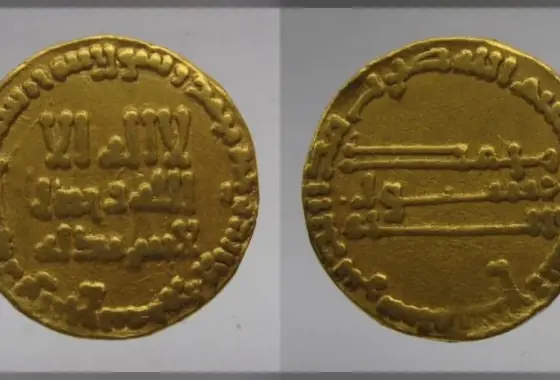
Al-Mahdi was the son of Abu Ja‘far al-Mansur, who put the Abbasid state on firm foundations. He governed Khurasan as a young man and became caliph when his father died on the pilgrimage road in 775.
Conciliatory government
At the start of his reign al-Mahdi freed many people imprisoned under his father, returned confiscated property and tried to improve relations with the descendants of Ali. He enlarged the Great Mosque of Mecca and the Prophet’s Mosque in Medina, and built water sources and rest stations along the pilgrim routes.
Campaign against “zindiqs”
Under al-Mahdi a harsh campaign was launched against people the state labelled “zindiqs”, especially those thought to follow Manichaeism, and a special official was appointed for the purpose.
Byzantine campaigns
Abbasid armies campaigned regularly against Byzantium. In 782 an army under his young son Harun (later Harun al-Rashid) crossed Anatolia and advanced to the Asian shore of the Bosphorus near Chrysopolis (Üsküdar). The empress Irene agreed to pay annual tribute in return for peace.
Death
Al-Mahdi died in 785 while hunting in the Masabadhan region of Iran. He was succeeded first by his son al-Hadi and, after al-Hadi’s short reign, by Harun al-Rashid.
Rusafa: the eastern side of Baghdad
Al-Mahdi's name is also linked with the growth of Baghdad on the eastern bank of the Tigris. His father al-Mansur had a new settlement called Rusafa built for his son and his army on the eastern side, opposite the round city. Al-Mahdi formed his own circle there, with a palace and a mosque. Over time Rusafa and its surroundings grew to become one of the most populous parts of Baghdad. In the following centuries the city's centre of gravity largely shifted to the eastern side.
The revolt of al-Muqanna
One of the longest-running internal problems of al-Mahdi's reign was the revolt of al-Muqanna, which began in Transoxiana. Hashim ibn Hakim, called "al-Muqanna" (the veiled one) because he covered his face with a veil, proclaimed himself a divine figure and gathered a large following around him, especially in the Sogdian region. His white-clad followers resisted the Abbasid forces for years. The revolt ended around 779–780 with the siege of his fortress near Kesh.
Viziers and the tax arrangement
Under al-Mahdi, the vizier Abu Ubaydallah Mu'awiya ibn Yasar carried out important financial reforms. The most notable of these was the application in Iraq of the "muqasama" system, under which land tax was taken as a fixed share of the harvest instead of a fixed amount. This arrangement aimed to lighten the burden on farmers in years of poor harvest. Ya'qub ibn Dawud, who was later appointed vizier, lost the caliph's trust after a while and was imprisoned.
The influence of al-Khayzuran
Al-Mahdi's wife al-Khayzuran is known as one of the most influential women in Abbasid history. Having come to the court as a slave woman of Yemeni origin, al-Khayzuran married al-Mahdi and became the mother of two caliphs, al-Hadi and Harun al-Rashid. According to the sources, she had a say in affairs of state, and governors and statesmen sought her support. It is also related that she bought the house in Mecca considered to be the Prophet's birthplace and turned it into a place of prayer.
The succession problem and his last journey
Al-Mahdi had named his sons al-Hadi and Harun as heirs in that order. In the last period of his life, however, he wanted to put Harun first. For this purpose he summoned al-Hadi, who was in Jurjan, to Baghdad; when al-Hadi did not come, he set out himself to persuade him. During this journey he died at Masabadhan in 785. After his death al-Hadi became caliph; but at the end of his short reign Harun al-Rashid came to the throne.
The meaning of the title "al-Mahdi"
"Al-Mahdi" means "the rightly guided one" in Arabic, and in Islamic tradition it also evokes the figure of a redeemer expected at the end of time. Most historians think that al-Mansur chose this title for his son deliberately. The purpose of this choice was to gather the messianic expectations widespread at the time around the Abbasid dynasty and to reduce the influence of rival claimants descended from Ali.
Sources and further reading
- Al-Tabari, History of the Prophets and Kings.
- Türkiye Diyanet Vakfı İslâm Ansiklopedisi, “Mehdî-Billâh”.
- Encyclopaedia Britannica, “al-Mahdī”.
- Hugh Kennedy, The Early Abbasid Caliphate: A Political History, 1981
- Turkish Religious Foundation Encyclopedia of Islam (TDV), "Hayzürân", "Mukannâ" and "Rusâfe" entries
- Hugh Kennedy, The Prophet and the Age of the Caliphates, 3rd edition, 2016
People also ask
Who was Al-Mahdi? Al-Mahdi, son of Abu Ja‘far al-Mansur, the founder of Baghdad, reigned as Abbasid caliph from 775 to 785.
When and where was Al-Mahdi born? Born: c. 744.
Who was Al-Mahdi’s father? Father: Abu Ja‘far al-Mansur.





Leave a comment
Your email address will not be published. Required fields are marked *