



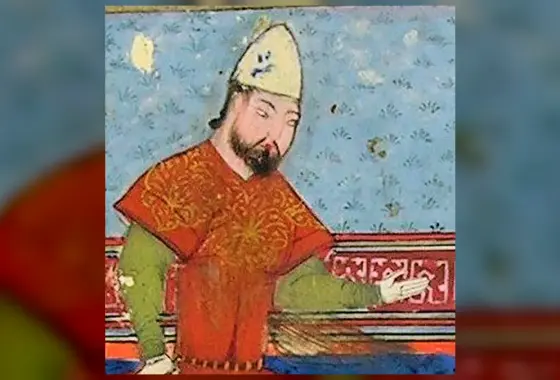
Malik-Shah was the son of Sultan Alp Arslan. He came to the throne young on his father’s death in 1072 and secured his position by suppressing the revolt of his uncle Qavurt. His father’s vizier Nizam al-Mulk stayed in office and played a major role in government.
Conquests and borders
Under Malik-Shah the Karakhanids became vassals and Seljuk rule was strengthened in Syria and Palestine. In Anatolia Suleyman ibn Qutalmish, based at Nicaea (İznik), laid the foundations of the Seljuk Sultanate of Rum. The empire stretched from Kashgar to the Mediterranean.
Science and culture
Led by Nizam al-Mulk, Nizamiyya colleges were opened in Baghdad, Nishapur and other cities. In 1079 the solar Jalali calendar, prepared by scholars including Omar Khayyam, came into use. Isfahan was developed as the capital.
Death
In October 1092 Nizam al-Mulk was assassinated by an Ismaili (Batini) agent. About a month later, in November 1092, Malik-Shah died in Baghdad. The succession struggles among his sons that followed weakened the empire.
Campaigns in the east and the west
Malik-Shah, like his father, was a ruler who went on long campaigns; but a large part of them aimed less at conquering new lands than at binding the distant branches of the dynasty and the vassal princes to the centre.
- The Karakhanids: In 1089 he crossed the Oxus, took Bukhara and Samarkand and advanced as far as Uzgen. The Karakhanid ruler in Kashgar also recognised Seljuk supremacy.
- Syria and Anatolia: His brother Tutush took Damascus in 1079. After Suleiman Shah died fighting Tutush in 1086, Malik-Shah came to Syria in person and reorganised the region. Sources relate that on reaching the Mediterranean coast he rode his horse into the sea.
- Kilij Arslan: Suleiman Shah's son Kilij Arslan was kept at Malik-Shah's court in Isfahan; he was only able to return to Anatolia after the sultan's death in 1092.
The Siyasatnama and the Friday Mosque of Isfahan
One of the best-known works of Malik-Shah's reign is the Siyasatnama, written by his vizier Nizam al-Mulk at the sultan's request. Thought to have been written in the last years of the reign, it gives the ruler advice on justice, taxation, the army, espionage and the supervision of officials; told through illustrative stories, this advice was read by statesmen for centuries. The iqta system, in which soldiers were given the tax revenue of certain districts instead of a salary, also became widespread in this period.
Two famous domes were added to the Friday Mosque in the capital Isfahan in this period: the great south dome built by Nizam al-Mulk and the north dome completed in 1088 by his rival Taj al-Mulk. The mosque, one of the most important surviving examples of Seljuk architecture, was inscribed on the UNESCO World Heritage List in 2012.
After Malik-Shah's death his wife Terken Khatun sought to put her young son Mahmud on the throne, while his elder son Berkyaruq eventually gained the upper hand. This long struggle between the brothers accelerated the division of the Great Seljuk state and left the Muslim world fragmented in the years when the First Crusade reached Syria.
Alamut and the last months of the reign
In the final years of Malik-Shah's reign a new threat to the state appeared. The Nizari Ismaili missionary Hasan-i Sabbah seized the castle of Alamut in the Alborz Mountains of northern Iran in 1090. The castle became the centre of the Nizaris for the following century and withstood every siege by Seljuk armies.
The year 1092 is one of the turning points of Seljuk history. The vizier Nizam al-Mulk fell victim to an assassination near Nahavand in October of that year; most sources attribute the killing to the Nizaris. Malik-Shah himself died in Baghdad only a few weeks later. The disappearance of the state's two great pillars in the same year marked the beginning of the succession struggles and fragmentation that followed.
Frequently asked questions
Where does the name “Jalali calendar” come from? From Malik-Shah’s honorific “Jalal al-Din”.
Sources and further reading
- Türkiye Diyanet Vakfı İslâm Ansiklopedisi, “Melikşah”.
- Osman Turan, Selçuklular Tarihi ve Türk-İslâm Medeniyeti.
- Encyclopaedia Britannica, “Malik-Shah”.
- Nizam al-Mulk – Siyasatnama (The Book of Government)
- The Cambridge History of Iran, Vol. 5: The Saljuq and Mongol Periods (Cambridge University Press, 1968)
- UNESCO World Heritage – "Masjed-e Jāmé of Isfahan" (2012)
- Farhad Daftary – The Ismāʿīlīs: Their History and Doctrines (Cambridge University Press, 2nd ed. 2007)
- A. C. S. Peacock – The Great Seljuk Empire (Edinburgh University Press, 2015)
People also ask
Who was Malik-Shah? Malik-Shah ruled the Great Seljuk Empire from 1072 to 1092.
When and where was Malik-Shah born? Born: 1055.
When did Malik-Shah reign? Reign: 1072 – 1092.
When did Malik-Shah die? Died: November 1092, Baghdad.



Leave a comment
Your email address will not be published. Required fields are marked *