



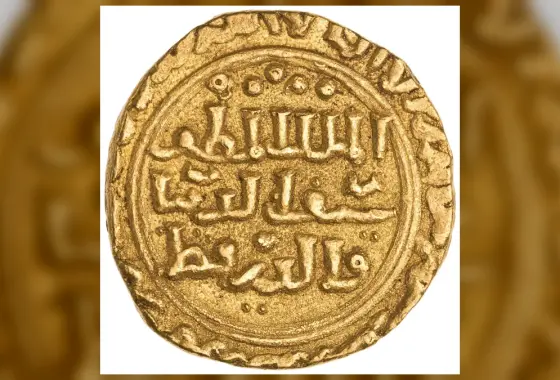
The sources differ on Qutuz’s origins; the usual view is that he was captured in the Khwarazm region, sold as a slave and trained among the mamluks of the Mamluk sultan Aybak in Egypt. After Aybak’s death he became regent for Aybak’s young son, and in 1259 took the sultanate himself, citing the Mongol danger.
The Mongol threat
In 1258 Hülegü’s army had taken Baghdad, and Aleppo and Damascus then fell. Hülegü sent Qutuz a letter demanding his surrender. Qutuz refused, had the envoys killed and decided on war. Around the same time Hülegü had withdrawn east with most of his army on the death of the great khan Möngke.
Ayn Jalut
Qutuz advanced into Palestine with the Mamluk army, which included Baybars, with whom he had earlier been at odds. On 3 September 1260 at Ayn Jalut the army of the Mongol commander Kitbuqa was defeated and Kitbuqa was killed. It was the Mongols’ first major defeat in the region, and Syria passed to the Mamluks.
Death
As Qutuz returned to Cairo after the victory, he was killed during a hunt in October 1260 by emirs including Baybars, who was then proclaimed sultan.
How did the Mamluks come to power?
The word "Mamluk" means "owned" in Arabic and refers to the class of soldiers bought at a young age and raised with military training. The Ayyubid sultan of Egypt, al-Salih Najm al-Din Ayyub, bought a large number of Mamluks, most of them Qipchaq Turks, and settled them on the island of Rawda in the Nile; they were called the "Bahri Mamluks".
- 1250: After al-Salih Ayyub's death his son Turanshah was killed by the Mamluks. Al-Salih's wife Shajar al-Durr briefly ruled the country as sultan.
- The reign of Aybak: Shajar al-Durr married the Mamluk emir Izz al-Din Aybak, and the sultanate passed to him. Aybak was killed in 1257.
- Qutuz's rise: Aybak's young son al-Mansur Ali came to the throne; Qutuz effectively ran the state as his regent and took the sultanate in 1259.
Why does Ayn Jalut matter?
Ayn Jalut ("Goliath's Spring") is the name of a spring in the Jezreel Valley (Marj Ibn Amir) in the north of present-day Israel. Although the exact details of the battle are told differently in the sources, it is reported that the Mamluk vanguard lured the Mongols into an ambush by pretending to retreat.
The importance of the victory lies in halting the Mongol advance towards Syria and Egypt. In later years the Mongols entered Syria again several times, but they could not hold the region permanently. Ayn Jalut also strengthened the legitimacy of the Mamluk state: the Mamluks presented themselves as the protectors of the Islamic world against the Mongols, and their state survived until the Ottoman conquest of 1517.
From victory to assassination: fifty days in Syria
A few days after Ain Jalut, Qutuz entered Damascus and appointed governors to the Syrian cities. With the Mongol withdrawal, the lands as far as Aleppo came under Mamluk rule. The sources report that Baybars, who had led the vanguard in the battle, expected the governorship of Aleppo but was not given it; this resentment is counted among the causes of the assassination a few weeks later.
In December 1260 a Mongol force that went on the offensive again near Homs was also defeated. In this way the outcome of Ain Jalut became permanent.
The long impact of a short reign
Qutuz ruled for only about a year, but the Mamluk order he helped to establish lasted in Egypt and Syria until 1517, until the victories of the Ottoman Sultan Selim I at Marj Dabiq and Ridaniya. During this time the Mamluks took on the protection of the Hejaz and made Cairo one of the greatest centres of learning in the Islamic world.
Sources and further reading
- Türkiye Diyanet Vakfı İslâm Ansiklopedisi, “Kutuz” and “Aynicâlût Savaşı”.
- Al-Maqrizi, al-Suluk li-ma‘rifat duwal al-muluk.
- Encyclopaedia Britannica, “Battle of Ayn Jālūt”.
- Reuven Amitai-Preiss – Mongols and Mamluks: The Mamluk-Īlkhānid War, 1260–1281 (Cambridge University Press, 1995)
- Robert Irwin – The Middle East in the Middle Ages: The Early Mamluk Sultanate 1250–1382 (1986)
- Reuven Amitai-Preiss – Mongols and Mamluks: The Mamluk-Ilkhanid War, 1260–1281 (Cambridge University Press, 1995)
- TDV İslâm Ansiklopedisi – "Kutuz" (Turkish)
People also ask
Who was Sayf al-Din Qutuz? Sayf al-Din Qutuz was the Mamluk sultan of Egypt from 1259 to 1260.
When did Sayf al-Din Qutuz reign? Reign: 1259 – 1260.
When did Sayf al-Din Qutuz die? Died: October 1260, Egypt.
What was Sayf al-Din Qutuz’s greatest victory? Great victory: Ayn Jalut, 3 September 1260.






Leave a comment
Your email address will not be published. Required fields are marked *