



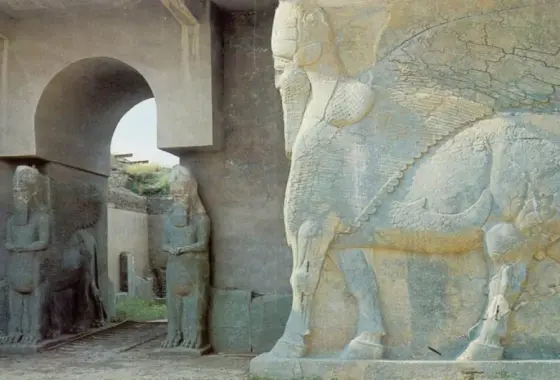
Assyria takes its name from the city of Assur on the Tigris and the god of that city. In the early 2nd millennium BC Assur was an important centre of long-distance trade.
Kültepe and the Anatolian trade
In the 20th–18th centuries BC Assyrian merchants founded trading colonies called “karum” in Anatolia, the most important being at Kültepe (Kanesh) near Kayseri. The merchants brought tin and textiles to Anatolia in exchange for gold and silver. The tens of thousands of cuneiform tablets found at Kültepe document the first period of writing in Anatolia.
The Neo-Assyrian Empire
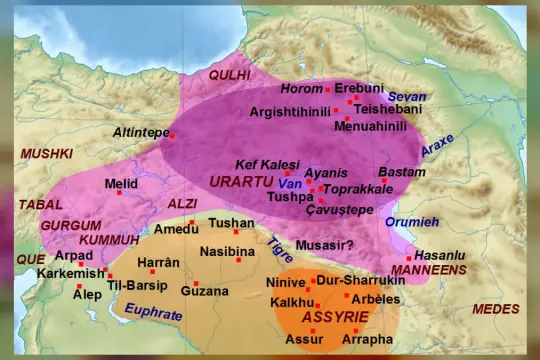
From the 9th century BC Assyria, with its powerful army and iron weapons, conquered Mesopotamia, Syria, Palestine and for a time Egypt. Tiglath-Pileser III reorganised the army and provinces; Sargon II made Dur-Sharrukin, and Sennacherib Nineveh, capitals with magnificent palaces. To crush revolts the Assyrians pursued a policy of mass deportation of peoples.
The Library of Ashurbanipal
King Ashurbanipal (c. 668–631 BC) had a great library of thousands of clay tablets assembled in his palace at Nineveh. Among its tablets is the Epic of Gilgamesh, one of the world’s oldest epics; most of the tablets are now in the British Museum.
Collapse
Internal turmoil began after Ashurbanipal’s death. The Babylonians and Medes destroyed Nineveh in 612 BC. Assyria’s last stand ended at Harran, near today’s Şanlıurfa, in 609 BC.
Sources and further reading
- British Museum, Library of Ashurbanipal collection.
- Tahsin Özgüç and Fikri Kulakoğlu, Kültepe excavation publications.
- Encyclopaedia Britannica, “Assyria”.
People also ask
What was Assyria? Assyria was a state centred on the city of Assur on the Tigris that grew into an empire ruling most of the Near East in the 1st millennium BC.
What was Assyria’s capital? Capitals: Assur, Kalhu (Nimrud), Dur-Sharrukin, Nineveh.
When did Assyria end? End: Nineveh 612 BC; Harran 609 BC.
Leave a comment
Your email address will not be published. Required fields are marked *