



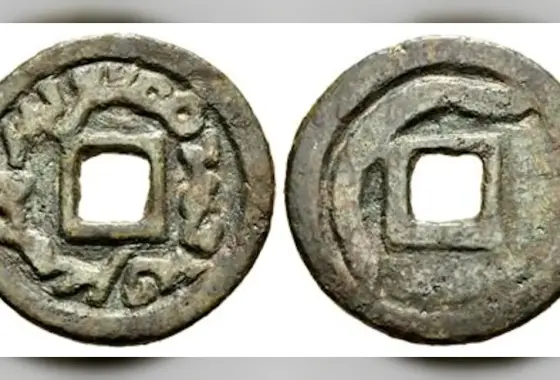
The Türgesh belonged to the On Ok (“Ten Arrows”) tribal union of the Western Göktürk Khaganate. As the Western Göktürks weakened at the end of the 7th century, the Türgesh leader Üch-Elig founded an independent khaganate in the Zhetysu region, choosing the city of Suyab in today’s Kyrgyzstan as his centre.
Relations with the Göktürks
The Türgesh soon became rivals of the Second Göktürk Khaganate to the east. As the Orkhon inscriptions record, under Qapaghan Qaghan the Göktürk army defeated the Türgesh at Bolchu in 711, and the Türgesh qaghan was killed.
Suluk Qaghan and the Umayyads
Suluk Qaghan, who rebuilt the Türgesh after this defeat, became leader of the resistance to the Umayyad advance in Transoxiana. Working with local Sogdian principalities, he inflicted heavy losses on Umayyad forces, winning a great victory in 724 in the battle known in Arabic sources as “Yawm al-Atash” (the Day of Thirst). Arab sources nicknamed him “Abu Muzahim” (the butting one) for his aggressiveness in battle. Suluk also established diplomatic relations with Tang China and Tibet.
End
Defeated in 737 by Asad ibn Abdallah, governor of Khurasan, Suluk Qaghan was killed by his own commanders in 738. The Türgesh then split into “Black” and “Yellow” factions and internal strife began. In 766 the Zhetysu region passed to the rising Karluks. Türgesh resistance slowed the spread of Islam in Transoxiana while strengthening the Turkic identity of the region.
Sources and Historiography Problem
The greatest difficulty in examining the Turgesh Khaganate is the absence of long texts originating from the state itself. Much of our information relies on records from outside observers: Chinese dynastic histories, Arabic historical and geographical works, and document fragments from Sogdian cities in Central Asia. In Chinese sources, this people appears as “Tuqishi,” with emphasis placed more on relations along the Chinese border than on the state’s internal organization. Arabic sources mostly portray the Turgesh as the opposing side in wars in Transoxiana.
This leads to the same event being interpreted differently from source to source. A battle recorded in Arabic sources as a border raid may appear in Chinese records as an embassy and a matter of titles. For this reason, historians compare sources with one another rather than relying on a single text; linking different spellings of names and titles to the same person requires separate expertise. For this reason, many definitive details about the Turgesh remain disputed, and writers often use cautious language such as “probably” or “according to sources.”
Social Structure and Economy
The Turgesh lived according to the classic nomadic order of the Central Asian steppe: herds were moved between summer pastures and winter quarters according to the season, and military strength depended on mounted archers. However, the region around Semirechye and Talas was not only pastureland; one of the northern branches of the Silk Road passed through this area. Therefore, the khaganate had a structure sustained by revenue obtained from taxes on caravans and protection in return. Sogdian merchants conducted trade in the settled towns of the region, while steppe animal products, horses, and furs changed hands for silk, silver, and various manufactured goods.
This division of labor between the nomadic tribal aristocracy and the settled trade towns was a common feature of many Turkic states in Central Asia. The khagan’s power depended both on the support of tribal leaders and on the security of trade routes. If one of these two pillars was shaken, central authority could quickly weaken; internal conflicts frequently seen in Turgesh history are also associated with this fragile balance.
Religious and Cultural Environment
The generation inhabiting the Turgesh lands had a multi-layered belief map in the 8th century. Alongside the traditional Sky God understanding of the steppe tribes, Buddhism, Manichaeism, Nestorian Christianity, and Zoroastrianism maintained their presence in the region, especially through communities in Sogdian cities. From the east, the Chinese court, and from the west, Islam brought by Umayyad armies, were new influences added to this diversity. Turgesh rulers often followed a policy of balancing between these powers, allying with one against the other.
In terms of writing culture, the Göktürk legacy was decisive; traces of the runic alphabet used in the Orkhon inscriptions are also found in tombstones and rock inscriptions around Semirechye. The fact that this region later became one of the centers of Karluk and Karakhanid culture is also interpreted as a product of the settled–nomadic synthesis established during the Turgesh period. Thus, although the khaganate was politically short-lived, it contributed to the cultural continuity of the region.
Legacy and Evaluation
The lifespan of the Turgesh Khaganate is limited to a short period of approximately seventy years; however, this period is quite intense in Central Asian history. The khaganate filled the political void left after the dispersal of the Western Göktürks and maintained its existence as an independent actor on a border where two great powers, Tang China and the Umayyad Caliphate, clashed. This characteristic makes it possible to read it not only as a Turkic tribal state but also as part of the intercontinental balance of power.
Historians sum up the success of the Turgesh in two points: being a steppe power that controlled trade routes and being able to maneuver flexibly among great neighbors. Their weakness lies in their difficulty in establishing a central institutional structure and in succession struggles that arose during the khaganate. The same pattern frequently recurs in the history of steppe states. For this reason, the Turgesh example is read as a good case showing that political authority in Central Asia was sustained not only by military force but also by balancing trade, alliances, and tribal support.
The Turgesh and Regional Cities
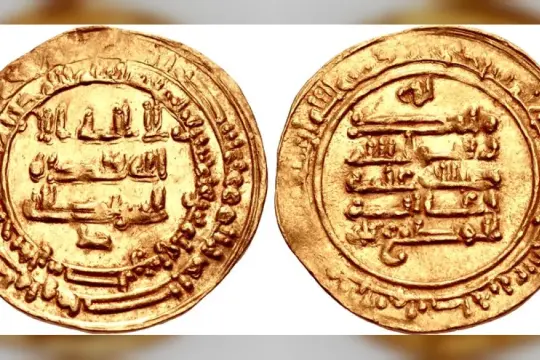
In the region under Turgesh administration, cities such as Suyab, Talas, and Taraz stood out as trade and craft centers. In these cities, there were documents written in Sogdian, silver and copper coins similar to money, caravanserai-type buildings, and places of worship for Buddhist and Nestorian communities. Turgesh khagans often left city administration to local Sogdian and Turkic administrators, receiving taxes and military support in return. This flexible model enabled the khaganate to govern its vast lands with little bureaucracy.
The existence of cities also strengthens the view that the state should not be evaluated merely as a nomadic power. Coinage, tax systems, and written administrative records indicate that the political organization of the Turgesh was more complex than supposed. Nevertheless, since the number of documents at our disposal is limited, every interpretation in this field remains open to update with new archaeological finds.
Sources and further reading
- Türkiye Diyanet Vakfı İslâm Ansiklopedisi, “Türgişler”.
- Al-Tabari, History of the Prophets and Kings.
- Orkhon inscriptions (Kül Tegin inscription).
- Gumilev, L. N. – Ancient Turks (Turkish edition, Ankara, 1998).
- Barthold, W. – Lectures on the History of Turkestan (Turkish translation).
- Sinor, D. (ed.) – The Cambridge History of Early Inner Asia (Cambridge University Press, 1990).
People also ask
What was the Türgesh Khaganate? The Türgesh Khaganate was founded in the Zhetysu (Semirechye) region in the late 7th century by the Türgesh, one of the On Ok tribes of the Western Göktürks.
When was the Türgesh Khaganate founded? Founded: c. 699, Üch-Elig Qaghan.
When did the Türgesh Khaganate end? End: 766, the Karluks.
Leave a comment
Your email address will not be published. Required fields are marked *