




Hadith is the name given to the sayings of the Prophet Muhammad, his actions, and the practices done in his presence that he did not object to (taqrir). Sunna refers to his way of life and religious practice; the hadith are the written record of the sunna that has reached us. It is through the sunna that Muslims learned how many of the Qur’an’s general commands are to be put into practice, for example how to perform the ritual prayer. For this reason hadith are considered the second fundamental source of Islam after the Qur’an.
إِنَّمَا الْأَعْمَالُ بِالنِّيَّاتِ، وَإِنَّمَا لِكُلِّ امْرِئٍ مَا نَوَى“Actions are judged only by intentions, and every person will have only what they intended.”
Writing down the hadith
During the Prophet’s lifetime some Companions wrote down what they heard in their own notebooks; Abdullah ibn Amr ibn al-As’s collection known as "al-Sahifa al-Sadiqa" is a well-known example. Most hadith, however, were at first transmitted orally within a strong culture of memorisation. At the end of the first Islamic century, the Umayyad caliph Umar ibn Abd al-Aziz officially ordered governors and scholars to compile the hadith so they would not be lost. From then on, hadith books arranged by subject and by narrator began to appear.
Isnad: a unique method of verification
To determine whether a saying truly came from the Prophet, hadith scholars examined the chain of people who transmitted it, a structure called the isnad. Each hadith is transmitted with a chain reaching back to the Prophet: "So-and-so told us, from so-and-so…". For every narrator in the chain, scholars rigorously investigated:
- their honesty and piety (’adala),
- the reliability of their memory and records (dabt),
- whether they actually met the previous narrator (ittisal).
The science of rijal, which recorded the lives, teachers and students of thousands of narrators, and the science of jarh wa ta’dil, which assessed their reliability, grew out of this need. Based on source criticism, this method is regarded as a unique achievement in the history of scholarship.
Types of hadith
- Sahih (sound): A hadith with an unbroken chain of trustworthy narrators with sound memory, free of hidden defects and contradictions.
- Hasan (good): One that meets the conditions of sahih, but some of whose narrators had slightly weaker memory.
- Da’if (weak): One that fails to meet one or more of the conditions of sahih and hasan.
- Mawdu’ (fabricated): A saying falsely attributed to the Prophet. Hadith scholars wrote separate works to identify fabricated reports.
The Six Books
The 9th century was the golden age of hadith compilation. The six works written in this period and regarded as the most reliable in the Sunni world are known as the Kutub al-Sitta (the Six Books):
- al-Bukhari (d. 870), al-Jami’ al-Sahih
- Muslim (d. 875), al-Jami’ al-Sahih
- Abu Dawud (d. 889), al-Sunan
- al-Tirmidhi (d. 892), al-Sunan
- al-Nasa’i (d. 915), al-Sunan
- Ibn Maja (d. 887), al-Sunan
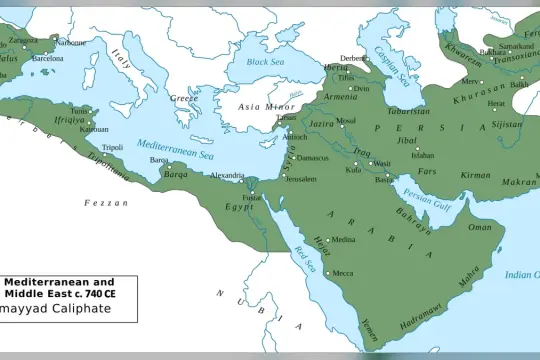
It is striking that many of these scholars came from Central Asia and Khorasan: al-Bukhari was born in Bukhara in today’s Uzbekistan, and al-Tirmidhi in Termez on the banks of the Amu Darya. These lands were among the most fertile centres of Islamic scholarship. The Shia tradition has its own chains of narrators and hadith corpus (the Four Books).
يَسِّرُوا وَلَا تُعَسِّرُوا، وَبَشِّرُوا وَلَا تُنَفِّرُوا“Make things easy, do not make them difficult; give good news, do not drive people away.”
Approaching hadith today
Many sayings of uncertain origin circulate on social media as "hadith". When quoting a hadith, it is important to state the book and number in which it appears and to rely on trustworthy collections. Hadith should be understood within the whole of the Qur’an and in light of their context. In Turkey, the Presidency of Religious Affairs’ Hadislerle İslam (Islam through Hadith) series is a comprehensive work explaining reliable reports in today’s language.
Journeys in search of knowledge (rihla)
Hadith scholars regarded travelling long distances to hear a single report from the person who had heard it first-hand as a virtue. As reported in al-Bukhari’s Sahih, the Companion Jabir ibn Abd Allah travelled for a month to reach Abd Allah ibn Unays in Syria in order to hear a single hadith. In later centuries al-Bukhari, Muslim and other great scholars made journeys lasting years, from Khorasan to the Hijaz and from Iraq to Egypt. This tradition of “rihla” created a network of knowledge linking scholars across different regions of the Islamic world.
Women scholars of hadith
Women hold a special place in the science of hadith. A’isha is among the Companions who narrated the most hadith, and she is known to have corrected some reports transmitted by other Companions. In later centuries thousands of women scholars taught hadith and granted licences. Karima al-Marwaziyya, who lived in Mecca in the 11th century, is known for teaching one of the most reliable recensions of al-Bukhari’s Sahih, and many great scholars studied with her. The researcher Mohammad Akram Nadwi has compiled biographies of more than eight thousand women scholars in the history of hadith.
The forty-hadith tradition
Writing collections of forty hadith on a given theme (“arba‘in”) is a deep-rooted tradition in the Islamic world. The most famous is the Forty Hadith of al-Nawawi, who lived in the 13th century; summarising the basic principles of the faith, this small book has been memorised and commented on in many languages for centuries. In the Ottoman period, too, many poets and scholars rendered the forty hadith into Turkish verse.
Frequently asked questions
What is the difference between a hadith and a verse?
A verse (ayah) is part of the Qur’an, which Muslims believe to be the word of God. A hadith is a saying or practice of the Prophet, transmitted through chains of narrators.
What is a hadith qudsi?
Hadith whose meaning is held to come from God and whose wording comes from the Prophet. Unlike the Qur’an, they are not recited in prayer and are not considered part of the Qur’an.
Sources and further reading
- Türkiye Diyanet Vakfı İslâm Ansiklopedisi, “Hadis”, “İsnad”, “Kütüb-i Sitte”.
- al-Bukhari, al-Jami’ al-Sahih.
- Jonathan A. C. Brown, Hadith: Muhammad’s Legacy in the Medieval and Modern World.
- Diyanet İşleri Başkanlığı, Hadislerle İslam.
- Encyclopaedia Britannica, “Hadith”.



Leave a comment
Your email address will not be published. Required fields are marked *