



When the Abbasids overthrew the Umayyad Caliphate in 750, many members of the Umayyad family were killed. Abd al-Rahman ibn Mu‘awiya, grandson of the caliph Hisham, escaped via North Africa to al-Andalus and proclaimed his emirate at Córdoba in 756. He is known as “al-Dakhil” (the one who entered).
Córdoba
In 785 Abd al-Rahman I began building the Great Mosque of Córdoba, which later emirs enlarged and which, with its two-coloured arches, became a symbol of Islamic architecture. In the 9th century the musician Ziryab, who came from Baghdad, influenced music, cuisine and dress in al-Andalus.
The caliphate
In 929 Abd al-Rahman III proclaimed himself caliph, placing himself on an equal footing with the Abbasids and the Fatimids. Near Córdoba he built the magnificent palace city of Madinat al-Zahra. The library of his son al-Hakam II is said to have held hundreds of thousands of volumes. Córdoba was then one of the most populous cities in Western Europe.
Al-Mansur and break-up
At the end of the 10th century the state was effectively run by the hajib al-Mansur (Almanzor in European sources), who led many campaigns against the Christian kingdoms of the north. After his death a civil war (fitna) broke out in 1009 that destroyed the caliphate, and in 1031 al-Andalus split into small kingdoms known as the taifas. The Great Mosque of Córdoba and Madinat al-Zahra are now on the UNESCO World Heritage List.
From Emirate to Caliphate
In 756 Abd al-Rahman ibn Mu’awiya defeated the Abbasid-backed governor near Córdoba and founded an independent Umayyad emirate in al-Andalus. Over the following two centuries the emirs tried to build a centralised state; under Hisham I, al-Hakam I and Abd al-Rahman II the tax system, army and court were organised. At the end of the 9th century Umar ibn Hafsun’s revolt in the south put serious pressure on the state.
When Abd al-Rahman III became emir in 912, the country was at risk of fragmentation. He suppressed the Hafsun revolt and restored internal order. In 929 he declared himself “caliph”. The title showed, against the rising Fatimids in North Africa and the Abbasids in Baghdad, that al-Andalus was an independent Islamic authority. The caliphate made Córdoba one of the three great centres of the Mediterranean world.
Society and Economy
Andalusi society was made up of Arab Muslims, Berbers, Muslims of local origin, Christians and Jews. Part of the Christian population spoke Arabic and adopted Arab culture and was known as “Mozarabs”. The famous Jewish physician and diplomat of the era, Hasdai ibn Shaprut, served at the court of Abd al-Rahman III and played a role in foreign relations. Religious minorities paid a tax and kept their own community arrangements; this order did not work flawlessly in every period, but it offered an experience of coexistence rarely seen in later Europe.
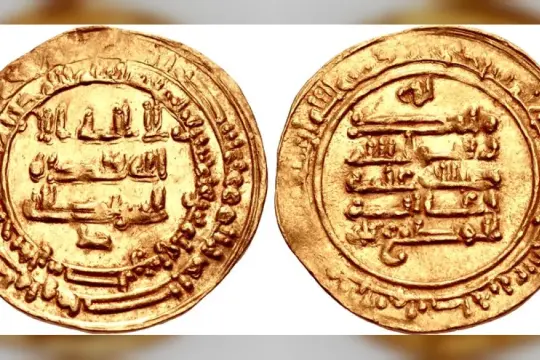
The economy rested on agriculture, crafts and trade. Irrigation canals and garden culture spread; silk, leather, weapons and ceramics were produced. Córdoba’s markets were linked to North Africa, Egypt and Europe. The state supported commercial stability by minting gold and silver coins.
Science, Libraries and Literature in Córdoba
In the 10th century Córdoba was one of the centres of knowledge production. The library at al-Hakam II’s court is said to have held hundreds of thousands of volumes; although the figures vary by source, there is agreement that the collection was very large. Al-Hakam sent agents east to collect books and assigned scribes to make copies.
The surgeon al-Zahrawi worked at the Córdoba court and wrote a broad medical encyclopaedia describing surgical instruments and methods; translated into Latin in later centuries, the work influenced European medical education. The astronomer Maslama al-Majriti and the thinker Ibn Hazm also grew up or worked in this milieu. Poetry and literature flourished too; the muwashshah and zajal forms born in al-Andalus may have influenced later European poetry.
Madinat al-Zahra and the Great Mosque
Construction of Madinat al-Zahra, the palace city Abd al-Rahman III built near Córdoba, began around 936. The city rose in terraces and contained a palace, administrative halls, gardens, a mosque and workshops. The palace’s reception halls were designed to impress Byzantine and European envoys. The city was plundered and left in ruins in the civil war of the 1010s; its remains were excavated in the 20th century and inscribed on the UNESCO World Heritage List in 2018.
The Great Mosque of Córdoba, begun in 785, was enlarged by one emir and caliph after another. After 961 al-Hakam II had a new mihrab section and rich mosaics added. With its double-tiered arches and forest of columns it is a symbol of Islamic architecture. Today, in its form converted to a cathedral, the Historic Centre of Córdoba is on the UNESCO list.
Al-Mansur’s Rise and the Fitna
After al-Hakam II’s death in 976 the caliphate passed to Hisham II, who was still a child. Real power fell to Muhammad ibn Abi Amir, who served as chamberlain; this statesman, who took the title “al-Mansur” (the Victorious), reshaped the army to rely on Berber soldiers and launched many campaigns against the Christian kingdoms of the north. In 997 he marched on Santiago de Compostela and sacked the city. When he died in 1002 his son Abd al-Malik took his place.
The rule of the Mansur family was short. The Fitna that began in 1009 turned into civil war among Arab, Berber and Slavic groups, and caliphs changed in quick succession. The last caliph, Hisham III, was deposed in 1031 and the caliphate was abolished in Córdoba. Al-Andalus split into dozens of small states called taifas. This fragmentation eased the southward advance of the Christian kingdoms of the north.
The Taifa Kingdoms and the Mark Left by al-Andalus
After the caliphate broke up, cities such as Seville, Granada, Toledo and Zaragoza became independent taifa kingdoms. Despite political fragmentation, these courts competed with one another in patronising poets, scholars and artists; for this reason the taifa period is remembered as a culturally fertile age. The passing of Toledo to King Alfonso VI of Castile in 1085 pushed the taifas to seek help from the Almoravids in North Africa.
Córdoba’s accumulated knowledge reached Europe through translations from Arabic into Latin made in cities such as Toledo. From the 12th century works in philosophy, medicine, astronomy and mathematics began to be taught in European universities. Thus, although the political life of the Andalusi Umayyads was short, their influence in knowledge and urbanism lasted for centuries.
Sources and further reading
- Türkiye Diyanet Vakfı İslâm Ansiklopedisi, “Endülüs Emevîleri”.
- UNESCO World Heritage, “Historic Centre of Cordoba” and “Caliphate City of Medina Azahara”.
- Encyclopaedia Britannica, “Umayyad dynasty (Spain)”.
- Türkiye Diyanet Foundation Encyclopaedia of Islam, entries “Endülüs”, “Abdurrahman b. Muâviye” and “Mansûr b. Ebû Âmir”.
- Encyclopaedia Britannica, entries “Umayyad dynasty (Spain)” and “Córdoba”.
- UNESCO World Heritage Centre, “Caliphate City of Medina Azahara” (2018) and “Historic Centre of Córdoba”.
People also ask
What was the Umayyads of al-Andalus? The Umayyad state of al-Andalus was founded in Spain in 756 by Abd al-Rahman I, who had escaped the Abbasid purge of the Umayyad family.
When was the Umayyads of al-Andalus founded? Founded: 756, Abd al-Rahman I (emirate).
What was the Umayyads of al-Andalus’s capital? Capital: Córdoba.
When did the Umayyads of al-Andalus end? End: 1031, the taifa period.
Leave a comment
Your email address will not be published. Required fields are marked *