



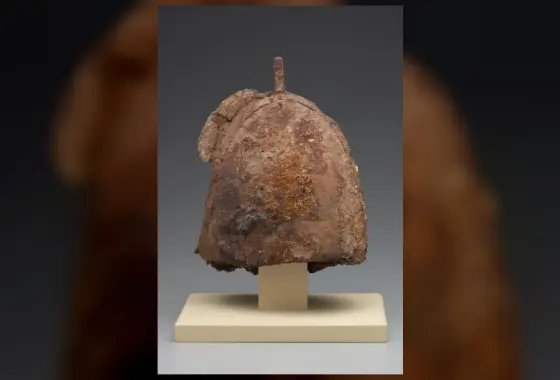
The Sasanians take their name from the dynasty’s ancestor, Sasan. Ardashir I, ruler of the Fars region in south-western Iran, defeated the Parthian king Artabanus V in 224 and founded a new empire.
Wars with Rome
Ardashir’s son Shapur I won great successes against Rome, capturing the Roman emperor Valerian near Edessa (Urfa) in 260, an event depicted in the rock reliefs at Naqsh-e Rostam. Wars between the Sasanians and Rome, and later Byzantium, over Mesopotamia, Armenia and Syria went on for centuries.
Khosrow Anushirvan
Khosrow I Anushirvan (531–579) reformed taxation and the army and entered Islamic sources as a ruler famed for justice. Allied with the Göktürk ruler Istemi, he destroyed the Hephthalite state in Central Asia. The great arched palace at Ctesiphon (Taq Kasra) is associated with his era.
The last great war and the fall
From 602 Khosrow II launched a great war against Byzantium, conquering Syria, Palestine and Egypt and besieging Constantinople. But he suffered heavy defeats in the counter-offensive of the Byzantine emperor Heraclius. Exhausted by the long wars, the empire was defeated by Arab-Islamic armies at Qadisiyyah in 636–637 and at Nahavand in 642. The last king, Yazdegerd III, was killed near Merv in 651.
Legacy
Sasanian traditions of government, art and court culture deeply influenced later Islamic states, above all the Abbasids.
State Order and Zoroastrianism
The Sasanian state was built around a ruler styled “shahanshah” (king of kings). The ruler, the priesthood, the warrior nobility and the scribes were the cornerstones of the state order. Provinces were governed by officials appointed from the centre, and taxes were collected both in money and in kind. The chief of the priesthood, the mobedan mobed, carried considerable weight in affairs of state.
In the 3rd century Zoroastrianism took a strong institutional form as the state religion through the efforts of the religious leader Kartir. Kartir’s inscriptions describe a period in which other religions were under pressure. The death of Mani in prison in the mid-270s, under Bahram I, is regarded as an example of this pressure. It is traditionally held that the Avesta texts were committed to writing in the Sasanian period. Even so, Christian, Jewish and Buddhist communities continued to exist in the empire.
Society, Trade and Gundeshapur
Sasanian society was divided into distinct classes: priests, warriors, scribes, and farmers, craftsmen and merchants. The dehqans, small landowning nobles, played an important role in tax collection and local administration. Khosrow Anushirvan’s reforms tied the land tax to measured land, making state revenues more regular.
Its position at the western end of the Silk Road made the Sasanians intermediaries in trade between China, India and Rome. The area around Ctesiphon and Seleucia was one of the most populous urban regions in the world. Gundeshapur in Khuzestan was known for medical and philosophical teaching; Indian, Greek and Syriac knowledge met there. According to accounts, after Emperor Justinian closed the schools of Athens in 529 some Greek philosophers took refuge at Khosrow’s court; the details of this tradition are debated.
Art and Architecture
Sasanian art had a style that developed around the court and religion and later influenced Islamic art. Rock reliefs carved at Naqsh-e Rustam and Taq-e Bostan in Fars show scenes of royal investiture and victory. Silver plates are famed for depictions of the hunting king and mythological animals, and silk textiles for geometric and animal motifs; these were sold to distant lands and imitated.
In architecture domed halls, iwans and vaults came to the fore. The great arched hall of Taq-e Kasra at Ctesiphon is the best-known example of this tradition. The circular city plan of Firuzabad, founded by Ardashir I, is also remarkable. The Sasanian Archaeological Landscape of Fars Region was inscribed on the UNESCO World Heritage List in 2018.
Army and Border Wars
The core of the Sasanian army was heavily armoured cavalry. Mounted archers and elephant corps also took part in battles. Siege techniques developed over time; under Shapur I Rome’s eastern cities were besieged repeatedly.
Wars with Rome and Byzantium concentrated around Nisibis, Dara and the Euphrates. The death of Emperor Julian in 363 during his campaign in Sasanian territory forced Rome into a heavy withdrawal. In 530 at Dara the Byzantine commander Belisarius defeated the Sasanian army; the following year at Callinicum the Sasanians prevailed. In 532 the “Eternal Peace” was agreed between Justinian and Khosrow; the peace was broken in 540 when Khosrow took Antioch. This long rivalry wore both empires down and prepared the ground for a new power to rise in the region.
The Sasanians and the Turks: The Eastern Frontier
To the east of the Sasanians lay first the Kushans, then the Hephthalites, and from the mid-6th century the Göktürks. Wars with the Hephthalites in the 5th century led at times to Sasanian rulers being captured and at times to the payment of tribute. Khosrow Anushirvan formed an alliance with the Göktürk ruler Istemi Yabgu and, around the 560s, helped bring about the collapse of the Hephthalite state; the Oxus became the border between the two states.
This alliance did not last; when the Göktürks could not agree with the Sasanians over the silk trade, Istemi made direct contact with Byzantium. These developments on the eastern frontier show that the Sasanian state had to pursue a balancing policy not only in the west against Byzantium but also in Central Asia. This multi-front structure constantly strained the state’s resources.
Internal Turmoil and the Arab Conquests
Heraclius’s counter-attack culminated in the defeat of the Sasanian army near Nineveh in 627. In 628 Khosrow II was overthrown and killed in a coup led by his son Kavad II. Within the four years that followed about ten rulers took the throne, among them the women rulers Purandokht and Azarmidokht. Central authority dissolved and rivalry among army commanders increased.
In this period of weakness Arab armies entered Iraq. The Battle of al-Qadisiyya (around 636) broke the Sasanian defence; Ctesiphon was taken. The defeat at Nahavand in 642 seriously shattered Sasanian resistance. The last ruler, Yazdegerd III, withdrew east, fled for years and was killed near Merv in 651. Many elements of the Sasanian aristocracy and administrative tradition blended into the governance of the Islamic states that followed.
Sources and further reading
- Encyclopaedia Britannica, “Sasanian dynasty”.
- Türkiye Diyanet Vakfı İslâm Ansiklopedisi, “Sâsânîler”.
- Encyclopaedia Iranica, “Sasanian dynasty”.
- Türkiye Diyanet Foundation Encyclopaedia of Islam, entries “Sâsânîler”, “Enûşirvân” and “Kâdisiye Savaşı”.
- Encyclopaedia Britannica, entries “Sasanian Empire” and “Khosrow I”.
- UNESCO World Heritage Centre, “Sasanian Archaeological Landscape of Fars Region” (2018).
People also ask
What was the Sasanian Empire? The Sasanian Empire was founded in 224 when Ardashir I defeated the Parthian king, and ruled Iran and Mesopotamia until 651.
When was the Sasanian Empire founded? Founded: 224, Ardashir I.
What was the Sasanian Empire’s capital? Capital: Ctesiphon.
When did the Sasanian Empire end? End: 651, death of Yazdegerd III.



Leave a comment
Your email address will not be published. Required fields are marked *