



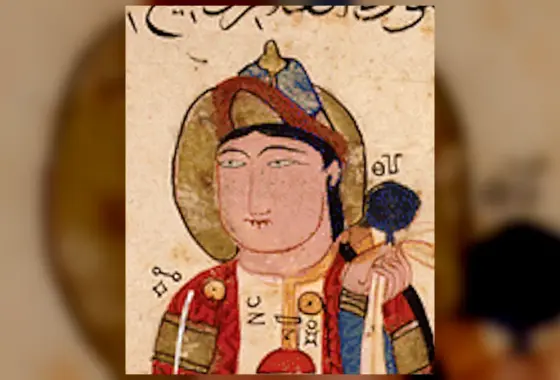
Artuk Bey was a Turkmen commander who held important posts under the Great Seljuk sultan Malik-Shah and for a time governed Jerusalem. His sons Sökmen and Ilghazi founded their own principalities in south-eastern Anatolia in the early 12th century.
Branches
Sökmen’s descendants founded the branch centred on Hasankeyf and later took Amid (Diyarbakır). Ilghazi’s descendants ruled Mardin and Mayyafariqin (Silvan). At the end of the 12th century a third branch emerged, centred on Harput.
Against the Crusaders
In 1119 near Aleppo Ilghazi inflicted a heavy defeat on the army of the Principality of Antioch, a battle known in Crusader sources as the “Field of Blood” (Ager Sanguinis). The Artuqids played an important role in the struggle against the Crusaders alongside the emirs of Mosul and Aleppo.
Science and architecture
Al-Jazari, who worked at the Artuqid palace in Diyarbakır, presented his famous book on automatic machines, completed in 1206, to the Artuqid ruler. The Malabadi Bridge over the Batman River (1147), the bridge at Hasankeyf, and mosques and madrasas in Silvan and Mardin are important examples of Artuqid architecture.
End
The Hasankeyf–Amid branch was eliminated by the Ayyubids in 1232 and the Harput branch by the Seljuks of Rum in 1234. The longest-lived Mardin branch survived the Mongol and Timurid eras before being ended in 1409 by the Kara Koyunlu ruler Kara Yusuf.
From Artuk Bey to the Loss of Jerusalem
The dynasty takes its name from Artuk ibn Eksheb, a Turkmen commander in Great Seljuk service. Artuk took part in campaigns in Anatolia and Syria under Sultan Malik-Shah; at the end of the 11th century he stood with the Seljuk ruler Tutush, and the administration of Jerusalem was entrusted to his family. Artuk died around 1091.
His sons Sökmen and Ilghazi governed Jerusalem for a time. In 1098 a Fatimid army besieged the city and took it back, shortly before the First Crusade reached Jerusalem. After losing the city the two brothers withdrew north: in the early 12th century Sökmen took Hasankeyf on the Tigris, while Ilghazi served as a Seljuk governor in Iraq and later settled in Mardin and its surroundings. A single family thus produced several branches, and the Artukids earned a lasting place on the political map of Upper Mesopotamia.
Harran and the Field of Blood on the Crusader Frontier
The Artukids lived on the eastern border of the Crusader states, and this position drew them into constant struggle. In 1104 near Harran the armies of Sökmen and the governor of Mosul, Jekermish, defeated the forces of Bohemond, Prince of Antioch, and Baldwin of Le Bourg, Count of Edessa. The victory slowed the Crusaders’ advance east of the Euphrates and fixed the borders of the County of Edessa.
Ilghazi’s best-known success came in 1119 around Aleppo. The army of Roger, Prince of Antioch, was almost entirely destroyed and Roger died in battle; Latin sources call the clash “Ager Sanguinis”, the Field of Blood. Ilghazi’s nephew Belek captured King Baldwin II of Jerusalem in 1123. These successes made the Artukids a recognised power in the Islamic world, but in the years that followed the rise of the Zengids moved leadership against the Crusaders to another dynasty.
The Hasankeyf–Amid Branch
The Hasankeyf branch made the city on the high cliffs of the Tigris its capital. Hasankeyf lay on a trade route linking East and West, and in Artukid times it was furnished with a citadel, palaces, mosques and bridges. The stone bridge piers over the Tigris were among the most visible traces left from this period.
The branch’s second centre was Amid, today’s Diyarbakır. In 1183 Saladin gave the city to the branch’s ruler Nur al-Din Muhammad, and the Artukid rulers continued to govern as vassals of the Ayyubids. Diyarbakır’s black basalt walls and mosques carry traces of the Artukid and earlier periods. The branch lost its political existence in 1232 when the Ayyubid sultan al-Kamil took Amid and Hasankeyf. Centuries later Hasankeyf itself went under water when the Ilısu Dam began to fill in 2019–2020; some structures were moved to a new site.
The Mardin Branch: The Longest-Lived Line
Ilghazi’s descendants ruled Mardin and Mayyafariqin (today’s Silvan). The Mardin branch became the longest-lived of the Artukids; under the sway of the Zengids, Ayyubids, Mongols and Ilkhanids it kept its local rule through different forms of vassalage. Its rulers generally offered allegiance to strong neighbours so that their land remained untouched.
Mardin is a city set on a rocky slope overlooking the Mesopotamian plain, famed for its stone houses and madrasas. The Zinciriye (Sultan Isa) Madrasa, built in 1385, is one of the notable architectural works of this period. The Mardin branch ended in 1409 when the Kara Koyunlu ruler Kara Yusuf took the city. The third branch, at Harput, came under Anatolian Seljuk control in the first half of the 13th century. The Artukid name lives on today in Mardin Artuklu University and in the city’s “Artuklu” district.
Engineering, Science and Architecture
The Artukid court offered a notable environment for science and technology. The engineer al-Jazari, who worked in Diyarbakır, dedicated his “Book of Knowledge of Ingenious Mechanical Devices”, completed in 1206, to the Artukid ruler Nasir al-Din Mahmud. The book describes water clocks, fountains, lever machines and automatic devices with illustrations, and is regarded as one of the most important sources of medieval engineering. The history of mechanical ideas such as the crankshaft and the piston is often discussed alongside this work.
In architecture the Artukids stood out for their stonework. The Malabadi Bridge spans the Batman River in one wide arch and is dated to 1147. Mosques, madrasas and caravanserais in Diyarbakır, Hasankeyf and Mardin reflect the region’s distinctive stone culture. Part of this heritage is still in use today.
How Is the Artukid Legacy Read Today?
In the early phases of Anatolia’s Turkification and Islamisation the Artukids acted as a bridge between the pre-Seljuk and post-Seljuk worlds. The Turkmen presence in the southeast became lasting through the cities and endowment systems they established. In this geography where Arab, Kurdish, Syriac and Armenian communities lived together, Artukid rule, as in most periods, accepted local religious and ethnic diversity.
Historians generally regard the Artukids not as a great empire but as a small principality skilled at balancing among strong neighbours. This flexible policy is one of the important factors explaining why the dynasty survived for three centuries. The historic fabric of Mardin and Diyarbakır today is the most tangible witness of this balanced and multicultural past.
Sources and further reading
- Türkiye Diyanet Vakfı İslâm Ansiklopedisi, “Artuklular”.
- Osman Turan, Doğu Anadolu Türk Devletleri Tarihi.
- Encyclopaedia Britannica, “Artuqid dynasty”.
- Türkiye Diyanet Foundation Encyclopaedia of Islam, entries “Artuklular”, “Artuk Bey” and “Cezerî”.
- Encyclopaedia Britannica, entries “Artuqid dynasty” and “al-Jazarī”.
- Steven Runciman, A History of the Crusades, vol. 2 (accounts of Harran and Ager Sanguinis).
People also ask
What was the Artuqids? The Artuqids were founded in the early 12th century in south-eastern Anatolia and Upper Mesopotamia by the sons of the Seljuk commander Artuk Bey.
When was the Artuqids founded? Founded: c. 1102.
When did the Artuqids end? End: 1409, elimination of the Mardin branch by the Kara Koyunlu.

Leave a comment
Your email address will not be published. Required fields are marked *