



What happened?
On the morning of 27 November, Euronews published a headline describing Pablo Hernández de Cos as "Spain’s consensus technocrat" for the presidency of the European Central Bank (ECB). The report points to De Cos gaining ground in the debate over who will lead the ECB after Christine Lagarde.
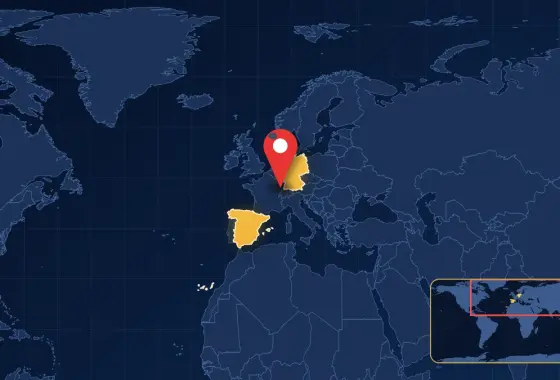
The Spanish government formally nominated Hernández de Cos in July 2026, marking the first time Spain has put forward a name for the ECB presidency since the institution was founded in 1998. Deputy Finance Minister Carlos Cuerpo wrote to Eurogroup President Kyriakos Pierrakakis saying he was confident De Cos would bring the "steady leadership" he showed at the Bank of Spain to the ECB.
Spain itself, however, struck a cautious tone, saying the selection process had not formally begun and that it would put forward a candidate "up to the task" when the time came.
Who else is in the race?
According to reports, Hernández de Cos’s strongest rival is Klaas Knot, president of the Dutch central bank (DNB). The Italian newspaper Il Foglio described the pair as rival economists under the headline "De Cos and the Dutchman Knot".
Germany’s Bundesbank president Joachim Nagel was also seen at one point as the frontrunner in the process, and the name of ECB Executive Board member Isabel Schnabel has come up in some reports too. According to Euronews’ Turkish service, all these names were part of the debate when Spain first formally announced its candidacy in July.
The 27 November Euronews report framing De Cos as the "consensus candidate" is being read alongside claims of a behind-the-scenes understanding between Germany and France, though that claim has not been independently confirmed and no official decision has been announced yet.
Why is Hernández de Cos a strong name?
Hernández de Cos served as governor of the Bank of Spain from 2018 to 2024, representing Spain on the ECB’s Governing Council during that time and taking part directly in the eurozone’s interest rate decisions.
After his term as governor, he moved to become general manager of the Bank for International Settlements (BIS), known as the institution where the world’s central banks coordinate with one another. That background presents him as a figure with monetary-policy experience at both the national and international level.
How will the process unfold?
The ECB president is appointed by a unanimous decision of EU leaders after consulting the Eurogroup of eurozone finance ministers; the term lasts eight years and cannot be renewed.
Lagarde’s term runs until October 2027, though some reports suggest she could leave the post earlier. Since the selection process has not formally started, neither the timing nor the identity of the eventual candidate is certain. In financial circles, the period until a formal shortlist emerges is seen, as with similar senior appointments, as one shaped largely by behind-the-scenes bargaining.
In the meantime, the Spanish government keeps repeating that the nomination has not been withdrawn and that it will continue backing Hernández de Cos whatever stage the process reaches.
What does the ECB do, and why does the presidency matter?
The European Central Bank sets common monetary policy for the 20 countries using the euro, deciding on interest rates with the aim of keeping medium-term inflation around 2%. Based in Frankfurt, the institution’s president carries a decisive voice in these decisions and is closely watched by global markets.
Since the ECB was founded in 1998, the presidency has been held in turn by the Netherlands’ Wim Duisenberg, France’s Jean-Claude Trichet, Italy’s Mario Draghi and, again, France’s Christine Lagarde. No Spaniard, German or Dutch national has held the post twice, which sharpens sensitivities over how it is shared among the larger member states.
How are markets reading the process?
The ECB presidency race is being read along a "hawk" versus "dove" axis in markets: figures seen as more willing to raise rates quickly to fight inflation are labelled "hawks", while those leaning toward looser policy to support growth are called "doves". Italy’s Il Foglio, comparing De Cos and Knot on this axis, notes that neither sits at an extreme, with both seen as holding a relatively balanced line.
What matters most for markets is whether the new president, whoever it is, keeps the predictable communication style followed under Lagarde. A prolonged uncertainty could somewhat raise the risk of volatility in eurozone bond markets and the euro exchange rate, which is why analysts are closely watching the process play out.
Why might Lagarde leave early?
Some reports include assessments suggesting Lagarde could leave the post before her official end date in October 2027, though there is no official confirmation from the ECB on this and no firm date has been announced.
That uncertainty is read as one of the reasons behind Spain’s push to put its candidate forward early: even though it is unclear when the process will formally start, having candidate names debated publicly in advance aims to avoid being caught unprepared by any early transition.
Why does this matter for Spain?
Despite being the eurozone’s fourth-largest economy, Spain has never held the ECB presidency since the institution was founded in 1998, something long seen in Madrid as a gap. Hernández de Cos’s candidacy carries the potential to be a symbolic first for Spain in this respect.
Government officials argue the candidacy is not merely symbolic but also backed by the Spanish economy’s above-eurozone-average growth in recent years, a performance that forms the backdrop to Spain wanting a stronger voice in monetary-policy debates.
Spanish media write that the government sees the candidacy as an important part of its diplomatic capital, and that whatever the outcome, it will present the effort as part of a broader push to raise Madrid’s weight in Brussels.
How is the ECB president chosen?
The president of the European Central Bank is appointed through a process in which EU leaders decide by unanimity, after consulting the Eurogroup of eurozone finance ministers. The term lasts eight years and cannot be renewed.
Candidates usually come from the ranks of member states’ central bank governors or senior monetary policy officials. In recent years an informal expectation has developed that the post should rotate between larger and smaller member states; Spain has never held the presidency since the institution was founded in 1998.
Who is Hernández de Cos?
Pablo Hernández de Cos served as governor of the Bank of Spain from 2018 to 2024, during which he sat on the European Central Bank’s Governing Council and took part in monetary policy decisions. Earlier in his career he worked as an economist at the ECB.
After his term as governor, he became general manager of the Switzerland-based Bank for International Settlements (BIS), an institution known as the place where the world’s central banks coordinate with one another. This background presents him as an experienced figure in monetary policy and banking supervision.
What does this mean?
Hernández de Cos being described as the "consensus candidate" signals that Spain’s hand has strengthened in the race to succeed Lagarde at the ECB, but it does not amount to a formal appointment. Names such as Knot, Nagel and Schnabel still appear to be on the table. How the process concludes will become clearer through talks at the Eurogroup and EU leader level in the coming months.
This report was compiled as of 27 November 2026, 09:00 Türkiye time; figures and details may differ between sources and may be updated as events develop.
This article is for general information only and is not investment advice. Review the official data before making any investment decision and consult a licensed adviser if needed.
Frequently asked questions
Has a decision been made on the ECB presidency?
No; reports describe Hernández de Cos as a strong, consensus candidate, but the formal selection process has not been completed and no firm date has been set.
Who is Hernández de Cos?
An economist who served as governor of the Bank of Spain from 2018 to 2024 and is now general manager of the Bank for International Settlements (BIS).
When will Lagarde leave?
Her term ends in October 2027, though some reports suggest she could leave earlier; the ECB has not confirmed an official date on this.
Who chooses the ECB president?
EU leaders decide by unanimity after consulting the Eurogroup.
Sources and further reading
- Euronews, “Pablo Hernández de Cos, Spain’s consensus technocrat to head ECB”, 27 Kasım 2026.
- Euronews, “Spain backs Hernández de Cos in first ever bid for the ECB presidency”, 21 Temmuz 2026.
- Il Foglio, “Spain’s de Cos and the Dutchman Knot: who are the two economists in the running to succeed Lagarde at the ECB?”, 29 Ekim 2026.
- EUobserver, “What kind of ECB is Europe getting after Lagarde?”, 2026.



Leave a comment
Your email address will not be published. Required fields are marked *