



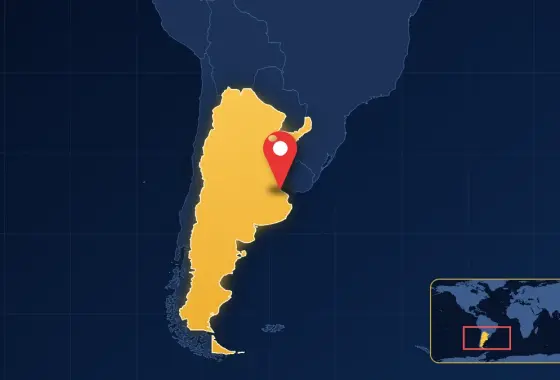
What happened?
In an economic report published on the evening of 26 November, Euronews said Argentina has entered a technical recession, with weak consumption undermining the economic gains made by President Javier Milei.
According to a Reuters report from 2 November, carried by the Italian site Internazionale, Argentina’s austerity-hit economy is reeling towards recession as Milei heads into the 2027 election.
What do the numbers show?
According to data from market research firm Scentia, consumption fell 2.7% in the first nine months of 2026 compared with the same period in 2025. Because household consumption makes up roughly two-thirds of Argentina’s gross domestic product (GDP), this decline is decisive for the economy’s overall trajectory.
According to EMAE (Monthly Economic Activity Estimator) data from the official statistics agency INDEC, economic activity fell 1.4% year-on-year in July 2026 and 1.7% in August 2026. The Buenos Aires Herald wrote after the August figure that recession "looks inevitable".
GDP had contracted 0.6% quarter-on-quarter in the second quarter. If third-quarter data shows a similar contraction, the economy will meet the technical-recession definition of two consecutive quarterly declines; the final third-quarter figure is due on 16 December 2026. Most analysts think the weakness already seen in September data will likely confirm that picture.
Where does Milei’s economic programme stand?
Milei has pursued a sharply austere spending-cut programme since taking office in December 2023, with the core goal of bringing years of budget deficits and high inflation under control.
JPMorgan forecasts that private consumption will rise just 0.4% next year, well below the 3.4% increase assumed in the 2027 budget. That gap points to a divide between the government’s growth expectations and the picture markets are seeing.
What does the political calendar say?
The slowdown is emerging about a year before the October 2027 presidential election, in which Milei is expected to run for a second term. That means economic data will stay at the centre of political debate in the coming months.
Economists will watch the December third-quarter GDP figure and subsequent EMAE reports closely to judge whether this is a temporary slowdown or a more lasting trend. Milei’s chances of re-election are seen as depending heavily on how this data trends.
Why is Milei running such a strict programme?
When Milei took office in December 2023, Argentina faced annual inflation exceeding 200%, with public deficits and money printing cited as the main causes. The new government moved to sharply cut public spending, aiming to quickly correct the budget balance and bring inflation down.
The programme’s success in substantially lowering inflation is presented as the government’s biggest achievement; but the cost has been that public investment and household consumption stayed under pressure for a while. The question now is whether that pressure is temporary or turning into a lasting slowdown.
The political dimension of the debate
Argentine financial outlet Eleconomista has noted that the opposition has stayed relatively quiet in the recession debate, suggesting criticism of the government’s economic policy is coming for now mostly from economists and market analysts rather than political rivals.
The Milei government, meanwhile, argues it will not compromise on the programme’s core goals of lowering inflation and balancing the budget despite the weak data; it frames the short-term contraction as the cost of longer-term stability.
How is the IMF programme shaping the picture?
In 2025, Argentina agreed a new International Monetary Fund (IMF) loan programme worth roughly 20 billion dollars; the programme ties the government’s austerity and currency policies to specific targets and proceeds through regular reviews.
Being under such a programme narrows the government’s room to step back from spending cuts; even as weak growth data comes in, this is one reason the Milei administration appears reluctant to change course from the IMF-aligned targets.
Which sectors are hit hardest?
According to analyses cited by Reuters, sectors sensitive to domestic demand, such as construction and retail, are being hit harder by the slowdown than export-oriented agriculture and energy. That suggests the recession risk could weigh disproportionately on the working class and the urban middle class.
Government officials argue that growth in energy and agricultural exports will revive domestic demand in the medium term, but economists are not in agreement on how long that turnaround would take.
How does Argentina compare regionally?
Neighbouring Latin American economies such as Brazil and Chile are posting more moderate growth over the same period, a contrast that leads analysts to link Argentina’s slowdown more to country-specific policy choices than to a regional trend.
Investors pricing Argentine assets are now weighing growth data more heavily alongside inflation and currency stability, which raises the importance of the December third-quarter figure for market pricing.
What is the state of the labour market?
During economic slowdowns, Argentina’s unemployment rate and the share of informal employment are closely watched indicators; a growing recession risk can erode the purchasing power of lower-income households working in the informal sector especially quickly.
Unions have been raising the employment impact of public-sector spending cuts more loudly, while the government argues private-sector investment will offset that loss over the medium term. Official unemployment data, read alongside the third-quarter GDP figure, will give a clearer picture of how deep the slowdown runs; these figures will be released gradually, on a week-by-week and region-by-region basis, following the official calendar throughout December.
What does a technical recession mean?
In economics, the term "technical recession" describes a situation where a country’s gross domestic product (GDP) contracts for two consecutive quarters compared with the previous quarter. The definition is not an official or legal threshold; most countries have no official body that declares a contraction, so economists generally rely on this simple rule of thumb.
Argentina’s GDP shrinking by 0.6% quarter-on-quarter in the second quarter could place the country within the technical-recession definition if third-quarter data shows a similar contraction; the final third-quarter figure is due on 16 December 2026.
What is Milei’s economic programme aiming for?
President Javier Milei has pursued a sharp austerity programme cutting public spending since taking office in December 2023, aiming to bring years of budget deficits and high inflation under control.
While the programme has had some success in lowering inflation, it is weighing on consumption and economic activity in the short term, which means Milei faces time pressure to revive the economy before the 2027 election.
What does this mean?
The drop in consumption and a run of weak EMAE figures point to Argentina’s economy nearing a technical recession, though final confirmation will come with the third-quarter GDP data on 16 December. This suggests Milei’s austerity programme, while making progress on lowering inflation, has to weigh that against a cost on growth and employment. This assessment rests on the data reported so far; official figures may be updated, and the 16 December release will make the picture clearer.
This report was compiled as of 27 November 2026, 09:00 Türkiye time; figures and details may differ between sources and may be updated as events develop.
This article is for general information only and is not investment advice. Review the official data before making any investment decision and consult a licensed adviser if needed.
Frequently asked questions
Is Argentina officially in recession?
Not yet officially confirmed; two consecutive quarterly contractions are needed, and Q3 data is due on 16 December.
How much has consumption fallen?
According to Scentia, it fell 2.7% year-on-year in the first nine months of 2026.
What is Milei’s programme aiming for?
A strict public-spending-cut programme aimed at lowering the budget deficit and inflation.
Is this linked to the election?
The slowdown is emerging about a year before the October 2027 election, in which Milei is expected to run.
Sources and further reading
- Euronews, “Argentina enters technical recession as weak consumption undermines Milei’s economic gains”, 26 Kasım 2026.
- Reuters (Internazionale üzerinden), “Argentina’s austerity-hit economy reels towards recession, testing Milei ahead of 2027 vote”, 2 Kasım 2026.
- Buenos Aires Herald, “Argentina’s recession looks inevitable after August data”, 2026.
- INDEC (Arjantin İstatistik Enstitüsü), EMAE (Ekonomik Faaliyet Tahmin Göstergesi) aylık raporları, Temmuz-Ağustos 2026.


Leave a comment
Your email address will not be published. Required fields are marked *