



What happened?
On Wednesday, 25 November 2026, the European Commission unveiled a draft Quantum Act together with a proposal for a fund that would take equity stakes in technology companies. The Sovereign Tech Equity Fund has a stated target size of 50 billion euros. The goal is to make Europe a global leader in quantum technologies by 2030.
Henna Virkkunen, the Commission’s technology chief, said Europe wants quantum technologies developed in Europe to be manufactured and used there, and that Europe needs to accelerate now, adding that strong foundations are already in place.
The draft is not yet law. It still has to be negotiated by the European Parliament and member states, and if adopted it would take effect 20 days after publication.
Where would the 50 billion euros come from?
An important detail: the 50 billion euros is a target size, not a fixed budget line. According to press reports, the Commission’s own question-and-answer text says the proposal contains no fixed budget, and no firm launch date for the fund is given.
The fund is meant to be built with contributions from the Commission, the European Investment Bank and member states, drawing in private investors. Reports say the aim is up to six euros of private money for every public euro. It is planned to be operational by 2028 at the latest, at the start of the next long-term EU budget.
The fund would not be limited to quantum: it would take stakes in European companies and industrial projects in strategic areas such as artificial intelligence, chips, cybersecurity and biotechnology. Separately, a European Competitiveness Fund worth 234.3 billion euros is expected to start in January 2028.
A European preference in public procurement
One contentious element is rules giving priority to European firms in public contracts. According to reports, procurement could be limited to Union-controlled entities, while entities from reciprocal partner countries, including members of Horizon Europe and the World Trade Organization’s government procurement agreement, could also bid.
The approach reflects a wish to reduce dependence on foreign suppliers in strategic technologies. Some reporting also mentions concerns that reliance on American technology could create a kind of kill switch risk. Protective purchasing rules could also cause new frictions with trade partners; that is a possibility, and the sources report no firm reaction.
The act rests on three pillars: research excellence, use of quantum technology and secure systems and supplies, delivered through a Quantum Europe Framework Initiative.
How big is the funding gap?
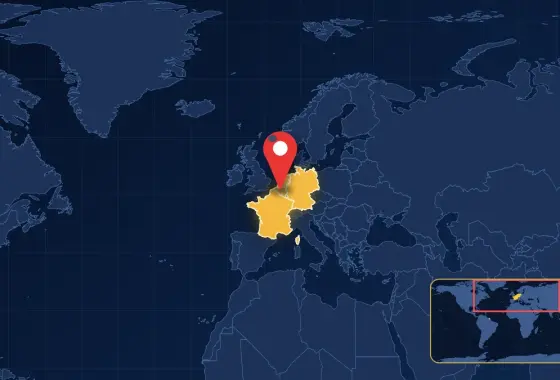
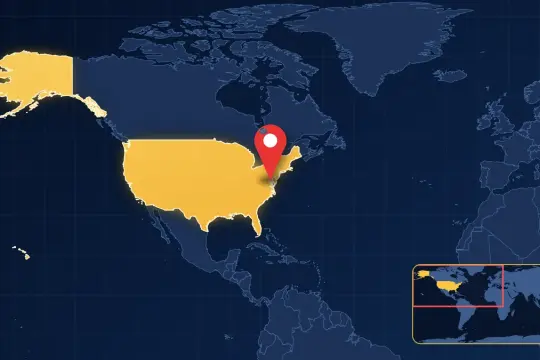
Comparative figures show why Europe is acting. According to published data, the EU leads the United States in public quantum funding, with 8.6 billion euros against 5.3 billion, but trails China at 13.6 billion. In private investment the picture flips: the EU is at about 1.1 billion euros while the United States reaches about 7 billion.
Sources differ slightly on which year the figures refer to, citing last year or 2025. Even so, the gap on the private side is clear.
Europe is strong in research and patents. It is reported to host about a third of the world’s quantum companies and to hold 44% of quantum patents. The problem is turning that base into large companies.
What does the industry say?
Leaders of some European quantum start-ups welcomed the proposal, while a research director at a public institute raised the question of whether Europe should build a quantum Airbus.
The European Quantum Industry Consortium, with more than 240 members, said it wants 300 to 500 million euros of public procurement within six months and 7.7 to 12.3 billion euros of support over five years. Representatives of global firms such as IBM and Cisco also commented.
Recent funding rounds at European quantum start-ups have drawn attention, for example an 18 million euro round at an algorithm company and a 25.5 million dollar round at another firm. Compared with the fund target, such sums show how much capital growth requires.
Why is quantum technology strategic?
Quantum computers have the potential to carry out certain calculations far faster than classical ones, with drug and materials design, logistics optimisation and security among the areas cited. Quantum sensing and communication promise new tools for measurement and secure messaging. Much of the technology is still in development.
Security is important: a sufficiently powerful quantum computer could break some encryption used today. The Commission therefore also sets dates for moving to post-quantum cryptography: 2030 for high-risk systems and 2035 for the rest.
In its quantum strategy of July 2025, the Commission had said a legislative proposal was expected in 2026. Wednesday’s announcement follows that timetable.
What to watch next
Watch the negotiations in the Parliament and the Council, how large actual contributions to the fund will be, the appetite of private investors, reactions from trade partners to the procurement rules and the shape of the 2028 budget period.
For companies, which sectors and projects qualify, application conditions and timing will be decisive. Because the text can change during the legislative process, today’s figures and rules should not be treated as final.
Researchers and firms in Türkiye will also be interested in the conditions for joining EU programmes. The sources do not set out any specific provision about Türkiye.
In short, the text announced is a starting point: the structure of the fund, contributions and rules will be settled during the legislative process.
What does this mean?
The EU wants to turn its quantum research strength into commercial scale and close the private capital gap. The 50 billion euro target is striking but is not money already fixed in a budget; success depends on contributions from member states and private investors. European-preference procurement may become a subject of both industrial policy and trade debate. This assessment rests on the sources and is not a firm forecast.
This article is for general information only and is not investment advice. Review the official data before making any investment decision and consult a licensed adviser if needed.
This report was compiled as of 26 November 2026, 09:00 Türkiye time; figures and details may differ between sources and may be updated as events develop.
Frequently asked questions
What is the Quantum Act?
A legislative proposal to strengthen European quantum research, use and secure supply.
Is the 50 billion euros budgeted?
No, it is a target fund size; the proposal has no fixed budget.
When would the law take effect?
Twenty days after publication, once adopted by Parliament and member states.
Are there dates for post-quantum cryptography?
Yes: 2030 for high-risk systems and 2035 for the rest.
Sources and further reading
- Reuters (Global Banking & Finance Review), “Europe plans €50 billion sovereign tech equity fund to boost quantum”, 25 November 2026.
- CASRAI, “EU Quantum Act and €50bn tech equity fund”, 26 November 2026.
- Tech Funding News, “EU proposes €50B Sovereign Tech Equity Fund to close Europe’s quantum funding gap with US and China”, 26 November 2026.
- Tempo (Antara), “EU plans 50 billion euro tech equity fund to boost quantum technology”, November 2026.





Leave a comment
Your email address will not be published. Required fields are marked *