



What happened?
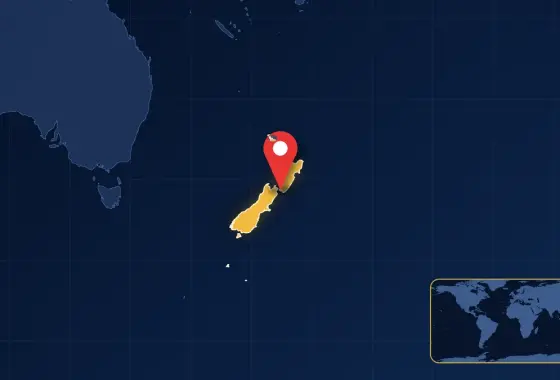
New Zealand held a general election on 7 November 2026. According to preliminary results announced on election night, Prime Minister Christopher Luxon’s centre-right National Party, together with its smaller partners ACT and New Zealand First, is positioned to remain in power, but only by a very thin margin.
According to reports, New Zealand’s independent electoral body began counting "special votes", cast by voters abroad or who enrolled on election day, on 27 November. This count will determine the final allocation of seats and which parties will form the government.
What do the preliminary results show?
According to China’s state news agency Xinhua, the National-ACT-NZ First bloc won 67 seats in the preliminary count, while the opposition bloc of Labour, the Greens and the Māori Party held 57 seats.
According to a Reuters analysis, that gives Luxon’s coalition a majority of just two seats in parliament; a margin this thin could change once the special votes are counted. Luxon said on election night that the result was "too close to call" and that compromise would be needed.
According to AP, if the count fails to produce a clear path to forming a government, New Zealand could also face the possibility of a fresh election, though this is currently seen as a distant scenario. Analysts note that special votes have historically tended to favour centre-left parties somewhat more, so Luxon’s two-seat edge could narrow even if it does not disappear entirely.
Where is the risk for Luxon?
The Reuters analysis suggests Luxon will have to govern with "a weaker hand" whatever final shape the coalition takes; such a thin seat margin reduces the government’s bargaining power against the demands of its smaller partners.
The same analysis notes that Luxon had also fended off two attempts by lawmakers from within his own party to replace him in the months before the election, suggesting his leadership could remain contested after the vote as well. NZ First leader Winston Peters’ record of having formed coalitions with both left- and right-leaning governments in the past has also fuelled speculation that he could demand more than expected at the negotiating table.
What comes next?
Once the count of special votes is complete, New Zealand’s Electoral Commission is expected to declare the final, official result about three weeks after the election, toward the end of November.
After the final seat numbers are confirmed, attention will turn to whether coalition talks between Luxon, ACT and NZ First formally conclude and the new government takes office. Until that process is complete, New Zealand will go through a transition period in which the government’s exact make-up remains unsettled.
What dominated the campaign?
Throughout the campaign, polling firms and the local press highlighted the cost of living and housing prices as the leading issues; the Luxon government’s tax and spending policies during its 2023-2026 term were frequently criticised on these grounds.
When Prime Minister Luxon announced the election date in January 2026, he built his campaign around growth and a promise of "economic prosperity", while the opposition targeted cuts to public services made during that term. The result shows voters did not clearly favour either narrative, with the vote split quite evenly. Local media report that rising housing costs were a particularly decisive issue among younger voters in the big cities, and that this group’s votes played a clear role in producing such a thin margin nationwide.
Who are the coalition partners?
The ACT Party is known as a liberal/right-leaning party favouring less state regulation of the economy and tax cuts, generally considered National’s natural partner. New Zealand First (NZ First), led by veteran politician Winston Peters, follows a more populist line on immigration and national identity.
On the opposition side, Labour is joined by the environmentalist Green Party and the Māori Party, which prioritises representation for the Māori community. This four- or five-party structure is seen as a typical outcome of the mixed-member proportional (MMP) system New Zealand adopted in 1996.
How does this compare with the pre-2023 period?
New Zealand was governed from 2017 to 2023 by Labour governments first under Jacinda Ardern and then under Chris Hipkins. Luxon’s 2023 victory shifted the country back to a centre-right coalition after that period.
The preliminary results of the 7 November 2026 election serve as a test of whether that three-year-old shift has held; the thin seat margin shows voter opinion remains sharply divided.
Why does the vote count take so long?
Special votes in New Zealand include postal ballots from citizens abroad and from voters who had not completed enrolment by election day; verifying and counting these takes longer than standard votes cast at polling places.
In past elections, special votes have made up roughly 15-20% of the total, and that size is why a margin as thin as two seats is still seen as capable of shifting.
What are the international implications?
New Zealand is a small-population but influential voice in the Pacific region; who ends up holding government could also affect continuity on foreign-policy fronts such as defence cooperation with Australia and trade ties with China.
Analysts expect the broad thrust of current foreign policy to continue if the Luxon government stays in office, while the increased bargaining power of coalition partners could lead to small adjustments on some fronts. Other governments in the region are watching the final outcome as a reference point while planning their own bilateral relations, with continuity in ties to Pacific Island nations and in climate policy seen as areas likely to hold steady; regional diplomats have voiced no concern on this front for now.
How does New Zealand’s electoral system work?
New Zealand uses a system called "mixed-member proportional representation" (MMP): voters cast one vote for their local electorate candidate and one for a party, and seats in parliament are balanced according to the share of the vote each party receives. Under this system, a single party rarely wins an outright majority; governments are usually formed through coalitions.
Results announced on election night are "preliminary"; "special votes", cast by voters abroad or who enrolled on election day, are counted separately afterwards and can shift the final seat allocation. New Zealand’s Electoral Commission declares the final official result about three weeks after the election.
What was Luxon’s previous government like?
After the 2023 election, Christopher Luxon formed a government bringing the National Party into coalition with the smaller ACT and New Zealand First parties. That three-way coalition saw frequent internal disputes over tax policy and public spending during the 2023-2026 term.
According to Reuters, Luxon had also fended off two attempts by lawmakers from within his own party to replace him in the months before the 7 November election, showing that his leadership was contested even before voters went to the polls.
What does this mean?
The two-seat margin in the preliminary results shows Luxon’s centre-right coalition holds an edge toward staying in power, but one fragile enough to shift once special votes are counted. The final picture will become clear once the special-vote count that began on 27 November is finished. This assessment rests on the preliminary data reported so far; the official result could differ.
This report was compiled as of 27 November 2026, 09:00 Türkiye time; figures and details may differ between sources and may be updated as events develop.
Frequently asked questions
Who won in New Zealand?
Preliminary results put Luxon’s National-ACT-NZ First bloc ahead with 67 seats, but special votes could change this.
What is a special vote?
Votes cast by voters abroad or who enrolled on election day; they are counted separately after election night.
When will the final result be announced?
New Zealand’s Electoral Commission is expected to announce it about three weeks after the election.
Could there be a fresh election?
Theoretically possible if no government can be formed, but currently seen as a distant scenario.
Sources and further reading
- Euronews, “New Zealand election: newcomer centrist party holds the key as Luxon scrambles for a majority”, 27 Kasım 2026.
- Reuters (The Star Malaysia üzerinden), “Analysis-New Zealand’s Luxon on course for second term, but weaker hand in coalition”, 9 Kasım 2026.
- OPB/AP, “No clear winner in New Zealand election, as leaders prepare for weeks of talks”, 8 Kasım 2026.
- Xinhua (China Daily HK üzerinden), Yeni Zelanda seçim sonuçlarına ilişkin haber, 8 Kasım 2026.



Leave a comment
Your email address will not be published. Required fields are marked *