



What happened?
According to a report published by Euronews on the evening of 26 November, NATO has again deployed an AWACS (airborne early warning and control) aircraft to monitor Polish airspace. The report shows that the alliance’s air-monitoring activity on its eastern flank continues.
AWACS flights are part of the "Eastern Sentry" mission NATO launched after Russian drones violated Polish airspace in September 2025. Under the mission, the alliance has strengthened air defence and early-warning capacity in eastern-flank countries such as Poland, the Baltic states and Romania.
What exactly does AWACS do?
Known for the rotating radar dome mounted on a Boeing E-3 Sentry airframe, AWACS aircraft can scan an area hundreds of kilometres wide, in the air and over the sea, detecting and tracking aircraft, ships and missiles in real time.
NATO’s 14 centrally owned AWACS aircraft are based at Geilenkirchen in Germany and flown with mixed crews drawn from different member states. The aircraft carry no weapons of their own; they relay the radar data they gather instantly to ground control centres and fighter jets.
Why is this happening over Poland?
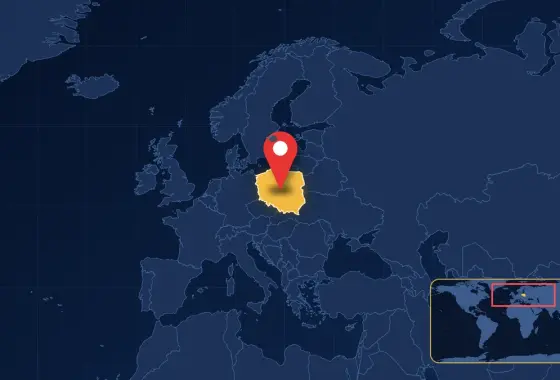
Poland occupies a strategic position on NATO’s eastern flank because of its proximity to Russia’s Kaliningrad region and the Ukrainian border. Reports of Russian drone and missile activity in the region came up frequently throughout 2026.
In August 2026, a large-scale, US-led NATO air exercise was held in the region, and AWACS aircraft were included in that exercise. The 26 November deployment shows the alliance’s monitoring activity in the region continuing; similar flights have been repeated at different intervals through the year.
Is tension with Russia continuing?
The ongoing war in Ukraine, along with recurring claims of Russian airspace violations against NATO member states, keeps the alliance’s eastern flank on alert.
NATO officials stress that such monitoring flights carry no offensive intent and are aimed only at deterrence and awareness; even so, each new deployment is read as a sign of the tension still present in the region. Alliance military officials repeat at every opportunity that these measures carry no escalation risk as long as they remain defensive in nature.
Why is Poland geographically sensitive?
To Poland’s north lies a roughly 65-kilometre-wide strip of land between Russia’s heavily militarised Kaliningrad exclave and Russia’s close ally Belarus. Military analysts know this strip as the "Suwałki Gap" and view it as a potential vulnerability that could cut the Baltic states off from NATO’s land connection.
That is why Polish airspace plays a central role in NATO’s eastern-flank monitoring, given its proximity to both the Baltic states and the Ukrainian border; it is no coincidence that AWACS flights concentrate in this area.
Who contributes to the Eastern Sentry mission?
According to NATO’s official statements, the mission is carried out through the joint contribution of many member states rather than a single country; different members have at times sent additional fighter jets, air-defence systems and naval assets to support it.
Within this structure, AWACS aircraft serve as "eyes and ears": they do not attack or defend themselves, but the radar data they gather speeds up decisions on which fighter jet should respond to which threat. This shows the mission is designed as a low-profile but continuous element of deterrence.
What happened in the region through 2026?
In August 2026 a large-scale, US-led NATO air exercise was held in the Poland-Baltic region, with AWACS aircraft taking part. In September, as Russian drones struck western Ukraine, Polish forces raised their air-defence alert level; no violation of Polish or wider NATO airspace was recorded during that period.
This string of events shows the Eastern Sentry mission is not a one-off reaction but a standing monitoring effort that has run, and at times intensified, since late 2025.
The future of NATO’s early-warning fleet
NATO has decided to gradually replace its ageing fleet of E-3 AWACS aircraft with new Boeing E-7 Wedgetail early-warning planes by the early 2030s. Until that transition is complete, the existing AWACS aircraft will keep flying missions over sensitive areas such as Poland.
Alliance officials say maintenance and flight demands on the current aircraft could rise until the fleet changeover is finished, which could in turn affect how many aircraft are available for deployment during periods of heightened tension in particular.
Why do similar deployments keep recurring?
NATO officials say AWACS deployments do not follow a pre-announced fixed schedule but shift according to threat assessments and intelligence input from the region. That is why fresh deployment reports over the same airspace can appear at short intervals; it does not necessarily mean the mission is suddenly expanding.
Analysts stress that such reports should be read together with developments on the front line of the war in Ukraine and reporting on Russian missile and drone activity, rather than in isolation.
Is civil air traffic affected?
NATO officials say AWACS flights are generally carried out in international airspace and military corridors, so they do not directly affect civilian passenger flights. Even so, some airlines may adjust routes as a precaution during periods of heightened regional tension.
Polish civil aviation authorities say no additional restrictions are typically applied following such deployments, and that airspace continues to operate normally. For passengers, the practical upshot is summed up as no noticeable change to flight bookings or arrival times; air traffic controllers in the region also continue working their normal shifts and issue no extra advisories.
What is AWACS and what does it do?
AWACS stands for Airborne Warning and Control System, and the aircraft is best known for the rotating radar dome mounted on a Boeing E-3 Sentry airframe. It can scan an area hundreds of kilometres wide, in the air and over the sea, detecting and tracking aircraft, ships and missiles in real time.
NATO’s 14 centrally owned AWACS aircraft are based at Geilenkirchen in Germany and flown with mixed crews drawn from different member states. The planes carry no weapons of their own, but they can relay the radar data they gather instantly to ground control centres and to fighter jets.
What is the Eastern Sentry mission?
NATO launched the mission it calls "Eastern Sentry" in September 2025, after Russian drones violated Polish airspace. Under the mission, air defence and early-warning capacity was strengthened along the alliance’s eastern flank, including Poland, the Baltic states and Romania.
Throughout 2026, NATO held large-scale air exercises in the region and stepped up AWACS flights, seen as part of the alliance’s effort to maintain deterrence against possible Russian air and drone threats.
What does this mean?
NATO again deploying an AWACS aircraft to monitor Polish airspace shows the alliance keeping its eastern flank on alert. It does not amount to direct confrontation with Russia; NATO runs these flights for deterrence and early warning. Air activity in the region will keep being watched alongside how the war in Ukraine unfolds.
This report was compiled as of 27 November 2026, 09:00 Türkiye time; figures and details may differ between sources and may be updated as events develop.
Frequently asked questions
What does AWACS do?
It scans an area hundreds of kilometres wide, detecting aircraft, ships and missiles in real time and relaying that data instantly to ground control units and fighter jets.
When did the Eastern Sentry mission begin?
It was launched in September 2025, after Russian drones violated Polish airspace, and has continued intermittently ever since.
Does this mean confrontation?
No; NATO runs these flights for deterrence and early warning.
How many AWACS aircraft are there?
NATO centrally owns 14 AWACS aircraft, based at Geilenkirchen in Germany.
Sources and further reading
- Euronews, “NATO deploys AWACS airborne radar to monitor Polish airspace”, 26 Kasım 2026.
- NATO, “NATO AWACS aircraft patrols NATO airspace for Eastern Sentry”, resmî yayın, Eylül 2025.
- Air & Space Forces Magazine, NATO AWACS ve Eastern Sentry görevine ilişkin haberler, 2026.
- Yahoo News / Reuters, “NATO launches Eastern Sentry mission after Russian drones violate Polish airspace”, Eylül 2025.
Cite this article
Use this article as a source in your work, assignment or blog:
YulaHub Editorial Team. (27 November 2026). NATO Deploys AWACS Aircraft to Monitor Polish Airspace. YulaHub. https://yulahub.com/en/nato-deploys-awacs-aircraft-to-monitor-polish-airspace
YulaHub Editorial Team. "NATO Deploys AWACS Aircraft to Monitor Polish Airspace." YulaHub, 27 November 2026, https://yulahub.com/en/nato-deploys-awacs-aircraft-to-monitor-polish-airspace.
<a href="https://yulahub.com/en/nato-deploys-awacs-aircraft-to-monitor-polish-airspace">NATO Deploys AWACS Aircraft to Monitor Polish Airspace</a> (YulaHub)




Leave a comment
Your email address will not be published. Required fields are marked *