



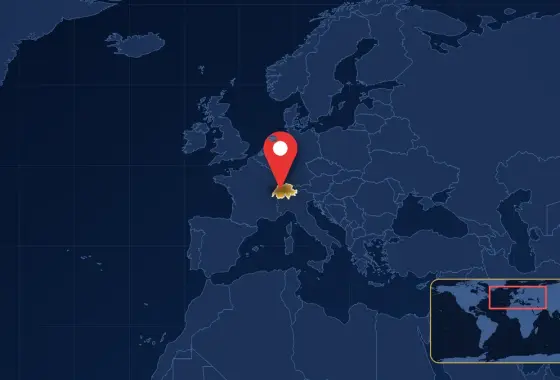
What happened?
On Wednesday, 25 November 2026, the European Parliament in Strasbourg approved by a wide margin the new package of agreements between the European Union and Switzerland. The vote was 584 in favour, 13 against and 60 abstentions, and it was taken without debate.
On the same day a 36-page report on bilateral relations was also adopted. The text, drafted by French member Christophe Grudler, passed with 554 votes in favour, 22 against and 79 abstentions.
According to Keystone-SDA, the vote completes the approval process on the European side. Grudler said the ball is now in Switzerland’s court.
What the package contains
Known in Switzerland as Bilaterals III, the package updates existing agreements and adds new ones. Electricity, health and food safety are among the main new areas.
According to the Swiss government, it was submitted to parliament as four separate federal decrees: one on stabilising existing agreements and three on the electricity, health and food safety agreements. Ninety-four EU legal acts are relevant to Switzerland under the package.
The agreements were signed in Brussels on 2 March 2026, and on 13 March the Federal Council approved its dispatch to parliament. Related laws on the European cohesion contribution, state aid monitoring and recognition of professional qualifications will also be examined.
Background to the relationship
Switzerland is not an EU member, but it is surrounded by EU countries and has very strong economic ties with them. It is the EU’s fourth most important trading partner, while the EU is Switzerland’s most important one.
Swiss voters rejected joining the European Economic Area in 1992. The two sides then signed broad packages of bilateral agreements in 1999 and 2004. Talks on an institutional framework agreement were ended by Switzerland in May 2021.
The new package aims to put the relationship on an updated footing after that break.
How the process will work in Switzerland
Entry into force depends on approval by the Swiss parliament and a popular vote. The Federal Council proposed an optional referendum, meaning a vote is held if enough signatures are collected.
Parliamentary committees are divided on the type of referendum; the political institutions committee reportedly recommended a mandatory one by 14 votes to 11. Because the two routes have different majority requirements, this dispute could affect the outcome.
According to secondary reports, parliament is expected to decide in spring 2027 and a popular vote is not expected before 2028. Switzerland also holds federal elections in autumn 2027. This timetable is not yet fixed.
The European Parliament’s remarks
The report mentions future topics such as a possible financial services agreement and Swiss participation in the EU Civil Protection Mechanism, possibly in 2028.
Parliament expressed regret at the Swiss government’s decision not to join the EU’s Copernicus space programme. The report also calls for coordination on a Gotthard road toll and asks the Commission to include Switzerland in the “roam like at home” arrangement.
Some outlets report that EU plans to favour European suppliers have caused concern in Switzerland and that the vote does not settle the issue.
What could change for people and companies?
If the whole package takes effect, it will create a new framework for the electricity market, health security cooperation and food safety rules. Updating the existing agreements is meant to clarify how the two sides align their rules.
Because the domestic process in Switzerland is not complete, no immediate change in daily life should be expected. Residence and work conditions for people from other countries, including Turkish citizens, depend mainly on national rules and separate arrangements; anyone with a specific case should consult official authorities.
What to watch
The next topics are committee work in the Swiss parliament, the decision on the type of referendum, the 2027 elections and any signature campaigns. On the EU side the approval is done, so attention now turns to Bern.
The arguments of supporters and opponents will become clearer during the campaign. Sovereignty, migration and economic relations are expected to be prominent.
Why do electricity, health and food matter?
Switzerland sits in the middle of Europe’s electricity grid and exchanges a great deal of power with its neighbours. A separate electricity agreement aims to set written rules for market participation and grid cooperation.
The health agreement targets cooperation against cross-border threats, and the food safety agreement targets alignment on product checks and standards. Given the intense trade and daily border crossings between the two sides, these topics can have practical effects.
The focus of the political debate
In Switzerland’s tradition of direct democracy, major agreements often go to a popular vote, so parliamentary approval alone will not be enough. The campaign is expected to debate how EU law is adopted, how disputes are settled and the limits of free movement.
It is not possible to say today which side will prevail. The information in this report rests on public sources and does not support any political choice.
What it means for the EU
For the EU, Switzerland is a close neighbour and a major trading partner. The broad support in Parliament shows a strong wish to update the rules of the relationship. Completion of the European side also brings clarity to the debate in Bern: the text is now ready for the other party as well.
The scale of economic ties
Trade in goods and services between Switzerland and the EU, together with thousands of cross-border workers and shared transport links, ties the two closely. Uncertainty about the rules can affect company investment plans and product access to the market. An updated legal framework aims to reduce that uncertainty.
The cost and obligations that come with the agreements will also be part of the Swiss debate.
How the approval process moves
On the EU side such international agreements require the European Parliament’s consent and a Council decision. The parliamentary vote is one of the most visible links in that chain. According to Keystone-SDA, it completes the process on the European side.
On the Swiss side, the federal structure and direct democracy make decision-making longer. Both chambers of parliament will examine the text separately, and the cantons’ views will carry weight in the debate.
The two timetables therefore move at different speeds. A quick vote in Europe does not mean a result is expected at the same speed in Switzerland.
Existing agreements remain in force until the new package takes effect, so there is no sudden change in trade or travel rules today.
Following current information from official Swiss and EU sources is the best way to stay updated as events progress.
Each new step will also show which way public support is heading, and debate is expected to intensify as a popular vote approaches.
The detailed texts are made public on the page the Swiss foreign ministry opened for the package, so interested readers can examine the topics first hand.
The picture in brief
The European Parliament approved the package by a wide margin, while the parliamentary and voter stages continue in Switzerland. The agreements are therefore not yet in force.
The key dates to follow are parliament’s decision and a possible popular vote. The issues of the debate will sharpen as the timetable becomes clearer.
Comparable models in Europe
Switzerland’s relationship with the EU is an example of a middle way between full membership and no agreement at all. Norway, Iceland and Liechtenstein join the single market through the European Economic Area, while Switzerland has preferred to move forward with sector-by-sector bilateral agreements.
The method offers flexibility but requires many texts to be kept up to date. The new package aims to meet that need, and the debate will focus on how to balance sovereignty with economic access.
What does this mean?
Completion of approval on the EU side is an important step in a bilateral relationship debated for years. The fate of the package now rests with the Swiss parliament and voters, and the process could run to at least 2028. Today’s vote should therefore be seen not as an end but as the start of a new stage. This assessment rests on the sources and is not a firm forecast.
This report was compiled as of 26 November 2026, 19:30 Türkiye time; figures and details may differ between sources and may be updated as events develop.
Frequently asked questions
Has the package taken effect?
No. The EU side is done; the parliamentary and popular process in Switzerland continues.
Is Switzerland an EU member?
No, relations run through bilateral agreements.
When is the popular vote?
Secondary reports say not before 2028; the timetable is not fixed.
What does the package cover?
Updates to existing agreements plus electricity, health and food safety.
Sources and further reading
- Keystone-SDA / blue News, “EU Parliament Approves the Switzerland-EU Treaty Package”, 25 November 2026.
- Swiss Federal Department of Foreign Affairs, “Package Switzerland-EU (Bilaterals III)”.
- SWI swissinfo.ch, “Swiss government hands over EU treaty package to parliament”, 2026.

Leave a comment
Your email address will not be published. Required fields are marked *