



What happened?
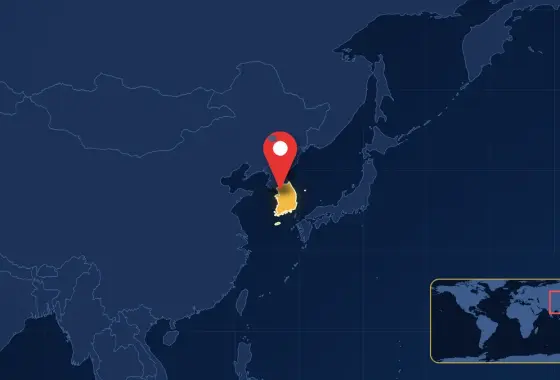
On Thursday, 26 November 2026, the Bank of Korea raised its base rate by 25 basis points from 3.00% to 3.25%, the highest level since November 2024. The decision matched market expectations: 32 of 34 economists in a Reuters poll had forecast it.
The vote was not unanimous. Five of the seven members of the Monetary Policy Board backed the increase, while two proposed keeping the rate at 3.00%.
It was the bank’s third increase of the second half of the year. After back-to-back hikes in July and August, the board paused at 3.00% in October and moved again at the November meeting.
A sharp upgrade to growth
The new forecasts released with the decision are striking. The bank raised its 2026 growth forecast from 3.3% to 3.9% and its 2027 forecast from 2.9% to 4.1%. If the 2027 figure is realised, it would be the fastest annual expansion since 2021. Growth of 3.0% is projected for 2028.
Behind a revision of this size lie semiconductor exports. According to reports, chip exports nearly quadrupled year on year to a record in the first 20 days of November and made up about half of total exports. The bank expects the upswing to continue through next year.
Real gross domestic product grew 1.0% from the previous quarter in the third quarter. Given that earlier forecasts for 2027 were far lower, the hopes policymakers now pin on the chip cycle are plain to see.
Inflation still above target
The other reason for the hike is prices. Consumer inflation was 2.8% year on year in October, while the bank’s target is 2%. Under the new projections average inflation will be 2.7% in 2026, 2.4% in 2027 and 2.1% in 2028.
The 2027 forecast was raised from 2.3% to 2.4%, indicating that price growth may stay above target for the next two years. Governor Shin Hyun-song said the economy is maintaining solid growth while inflation will run above target for a considerable period.
The bank said it will decide on matters such as the timing of further rate increases while monitoring inflation, growth and financial stability conditions. In other words there is no preset rate path; the approach is data-dependent.
Financial stability concerns
The statement highlighted not only inflation but also financial stability risks. The board pointed to faster growth in household borrowing and to the housing market in the Seoul metropolitan area. High expectations for house price gains are reported to be one of its key worries.
A higher rate aims to slow this trend by raising borrowing costs. But monthly payments can also rise for households with variable-rate loans and for heavily indebted firms. Central banks therefore have to curb inflation while keeping growth and borrowers in view.
Market reaction was limited. According to reports, the Kospi index rose about 1% on Thursday morning after a slide of more than 6% on Wednesday. A single day’s movement should not be read as a lasting trend.
The chip boom is not reaching everyone
There are imbalances behind the strong headline numbers. Private consumption fell in the third quarter, and consumer sentiment is said to have weakened after a stock market sell-off. Economists describe this as K-shaped growth: one part of the economy rises fast while another lags behind.
South Korea is one of the world’s leading makers of memory chips, and the surge in artificial intelligence investment is enlarging demand for them. Earlier in the year the country also announced that its exports had passed US$1 trillion for the first time. Yet such heavy concentration of exports in one product group can create vulnerability if the cycle turns.
The jump in the growth forecast therefore also shows how dependent the economy has become on chip prices and global demand. This is a reading of the figures in the sources rather than a firm conclusion.
What does a rate hike mean for people?
The policy rate is the reference for short-term transactions between banks and with the central bank. When it rises, loan and deposit rates usually rise too, although the speed and size of the pass-through differ between countries and lenders. In South Korea borrowing costs for mortgages and consumer loans are likely to go up, while savers may see higher deposit returns.
Such decisions can also affect the exchange rate. Higher rates usually increase interest in a local currency, but global risk appetite and US interest rates are also decisive. The sources give no firm forecast for the won.
Readers in Türkiye may follow the decision for indirect effects: Korea is an important player in electronics and automotive supply chains. This report, however, contains no concrete estimate of any impact on Türkiye.
What is expected next?
Economists in the Reuters poll expect one more increase, to 3.50%, in early 2027, and some local surveys suggest the peak could be 3.75%. These are forecasts and may change.
Data to watch include inflation, the pace of household lending, Seoul house prices, a recovery in private consumption and the path of chip exports. Changes in the pace of global artificial intelligence investment could also directly affect the picture.
The bank says it will reassess the data at each meeting, so no firm date has been given for the next move.
What does this mean?
South Korea is accelerating thanks to strong chip exports while trying to restrain price and housing pressures with higher rates. A 4.1% forecast for 2027 paints an optimistic picture, but growth leaning on one sector and weak domestic consumption need careful watching. The next steps will depend on inflation and lending data. This assessment rests on the sources and is not a firm forecast.
This article is for general information only and is not investment advice. Review the official data before making any investment decision and consult a licensed adviser if needed.
This report was compiled as of 26 November 2026, 09:00 Türkiye time; figures and details may differ between sources and may be updated as events develop.
Frequently asked questions
What is the new rate?
The base rate is 3.25% after a 25 basis point increase.
Why did the bank raise rates?
Faster growth driven by chip exports, above-target inflation and risks from household debt and the housing market.
What is the 2027 growth forecast?
It was raised from 2.9% to 4.1%.
Is another hike coming?
The bank says timing will depend on data; economists expect one more rise to 3.50% in early 2027.
Sources and further reading
- Seoul Economic Daily, “Bank of Korea raises rate to 3.25%, lifts 2027 growth outlook to 4.1%”, 26 November 2026.
- investingLive, “Bank of Korea hikes to 3.25%, sees 4.1% growth in 2027 as chip boom drives economy”, 26 November 2026.
- The Korea Times, “BOK raises key rate by quarter point to 3.25% as inflation concerns mount”, 26 November 2026.
- New Straits Times (Reuters), “BOK raises base rate by 25 bps to 3.25pct as expected”, 26 November 2026.





Leave a comment
Your email address will not be published. Required fields are marked *