



What happened?
On Wednesday, 25 November 2026, Yemen’s Houthis said they had attacked Saudi Arabia’s Ras Tanura oil refinery. Houthi military spokesman Yahya Saree claimed the strike started fires at the facility. Not every detail of that claim has been independently verified.
Satellite imagery from NASA and Planet Labs nonetheless showed thick black smoke over the installation, and a Reuters report cited a source with knowledge of the matter as confirming that the refinery was attacked.
The Saudi government and the state oil company Aramco had not responded to requests for comment when the reports were published, so the extent of the damage and any effect on output have not been officially stated.
What the coalition said
The Saudi-led coalition said on Wednesday that air defences had intercepted and destroyed four drones over Ras Tanura in the Eastern Province. The statement did not say the refinery had been hit.
A CNN report dated 26 November, citing a shipping source, said oil loadings at the terminal were suspended after the attack and that it was unclear whether they had resumed. Authorities have not confirmed this either.
In wartime, statements from the parties may not match. Claims in this report are therefore attributed to those who made them.
Why Ras Tanura matters
The Ras Tanura refinery can process 550,000 barrels a day. According to The National, it is Saudi Arabia’s oldest refinery and accounts for about 16 percent of the kingdom’s refining capacity.
The neighbouring export terminal is one of the largest crude loading points in the world, with a stated capacity of about 6.5 million barrels a day. Main buyers include Asian countries such as China, Japan, South Korea and India.
According to Reuters, the Red Sea port of Yanbu has gained importance since the US–Iran war, receiving oil through the pipeline that crosses the country from east to west. Ras Tanura nevertheless remains a key point of the energy infrastructure.
Earlier incidents in 2026
According to The National, Iranian drones first targeted the site this year on 2 March, two days after the US–Iran war began. Aramco shut the refinery and restarted it in mid-March.
Loadings at the terminal resumed in late June after a four-month halt. The Houthis had also claimed a ballistic missile strike on the complex on 27 October.
More broadly, Yemen’s frozen civil war reignited in July 2026 as a spillover from the US–Iran conflict. Since then the Houthis have said they targeted Saudi airports, oil infrastructure and office buildings. An attack on the east–west pipeline was reported on 9 November.
The attack on the Riyadh tower
Wednesday’s Houthi statement also claimed a strike on Riyadh’s financial district. Saudi civil defence had said that 11 people were wounded in an attack on the capital’s tallest building on Tuesday, 24 November.
The tower houses the headquarters of the Saudi Public Investment Fund. An earlier strike on the same building on 19 November caused damage but no reported injuries.
According to Reuters, the series of attacks temporarily disrupted some Aramco operations, led to the cancellation of most international flights to Riyadh and forced major events to be postponed or cancelled, including the Asian Cup and a large investment conference.
What matters for energy markets
Saudi Arabia is one of the world’s largest oil exporters, so any attack on a major facility can raise supply concerns. The price effect depends on the scale of damage, spare capacity and how long loadings are disrupted.
In 2019, strikes on Abqaiq and Khurais temporarily knocked out 5.7 million barrels a day of output. That example shows what infrastructure attacks can do, but every incident ends differently.
Citing Energy Ministry data, The National also recalled that attacks in April 2026 cut Saudi production capacity by about 600,000 barrels a day and east–west pipeline throughput by about 700,000.
What to watch next
The first question is whether Aramco or the Saudi energy ministry issues an official statement on damage and output. Tanker loadings at the terminal can also be followed through satellite images and shipping data.
The second is diplomacy. The regional dimension of the Yemen conflict, ceasefire efforts and airspace safety in the Gulf will shape the coming days.
Anyone planning travel to the region would be wise to check official travel advice and airline notices.
Who are the Houthis?
The Houthis, formally known as Ansar Allah, are an armed movement closely linked to Iran that controls large areas of north-western Yemen, including the capital Sanaa. The movement seized Sanaa in 2014, and in 2015 the Saudi-led coalition began its military intervention.
The long war largely quietened with a truce announced in 2022. As Reuters reports, that frozen conflict reignited in 2026. The United Nations has for years described Yemen as one of the world’s gravest humanitarian crises.
Civilians are directly affected by every new escalation. Access to food, health care and fuel should be followed alongside the military developments.
What satellite images can and cannot show
Commercial and official satellites can record externally visible signs such as smoke from fires or large areas of damage. NASA fire detection data and high-resolution Planet Labs images are often used for such events.
Smoke alone, however, does not say which unit was damaged, how much output fell or how long repairs will take. That needs a company statement, information from the ground and export data.
Some images circulating in wartime may come from earlier incidents. Readers should check the date and source of what they see.
Shipping and insurance
Attacks around large oil terminals can affect not only output but also tanker traffic. Shipowners weigh the security risk and recalculate routes, waiting times and war risk insurance premiums.
If loadings are delayed, buying countries may turn to their stocks or to other suppliers. Asian refiners rely heavily on Gulf crude, so developments are watched closely there.
Market perception is often shaped less by a single event than by the frequency of attacks and the number of facilities affected. Whether new strikes are reported in the coming days will therefore matter.
No further confirmation had come from Saudi authorities when this report was prepared; the picture may change as new information emerges.
Likewise, further Houthi statements should not be treated as established fact until compared with independent sources.
The picture in brief
What we know can be listed as follows: the Houthis claimed an attack, satellite images showed smoke rising from the facility, the coalition said it shot down four drones over Ras Tanura and Aramco had not yet spoken.
What remains unclear is which units were damaged, how far output and exports are affected and how long repairs will take. It is too early to judge the market impact before those questions are answered.
The report may be updated as events become clearer.
Regional effects
Gulf states have long treated the security of energy facilities as a priority. Although air defences can stop many drones, mass use of small, cheap aircraft can make defence harder.
If attacks continue, not only oil but also aviation, investment and large international events could be affected. Flight cancellations in Riyadh are an example already seen. Diplomatic efforts in the region are therefore being watched closely.
What does this mean?
The smoke visible from space means the Houthi claim has to be taken seriously, but the scale of damage is still not officially known. Targeting a major export point such as Ras Tanura shows that the war continues to threaten energy supply. Firm conclusions should wait for Aramco’s statement and loading data. This assessment rests on the sources and is not a firm forecast.
This report was compiled as of 26 November 2026, 19:30 Türkiye time; figures and details may differ between sources and may be updated as events develop.
Frequently asked questions
Has the attack been confirmed?
Satellites showed smoke and a Reuters source confirmed an attack; Aramco had made no official statement.
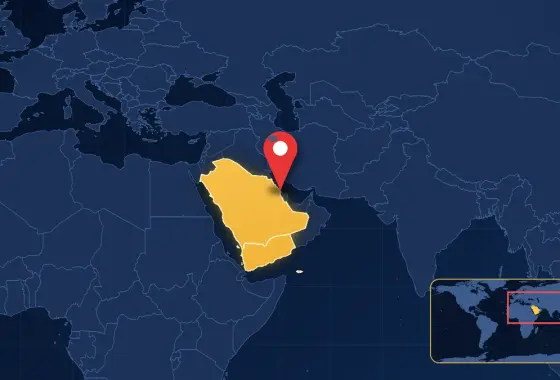
Where is Ras Tanura?
In Saudi Arabia’s Eastern Province on the Gulf coast.
What is the refinery’s capacity?
550,000 barrels a day.
Have loadings stopped?
A shipping source told CNN they were suspended; this is not officially confirmed.
Sources and further reading
- The National, “Saudi defences destroy drones in Ras Tanura as footage shows smoke from refinery”, 25 November 2026.
- Reuters / Algemeiner, “Yemen’s Houthis Say They Attacked Saudi Arabia’s Ras Tanura Refinery”, 25 November 2026.
- CNN, “Huge plume of black smoke seen from space after Houthis claim strike on Saudi’s biggest oil refinery”, 26 November 2026.

Leave a comment
Your email address will not be published. Required fields are marked *