



What happened?
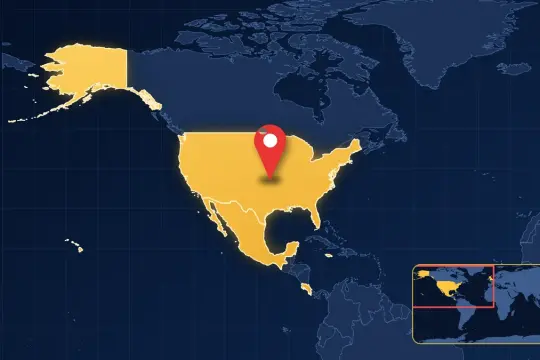
A US jury sitting in the federal court in Brooklyn found Chinese technology giant Huawei guilty on Tuesday, 24 November 2026, on ten of the twelve criminal counts it faced, including conspiracy to steal trade secrets, bank fraud, wire fraud and sanctions violations. According to Al Jazeera, citing AP and Reuters, and to Deutsche Welle, the jury acquitted the company and its three subsidiaries on the most serious count, a racketeering conspiracy, and on conspiracy to obstruct justice.
The verdict is an important stage in a case that began in 2018 and has long been one of the symbols of the technology rivalry between the United States and China. Huawei’s spokesperson and lawyer said they will take the verdict to appeal. Sentencing is expected next September, and according to the sources the company could face billions of dollars in penalties.
In the news sources the verdict is presented both as a win for US prosecutors and as a partial gain for Huawei, which escaped the heaviest charge. Below the charges, the evidence presented at trial and the statements of the parties are set out as far as the sources report them.
The jury’s verdict: which counts, which outcomes?
Huawei Technologies and three subsidiaries were tried on twelve counts. They included racketeering conspiracy, bank fraud, wire fraud, sanctions violations, conspiracy to steal trade secrets and conspiracy to obstruct justice. Deutsche Welle reports that the jury returned guilty verdicts on ten counts and acquitted the company on two — racketeering conspiracy and conspiracy to obstruct justice.
According to Al Jazeera, the racketeering conspiracy charge is normally used in organised-crime and drug cases. Prosecutors used it to try to show that Huawei operated in an illicit way to steal intellectual property from US companies. Huawei’s lawyer argued that this was the only count that tied all the allegations together and that the jury’s rejection of it amounted to a rejection of the government’s “central narrative”.
The convictions include the trade-secret conspiracy, which covers allegations that Huawei took technical information and software code from rival firms. The bank fraud, wire fraud and sanctions counts rest on the allegation that the company did business in sanctioned countries such as Iran and North Korea and made false statements to US banks and officials to hide it.
The prosecutors’ evidence and allegations
The trial lasted more than two months; prosecutors called more than sixty witnesses and the defence fifteen. Prosecutors showed jurors a series of examples that they said showed Huawei employees obtaining rivals’ products and technologies without permission. They included an engineer at a trade fair in Chicago who entered a rival firm’s booth and photographed circuit boards in a networking device, a video said to show an employee slipping a part of a T-Mobile testing robot into his backpack, and the photographing of a device at Fujitsu’s trade-show booth.
According to Deutsche Welle the victim companies included Cisco Systems, Motorola Solutions, T-Mobile, Quintel USA and Fujitsu. The US Department of Justice said the misappropriated intellectual property included “trade secret information and copyrighted works, such as source code and user manuals for internet routers, antenna technology, and robot testing technology”. Prosecutors also alleged that Huawei sold a router containing a rival company’s source code.
According to Al Jazeera, prosecutors tried to prove that Huawei took source code from Cisco for its routers, took Quintel’s antenna technology and hired a professor to gain access to a circuit board developed by semiconductor firm CNEX. The sanctions allegation was that Huawei did business in Iran and North Korea and made false statements to banks and officials.
Huawei’s defence and reaction
Huawei called the verdict unacceptable and said it would appeal. In a statement the company argued that the government’s remaining charges were equally “without legal or factual merit”. According to the company, the five trade-secret disputes cited by the prosecution were civil matters resolved over the past two decades; no court ever found Huawei liable for wilful intellectual-property misappropriation and the company was never ordered to pay damages for trade-secret misappropriation.
The company’s lawyer said prosecutors had “cherry-picked” a handful of disparate incidents to support a claim of a twenty-year conspiracy and that Huawei succeeded through “hard work, innovation and investment in research and development”. The defence also argued that the banks knew about Huawei’s business in Iran and were competing for Huawei’s business.
The defence argued that, in a company with more than 200,000 employees, the wrongdoing of a few staff had been turned into a narrative of a grand conspiracy. In the sources this appears as the view of the company and its lawyer.
Statements by US officials
After the verdict the US Attorney General said: “For decades, Huawei and three of its subsidiaries conducted their business in the United States on the basis of lies and theft.” The federal prosecutor in Brooklyn said that few crimes are as serious as Huawei’s decades-long pattern of endangering US national security, violating the sanctity of US commerce and impeding the enforcement of US laws.
These statements reflect the official side’s view; the sources also recall that the case is part of a years-long US policy of restricting Huawei on national-security grounds. Huawei has for years been unable to sell equipment to US carriers and has also been blacklisted by some other Western countries, including Canada and the United Kingdom.
The sources do not yet contain details of China’s official reaction to the verdict, so no comment on it is made here.
Background to the case: from 2018 to today
The case entered public attention in December 2018 when Huawei’s chief financial officer was detained in Canada on a US request. According to details reported by Al Jazeera, the executive had been secretly indicted for allegedly misleading a banker about Huawei’s business in Iran, fought extradition for nearly three years and finally entered a deferred prosecution agreement and returned to China, after which the charges were dropped. The episode had caused a diplomatic crisis among the United States, China and Canada.
The 2018 indictment alleged that Huawei misled HSBC, Standard Chartered and BNP Paribas about its dealings in Iran. In 2020 prosecutors added new charges, alleging that Huawei conspired for two decades to steal trade secrets from US technology companies. In 2019 the US government had placed Huawei on a trade blacklist restricting its access to US technology.
Experts say the case has not damaged Huawei’s business as much as expected, that the company has diversified and has become a key player in China’s push for artificial intelligence. Huawei operates in around 170 countries and employs more than 200,000 people.
What happens next?
Huawei said it will appeal the convictions; an appeal can take years. The sentencing hearing is due next September and the company faces the risk of billions of dollars in penalties. In the sources that figure is referred to as a possible penalty the company faces; no exact amount is stated.
The effect of the verdict on Huawei’s global position is uncertain; according to AP and Reuters it is not yet clear how it will affect the company’s operations worldwide. Because the company already cannot sell to US carriers, the direct commercial impact may be limited, though consequences for reputation and for policies in other countries are conceivable.
The main points to watch ahead are the scope of Huawei’s appeal, the penalties sought at the September hearing, effects on US–China technology and trade tensions and whether other countries’ policies towards the company change. None of these is certain at present.
What does this mean?
The verdict is a significant conviction in the US government’s long legal fight against Huawei, but the acquittal on the heaviest charge and Huawei’s determination to appeal show that the process is not over. Its symbolic weight in the US–China technology rivalry is large; since the company’s US market access is already limited, the direct commercial effect is unclear. The size of the penalty will become clear at the September hearing. This assessment rests on the information in the sources and is not a firm forecast.
This report was compiled as of 25 November 2026, 09:00 Türkiye time; figures and details may differ between sources and should be followed as developments are updated.
This article is for general information only and is not investment advice. Review the official data before making any investment decision and consult a licensed adviser if needed.
Frequently asked questions
Which counts was Huawei convicted of?
The jury found the company guilty on ten counts, including conspiracy to steal trade secrets, bank fraud, wire fraud and sanctions violations.
Which counts did it beat?
It was acquitted of racketeering conspiracy and of conspiracy to obstruct justice.
What will Huawei do?
The company and its lawyer said they will appeal; the sentencing hearing is due next September.
Will this affect Huawei’s sales in the United States?
The company has for years been unable to sell equipment to US carriers anyway; the global effect of the verdict is not yet clear.
Sources and further reading
- Deutsche Welle, “US jury convicts Huawei of violating sanctions, stealing trade secrets”, 25 November 2026.
- Al Jazeera (AP and Reuters), “Chinese tech giant Huawei found guilty of conspiracy to steal trade secrets”, 24 November 2026.
- US Department of Justice, Eastern District of New York, basın açıklaması / press release, 24 November 2026 (kaynaklarda aktarıldığı kadarıyla / as quoted in the sources).
Leave a comment
Your email address will not be published. Required fields are marked *