



What happened?
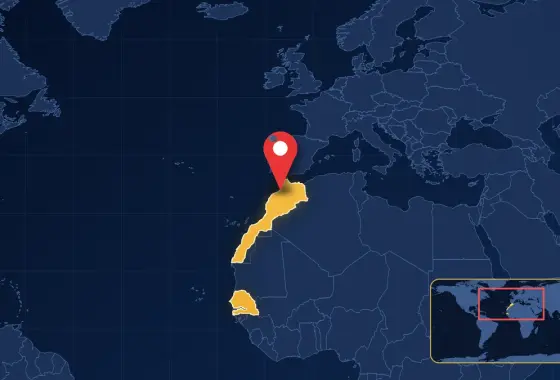
The Court of Arbitration for Sport (CAS) upheld on Tuesday, 24 November 2026, the appeal brought by the Senegalese Football Federation (FSF) against a decision of the Confederation of African Football (CAF). The decision of the CAF Appeal Board, which had declared Morocco champions of the 2025 Africa Cup of Nations with a 3-0 forfeit win, was thereby set aside and Senegal was reinstated as champion. According to the CAS statement quoted by Deutsche Welle, the Appeal Board decision is set aside, the decision of the CAF Disciplinary Board is reinstated and the result obtained at the end of the final is confirmed.
The final was played in Rabat on 18 January 2026, and Senegal won 1-0 after extra time. The ruling came about eight months after that eventful match. The Royal Moroccan Football Federation (FRMF) said it would not accept the decision and would pursue “all necessary legal avenues”.
The most disputed dispute in African football this year therefore appears to have ended at the arbitration level, but Morocco’s statements show that the legal dimension of the argument may continue. Below, the reasoning of the ruling, the background of the events and the reactions of the parties are set out as far as the sources report them.
What had happened in the final?
According to the sources, the final at the Prince Moulay Abdellah Stadium in Rabat was goalless as it neared the end of regulation time. After a VAR review the referee awarded Morocco a penalty in the closing minutes. In protest at the decision, Senegal’s players left the pitch for about 15 minutes, and fans tried to storm the field.
When play resumed, Morocco’s penalty was saved by Senegal’s goalkeeper. The match went to extra time and Senegal scored in extra time to win 1-0. The trophy was handed to Senegal on the pitch and the team celebrated the title.
After the incidents CAF’s Disciplinary Board imposed fines totalling more than one million dollars and bans on players and officials of both countries, but left the match result untouched. Morocco appealed, and the process moved to the CAF Appeal Board.
What had the CAF Appeal Board decided?
In March the CAF Appeal Board accepted Morocco’s appeal. The board said that Senegal’s conduct fell under Articles 82 and 84 of the tournament regulations and that by leaving the pitch the team had forfeited the match. The result was changed to 3-0 in Morocco’s favour and Morocco was deemed to have won its first African title since 1976.
The decision was met with sharp reaction in Senegal and in part of the African football public. The Senegalese Football Federation called it “unfair, unprecedented and unacceptable” and decided to go to the Court of Arbitration for Sport. The FSF’s appeal reached CAS on 25 March. The sources note that CAS usually takes a long time to decide such files.
In the meantime it remained unclear who held the trophy, and tension between the two countries’ federations and fans continued for months. Voices in football circles said the dispute had damaged the reputation of African football.
The CAS reasoning: the “field of play” doctrine
The CAS panel, ruling unanimously, said that the decision to restart the match lay within the referee’s sole authority. According to the reasoning quoted by Euronews, when the referee blew his whistle “both teams were on the pitch again, and both expressed their willingness to resume”, so the conditions for resuming the match had been met.
The panel said that the effects of the referee’s decision were limited to the pitch and therefore had to be treated under the “field of play” doctrine. Under that doctrine CAS does not review decisions taken by referees on the pitch unless the rules were applied arbitrarily or in bad faith. The panel accepted that the referee had to decide in an atmosphere of extreme tension but said this did not justify calling the decision “arbitrary”.
The panel also said that Articles 82 and 84 of the CAF tournament regulations apply only when a team’s conduct leads a referee to abandon a match permanently and so did not apply in this case. Morocco’s argument that the referee should have ended the match early was also rejected. The file had been heard behind closed doors in Lausanne on 8 October.
Morocco’s reaction and possible legal routes
After the ruling the Royal Moroccan Football Federation said in a statement that it would follow “all necessary legal avenues”. The federation said it objected to the rejection of its request to postpone the decision and that it could take the matter to Switzerland’s Federal Supreme Court, which sits in Lausanne. According to Euronews that court examines procedural issues rather than the merits of a dispute.
The federation also alleged that the German member of the three-person CAS panel had been in contact with the FSF president about 48 hours before the decision and argued that this cast a shadow over the integrity of the arbitration. According to a report based on the French broadcaster RMC Sport, sources close to the FSF denied that any such conversation took place. This allegation has not been independently confirmed at this stage and is reported as an allegation.
The federation further argued that the ruling did not take into account the approach recently adopted by FIFA and IFAB on players leaving the pitch without the referee’s permission and the disciplinary consequences. These criticisms appear in the sources as Morocco’s position.
The Senegal side and the outcome
Detailed reactions from the Senegalese side are limited in the sources, but it is clear that the ruling is an important gain for the federation of a country that lifted the trophy on the pitch, was later stripped of the title and has now regained it. The sources contain no detailed quotation in which the Senegalese side described the ruling as justice being done, so no such interpretation has been added.
The wording of the CAS statement is striking: “The decision rendered by the CAF Appeal Board is set aside and the decision by the CAF Disciplinary Board is reinstated. Consequently, the result obtained at the end of the AFCON 2025 final is confirmed.” This means that the original 1-0 score is officially valid.
At the same time, because that part of the decision was not set aside, the fines and bans imposed by the CAF Disciplinary Board straight after the final appear, as described in the sources, to remain in force; the sources, however, contain no separate CAS statement on this point.
Why does it matter in sports law?
The decision became an example of how strongly the referee’s on-field authority is protected in sports law. The “field of play” doctrine is one of the basic principles limiting the ability of federation bodies to change a referee’s in-game decision after the event. CAS applying it to the final of a continental tournament may also create a reference for which rules federations can rely on to impose sanctions in similar incidents.
On the other hand, for critics of the ruling, players leaving the pitch in protest is a serious matter for sporting discipline and may not be adequately met by administrative sanctions alone. This debate raises the question of whether the governing bodies of football will set clear rules for similar situations.
News sources report that the long duration of the dispute has harmed the reputation of both CAF and the tournament. In the coming days it will be watched whether Morocco applies to the Swiss court and how CAF responds to the ruling.
What does this mean?
The ruling has a legal outcome in Senegal’s favour for the 2025 Africa Cup of Nations title, but Morocco’s objection and a possible application to the Swiss Federal Supreme Court could keep the process alive. More broadly, the file has reopened the debate on where the line is drawn between the referee’s authority on the pitch and the disciplinary authority of federations. Morocco’s allegations about the arbitration panel remain allegations unless confirmed. This assessment rests on the information in the sources and is not a firm forecast.
This report was compiled as of 25 November 2026, 09:00 Türkiye time; figures and details may differ between sources and should be followed as developments are updated.
Frequently asked questions
What exactly did CAS decide?
CAS upheld Senegal’s appeal and set aside the CAF Appeal Board decision; the 1-0 result of the final was confirmed and Senegal counts as champion.
What was the ruling based on?
The panel said the referee’s decision to restart the match fell under the “field of play” doctrine and that Articles 82 and 84 of the CAF regulations did not apply to this incident.
Can Morocco challenge the decision?
Morocco’s federation said it will pursue all legal avenues and could go to Switzerland’s Federal Supreme Court, which generally examines procedural questions rather than the merits.
Has Morocco’s allegation about the CAS panel been confirmed?
No. The federation alleged contact between an arbitrator and the FSF president; sources close to the FSF denied it and the allegation has not been independently verified.
Sources and further reading
- Deutsche Welle, “CAS reinstates Senegal as 2025 AFCON champions”, 24 November 2026.
- Euronews, “Senegal reinstated as AFCON champions as Morocco vows to fight on”, 24 November 2026.
- Anadolu Agency, “Morocco to challenge sports arbitration ruling reinstating Senegal as 2025 Africa Cup of Nations champions”, 24 November 2026.
- Court of Arbitration for Sport (CAS), basın açıklaması / media release, 24 November 2026 (kaynaklarda aktarıldığı kadarıyla / as quoted in the sources).

Leave a comment
Your email address will not be published. Required fields are marked *