



Iran’s statement: what is being claimed?
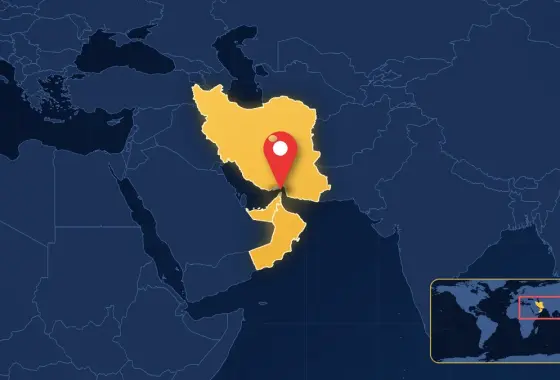
The naval forces of Iran’s Islamic Revolutionary Guard Corps (IRGC) said in a statement on Monday, 23 November 2026 that three oil tankers transiting the Strait of Hormuz caught fire and exploded after hitting naval mines. According to Al Jazeera’s live page of 24 November and Middle East Eye’s relay, the statement was carried by Iran’s state news agency IRNA and said the incidents had taken place in the preceding hours. According to the Iranian account, one of the tankers was near the strait’s southern coast and two were in its eastern part.
According to the IRGC statement, all three ships were passing under US air cover and escort, which failed to prevent the incidents. The IRGC said the vessels had used routes Iran had not authorised and that a US escort does not exempt ship operators from Iran’s traffic-control instructions. These statements are Iran’s one-sided claim, and the sources contain no independent verification.
Is there independent verification? Why do the numbers differ?
None of the sources gives the ships’ names, flags, owners, cargoes or crew status. In earlier similar Iranian statements, agencies such as Reuters noted that they could not verify them, and the reports this time are framed the same way. Some sources speak of two tankers, others of three, and another relays that the IRGC said six tankers burned and sank in two days. The differences may come from statements made at different times or from outlets relaying different Iranian statements.
All we can say in this report, therefore, is that the sentence “the IRGC claimed this” is accurate; whether the ships actually hit mines, the cause of the fires and whether there were casualties are not verified. It is important for readers to keep in mind that in wartime all sides can shape their information flow to suit their interests.
Earlier similar claims
Similar claims have surfaced repeatedly from mid-September through November. In an Al Jazeera report of 18 October Iran said two tankers hit mines and caught fire; in mid-November it was reported that the IRGC announced four tankers had been destroyed on a “prohibited route” and two more vessels seized. Each time independent outside verification was limited; a UKMTO report noted separately that one tanker was struck by an unidentified projectile with no crew injuries.
This recurring pattern shows that some of what happens in Hormuz can be verified but an important part rests on one-sided statements. This report therefore presents every detail as a claim.
US escort and the counter-blockade
According to the sources, the United States is applying a naval counter-blockade against Iranian oil exports; according to the Congressional Research Service (CRS) the blockade began on 13 April 2026. Iran says ships that switch off their navigation systems and use “unauthorised” routes will be considered hostile; IRGC naval commander Rear Admiral Ali Azmaei had issued such a warning. The message that a US escort does not exempt ships from Iranian control is delivered in the same frame.
The incident therefore draws a picture of two rival authorities claiming security and right of passage in the same narrow waterway. The sources contain no new US statement on the details of its escort practice and its role in this incident, so there is as yet no confirmation or denial from the US side.
Energy markets and global trade
The International Energy Agency (IEA) says the Iran war has caused the largest disruption ever to global oil and gas trade. According to Kpler data, crude shipments through Hormuz fell in November to about 8.5 million barrels a day, roughly half the prewar level. Because Hormuz is a narrow passage through which a large share of seaborne oil trade flows, any disruption there can put pressure on freight, insurance and prices.
The effect of this incident on oil prices has not been measured in the sources; market data would need to be consulted to judge the price reaction. The mine danger may be an additional risk factor affecting routing decisions for insurers and shipowners, but beyond the “fresh warning for shipping companies” phrase relayed by the Sunday Guardian, the sources give no detail.
Iran’s domestic and diplomatic picture
Reports also relay concern inside Iran about the effect of gas shortages and war hardships on public mood. On Monday the United States also imposed new sanctions on Iran’s financial networks, and Trump said he is inclined to return to strikes after the New Year if talks produce no result. Against that backdrop, the fire claims at Hormuz emerged at a time of simultaneous military and diplomatic pressure.
The effect of these claims on negotiations is not assessed in the sources. Still, that the IRGC statement carries a message stressing the inadequacy of the US escort suggests the claim may have a political dimension; that is an interpretation, not information verified by the sources.
What to watch
The main points to follow are whether independent sources verify the ships’ identities and damage, statements from UKMTO or shipping companies, reactions from the United States, the United Arab Emirates and Oman, new Iranian statements, movement in insurance and freight rates, and the course of US–Iran talks. These are follow-up points consistent with the sources and may change as events develop.
The most reliable sources on maritime security will be UKMTO and the official announcements of the states concerned. This report only summarises press accounts and does not verify any party’s claim.
What does this mean?
In the short term the IRGC statement shows that both the mine threat in Hormuz and the tension between the US escort and Iran’s claim to traffic control continue. Because the events rest on one-sided Iranian statements, the actual damage and the number of ships are uncertain. For markets and shipowners what matters most is whether independent verification arrives. These readings rest on information relayed by the sources and are not firm forecasts.
This report was compiled as of 24 November 2026, 09:00 Türkiye time; figures and details may differ between sources and should be followed as developments are updated.
This article is for general information only and is not investment advice. Review the official data before making any investment decision and consult a licensed adviser if needed.
Frequently asked questions
What is being claimed?
The IRGC says three oil tankers hit naval mines and caught fire and exploded; the claim was carried by Iran’s state news agency IRNA.
Is there independent verification?
No. The sources give no ship names, flags, owners or crew status; the claim is relayed as one-sided.
Why do the numbers differ?
Some sources say two tankers, some three; one relays that the IRGC said six in two days. This may reflect statements made at different times.
How is traffic through Hormuz?
According to Kpler data, daily crude shipments in November were about 8.5 million barrels, roughly half the prewar level.
Sources and further reading
- Al Jazeera, “Iran war live: Iran says three ships catch fire after hitting Hormuz mines”, 24 November 2026.
- Middle East Eye, “Three tankers explode in Strait of Hormuz”, live blog, 24 November 2026.
- The Jerusalem Post, “IRGC: Three tankers hit mines, exploded while transiting Hormuz with US support”, 24 November 2026.
- Press TV, “Three oil tankers catch fire after hitting naval mines in Strait of Hormuz: IRGC Navy”, 23 November 2026.
- Sunday Guardian, “Iran claims 3 oil tankers exploded after striking naval mines in Strait of Hormuz”, 24 November 2026.
Leave a comment
Your email address will not be published. Required fields are marked *