



What happened?
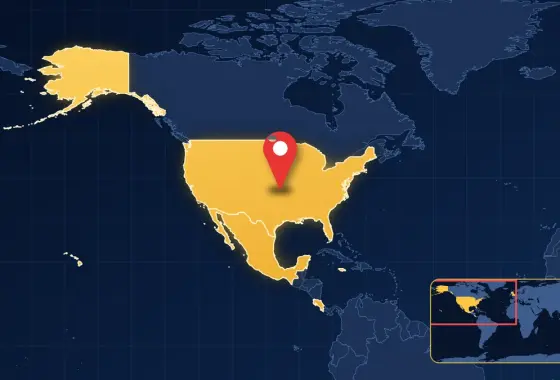
FIFA’s 211 member associations, meeting virtually at an Extraordinary Congress on Monday, 23 November 2026, appointed the hosts of the 2031 and 2035 FIFA Women’s World Cups. According to FIFA’s media release, the 2031 tournament will be co-hosted by the United States, Mexico, Costa Rica and Jamaica, and the 2035 tournament will be staged by England, Northern Ireland, Scotland and Wales. Both bids were approved by acclamation, that is, without a ballot.
ESPN reports that both bids ran unopposed: the four-nation Concacaf bid for 2031 and the joint application of the four UK associations for 2035 were the only valid bids in the process. The congress decision was therefore less a competitive election than a long-expected confirmation. It came roughly 20 months after the FIFA Council started the hosting process in March 2025.
FIFA also noted that the process comes almost exactly 35 years after the opening match of the first Women’s World Cup, played by 12 teams in 1991. The tournament has grown since then in both the number of participants and audience interest, and the decision makes the next stage of that growth, the 48-team format, permanent.
2031: co-hosting across four countries
The 2031 tournament will be the first edition of the women’s competition to feature 48 teams; the number of teams rises from 32 to 48 and the number of matches from 64 to 104. FIFA President Gianni Infantino and US Soccer Federation President Cindy Parlow Cone promised commercially successful tournaments and said all the revenue would be reinvested in women’s football. In her presentation to the congress, Parlow Cone said this would be “the largest women’s sporting event in history”.
The bid offers FIFA stadium options in 20 cities: 14 in the United States, four in Mexico, one in San José, the capital of Costa Rica, and one in Kingston, the capital of Jamaica. FIFA’s evaluation report rated the bid 4.4 out of five. The US-led bid had earlier projected tournament revenue of 4 billion dollars; after the decision Parlow Cone said that “if we do it right we probably will surpass that”.
The United States previously hosted the Women’s World Cup alone in 1999 and 2003; the national team’s 1999 win was the second of its four titles. Parlow Cone said she knows first-hand what hosting can do for a country, that she wanted the same for the whole region, and invited listeners to imagine what it will mean for Jamaica’s national team, known as the “Reggae Girlz”, to play a World Cup match in their home stadium.
2035: the United Kingdom for the first time
The 2035 edition will be the first World Cup the United Kingdom hosts since the men’s tournament of 1966. According to ESPN, the country failed in its earlier attempts to host the men’s World Cups of 2006 and 2018; the UK will also host the men’s European Championship in 2028. The joint bid of the four associations received 4.3 out of five in FIFA’s evaluation.
So far 19 venues have been put forward as part of the bid: 14 in England, two in Scotland, two in Wales and one in Northern Ireland. The English stadiums proposed include Wembley, Old Trafford, the Emirates, the Etihad, the Tottenham Hotspur Stadium, St James’ Park, Villa Park and Everton’s Hill Dickinson Stadium. Wales offers the Principality Stadium and Cardiff City Stadium, Scotland Hampden Park and Easter Road, and Northern Ireland a redeveloped Windsor Park.
Debbie Hewitt, chair of the English Football Association, addressed the congress after the bid’s success was confirmed, thanking members for their trust and confidence in awarding the 2035 tournament and saying it was a great honour. The UK bid is also notable for bringing four separate national associations together in a single application.
FIFA’s evaluation and the caveats
According to the evaluation reports FIFA published on 11 November, both bids met the minimum requirements for hosting. For the UK bid, the report said the contractual framework was rated “medium risk”. It noted that the bidder had submitted an extensive set of government support documents and contractual hosting agreements, but that certain government guarantees, particularly those relating to safety and security and to tax, contain qualifications.
The same report said certain contractual matters remain subject to further discussion, but that the bidder’s proactive engagement with FIFA and the substantial lead-in time provide a sound basis for resolving the outstanding issues. In other words the report describes the problems not as gone but as solvable. Tax and security guarantees of this kind are among the most contested parts of the legal and financial framework of any giant sporting event.
The sources contain no comparable detailed caveats for the 2031 bid; they report only its score and the number of venues. It would therefore be wrong to comment on a comparative risk between the two bids; the organisational details of both tournaments will become clearer over the coming years.
Why does the 48-team format matter?
Raising the number of teams from 32 to 48 means more countries get a chance to take part in a World Cup. According to ESPN, FIFA wants to bring the women’s tournament into line with the men’s; the men’s World Cup was also played this year with 48 teams in the United States, Canada and Mexico. The rise in matches, from 64 to 104, enlarges both the organisational load and the revenue potential.
Prominent in Infantino’s speech were making women’s football truly global, closing the gaps that still exist, and developing more women players, coaches, referees and administrators. Infantino said football belongs to everyone, that this requires opportunity, development and infrastructure, and that all of that requires resources. How much of these goals will be achieved depends on how tournament revenue is used.
Risks of expansion are also debated: more teams can mean wider gaps in competitive level in some matches. In the sources, however, this appears as a general talking point and not as a criticism of FIFA’s decision; this report reaches no firm verdict on it.
The next steps
The congress decision settled the hosts, but details such as stadium selection, the host-city and match schedule, ticket pricing and investment in facilities and infrastructure now have to be set. Which of the 20 cities will be chosen for 2031 and on what dates the tournament will be played is not yet in the sources. For 2035 it is said that further stadiums may be added to the list of 19; Chelsea’s possible new stadium, Wrexham’s redeveloped ground and Birmingham’s new 62,000-capacity Powerhouse Stadium are named among them.
The main points to watch ahead are the resolution of the open issues on the UK’s government guarantees, city selection and match allocation for 2031, the revenue split between FIFA and the hosts, and concrete commitments on reinvesting revenue in women’s football. These are follow-up points consistent with the sources and may change as events develop.
What does this mean?
The decision gives women’s football a long-term roadmap in two major markets, North America and the United Kingdom, with the expanded 48-team format. With unopposed bids there was no contest at the congress; the real test will be whether the promised revenue and the reinvestment goals for women’s football materialise, and whether the safety and tax guarantees are finalised. These readings rest on the information relayed by the sources and are not firm forecasts.
This report was compiled as of 24 November 2026, 19:00 Türkiye time; figures and details may differ between sources and should be followed as developments are updated.
Frequently asked questions
Where will the 2031 tournament be played?
The United States, Mexico, Costa Rica and Jamaica are joint hosts; the bid offers stadium options in 20 cities: 14 in the US, four in Mexico, one in San José and one in Kingston.
Who will stage the 2035 tournament?
England, Northern Ireland, Scotland and Wales will stage it jointly; it will be the UK’s first World Cup since the men’s tournament of 1966.
How many teams will take part?
From 2031 the number of teams rises from 32 to 48 and the number of matches from 64 to 104.
Was there a contest?
No. Each bid was the only valid application and was approved by acclamation at the virtual congress of 211 member associations.
Sources and further reading
- FIFA, “Extraordinary FIFA Congress appoints hosts of 2031 and 2035 editions of FIFA Women’s World Cup”, 23 November 2026 (media release).
- ESPN, “U.S. to co-host Women’s World Cup in 2031; U.K. wins bid for 2035”, 23 November 2026.
- Anadolu Agency, “Morning Briefing: Nov. 24, 2026” (sports section), 24 November 2026.
- FIFA, “Bid evaluation reports for 2031 and 2035 editions of FIFA Women’s World Cup published”, 11 November 2026.


Leave a comment
Your email address will not be published. Required fields are marked *