



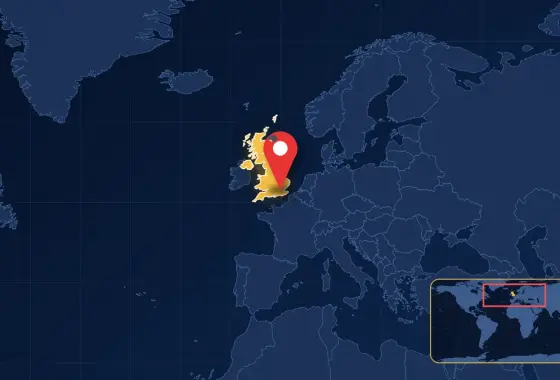
What exactly happened at DWP?
The UK’s Department for Work and Pensions (DWP) took some of its online services offline as a precaution on Friday morning after detecting a cyber incident affecting its systems on Thursday evening. In its official statement on GOV.UK, the department said it had "taken some DWP online services offline as a precaution after we identified a cyber incident affecting our systems".
UK Prime Minister Andy Burnham’s spokesperson told journalists that authorities were investigating the incident and that it remained "live and ongoing". The spokesperson added that there was "currently no evidence to suggest a malicious actor has targeted other departments". That statement reaffirmed that the incident is, for now, seen as confined to DWP, though the investigation remains at an early stage.
Which services were affected, and which were not?
Affected services include online services for pensioners, as well as Universal Credit and Personal Independence Payment (PIP) application systems. These three digital systems are used regularly by millions of people across the UK.
The department specifically stressed that benefit and pension payments are unaffected and continue to be paid as normal. It said citizens who need help should call their usual benefit line, where DWP staff will support them.
Which agencies is the department working with?
DWP said it is working closely with the UK’s National Cyber Security Centre (NCSC) and the Government Cyber Coordination Centre to investigate the incident, restore services online as quickly as possible, and minimise disruption.
The department also warned citizens about phishing attempts, reminding them that DWP will never ask for personal information via text message or email, and pointed them to GOV.UK guidance on avoiding and reporting internet scams.
As the UK government’s national coordinating body for cybersecurity, the NCSC provides technical investigation support in large-scale public-sector incidents; its involvement here signals the incident is being treated as a nationally monitored security matter rather than a purely local IT problem.
Is the cause and scope of the incident known?
As of publication, it was not disclosed exactly what the cyber incident was, who might be responsible, or when services would return to normal. Both DWP’s official statement and Euronews’ report stressed that the investigation remains at a "live and ongoing" stage, meaning details are limited for now.
Euronews noted that the incident is the latest in a series of cyber disruptions in the UK that have shown just how reliant society has become on technology, a list that has recently included a Microsoft outage and attacks affecting some smart home devices.
What is the practical impact for citizens?
For a pensioner unable to access their online account, or someone trying to apply for Universal Credit, the safest route is to call the relevant helpline listed on GOV.UK and inform DWP staff of the issue. The department confirmed that staff will provide support in the meantime.
Payments being unaffected stands out as one of the most important reassurances in the short term, but citizens who need online access for applications or account queries may need to wait until services are restored or apply by phone instead.
For those in the middle of a PIP application with a specific deadline to meet, this kind of disruption can be stressful; the department stressed that applicants affected should report their situation by phone, and their case will be handled without delay.
What comes next?
DWP and the UK government may share further information as the investigation continues; the GOV.UK page is being kept updated with a "last updated" section that can be monitored for changes. It has not yet been announced when services will be fully back to normal.
The growing frequency of cyber incidents targeting UK public bodies could bring more attention to the government’s cybersecurity investment and crisis-communication protocols in the period ahead.
What does this mean for the UK’s cybersecurity policy?
A cyber incident at a public department that millions of people interact with regularly puts the security dimension of the government’s public-service digitisation strategy back in the spotlight. The Prime Minister’s spokesperson saying there is "no evidence" pointing to other departments suggests the incident is, for now, seen as confined to one department, though this remains an early-stage assessment.
The UK had said after October’s wide-reaching PHP vulnerability that it would review its cybersecurity protocols; this new incident at DWP shows once again how often the interconnected digital systems of public bodies are being tested.
Cybersecurity experts say taking services offline as a precaution is a standard method public bodies use to stop a breach from spreading before its scale grows; DWP’s swift response can therefore be read as a cautious measure as much as a sign of how serious the incident is.
What is DWP and how many people does it serve?
The UK’s Department for Work and Pensions (DWP) is the country’s largest public service department, administering the State Pension and a wide range of benefits for working-age, disabled and ill-health claimants.
The department serves around 20 million people and is supported by 14 agencies and public bodies, a scale that explains why a disruption to DWP systems can affect such a large population.
What are Universal Credit and PIP, and who relies on them?
Universal Credit is the UK’s core welfare programme for working-age citizens on low incomes or out of work, merging six separate benefits into a single monthly payment. Applications and account management are run largely through an online portal, which explains why a disruption to the system can affect so many people.
Personal Independence Payment (PIP) is a payment that helps disabled people or those with long-term health conditions cover the extra costs of daily living and mobility. Because both programmes are directly tied to the regular livelihood of millions of people, any disruption to access can cause serious concern among citizens even when the payments themselves are unaffected.
What other recent cyber incidents has the UK seen?
In October 2026, more than 30 UK government services were temporarily taken offline because of a critical vulnerability found in a widely used programming language through AI-assisted research; the National Cyber Security Centre (NCSC) sent warnings to more than 50,000 organisations over the issue.
This chain of incidents shows how dependent public institutions have become on interconnected digital systems, where a single vulnerability or cyber incident can cause widespread disruption; the latest incident at DWP is seen as part of this same pattern.
What does this mean?
Taking the online systems of a department that serves close to 20 million citizens offline as a precaution shows how dependent the day-to-day running of public services has become on digital infrastructure. While unaffected payments limit the immediate crisis, the incident being described as "live and ongoing" means the scope and cause remain uncertain until official updates provide more clarity.
This report was compiled as of 27 November 2026, 19:30 Türkiye time; figures and details may differ between sources and may be updated as events develop.
Frequently asked questions
Which DWP services were affected?
Online services for pensioners, Universal Credit and Personal Independence Payment (PIP) application systems were affected.
Will my pension or benefit payment be delayed?
No; DWP said all payments continue to be made as normal.
Has the cause or culprit been identified?
No; as of publication the incident was described as "live and ongoing", with no further details disclosed.
What should citizens do?
Those unable to access online services should call the relevant helpline listed on GOV.UK and stay alert to phishing attempts.
Sources and further reading
- Euronews (Jonathan Benton), “‘Live and ongoing’ cyber incident takes down UK Department for Work and Pensions online services”, 27 Kasım 2026.
- GOV.UK / Department for Work and Pensions, “Temporary disruption to some DWP online services”, resmî duyuru, 27 Kasım 2026.
Go deeper

Cite this article
Use this article as a source in your work, assignment or blog:
YulaHub Editorial Team. (27 November 2026). UK’s DWP Takes Online Services Offline After ‘Live and Ongoing’ Cyber Incident. YulaHub. https://yulahub.com/en/uks-dwp-takes-online-services-offline-after-live-and-ongoing-cyber-incident
YulaHub Editorial Team. "UK’s DWP Takes Online Services Offline After ‘Live and Ongoing’ Cyber Incident." YulaHub, 27 November 2026, https://yulahub.com/en/uks-dwp-takes-online-services-offline-after-live-and-ongoing-cyber-incident.
<a href="https://yulahub.com/en/uks-dwp-takes-online-services-offline-after-live-and-ongoing-cyber-incident">UK’s DWP Takes Online Services Offline After ‘Live and Ongoing’ Cyber Incident</a> (YulaHub)
Leave a comment
Your email address will not be published. Required fields are marked *