



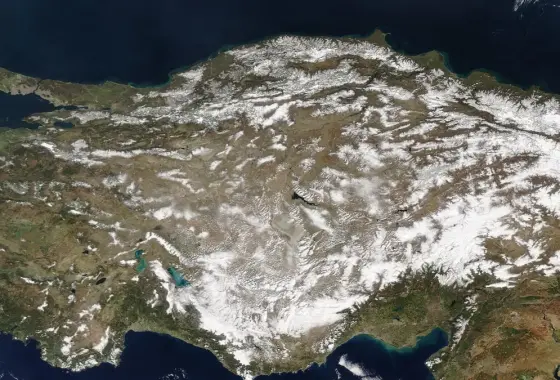
When Ottoman lands were occupied at the end of the First World War, the War of Independence that began in Anatolia was led by the Grand National Assembly of Türkiye, which opened in Ankara on 23 April 1920. After victories at the Battle of Sakarya (1921) and the Great Offensive (1922), the sultanate was abolished on 1 November 1922.
Lausanne and the proclamation of the republic
The Treaty of Lausanne, signed on 24 July 1923, recognised the borders and independence of the new Turkish state internationally. Ankara was made the capital on 13 October 1923, and on 29 October 1923 the republic was proclaimed, with Mustafa Kemal Pasha unanimously elected its first president.
The age of reforms
The caliphate was abolished on 3 March 1924 and education was unified under a single system. The Turkish Civil Code was adopted in 1926, and in 1928 a new Latin-based Turkish alphabet replaced the Arabic script. Women gained the right to vote and stand for election in municipal elections in 1930 and in parliamentary elections in 1934, the same year the Surname Law was passed. Far-reaching changes were also made to measures, the calendar and dress.

Multi-party politics and ties with the West
After Atatürk’s death on 10 November 1938, İsmet İnönü became president. Türkiye stayed neutral for most of the Second World War and was a founding member of the United Nations in 1945. Multi-party politics began in 1946, and in the 1950 election power changed hands through the ballot box for the first time. Türkiye joined the Council of Europe in 1949 and NATO in 1952, and became a candidate for European Union membership in 1999.
Recent decades
The republic experienced military interventions in 1960, 1971 and 1980; the 1982 Constitution is still in force. Following a constitutional referendum in 2017, a presidential system of government took effect in 2018. With a population of more than 85 million, Türkiye is a G20 member and a bridge between Europe and Asia.
The early years of the economy
Even before the republic was proclaimed, the İzmir Economic Congress, which met on 17 February 1923, debated the economic priorities of the new state. In 1925 the tithe, a heavy burden on farmers, was abolished. After the 1929 world economic crisis the state took a more active role in industrialisation: Sümerbank was founded in 1933 and Etibank in 1935, and the First Five-Year Industrial Plan was put into practice in 1934. Textile, sugar, paper and glass factories opened in various Anatolian cities during this period.
Population and censuses
The republic's first general population census was held on 28 October 1927 and recorded a population of about 13.6 million. Since then the population has grown more than sixfold. Since 2007 the count has been carried out every year through the Address-Based Population Registration System; according to the 2024 result announced by TurkStat, the population exceeded 85.6 million. Most people now live in cities, and Istanbul, Ankara and İzmir are among the most populous provinces.
Cultural heritage
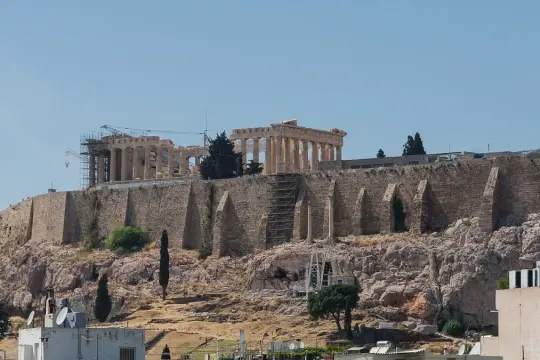
Thanks to thousands of years of history in Anatolia, Türkiye has a rich cultural heritage. The Historic Areas of Istanbul, Göreme and Cappadocia, and Hattusha were among the first Turkish sites inscribed on the UNESCO World Heritage List, in 1985–1986. In later years sites such as Göbeklitepe, Ephesus, Aphrodisias, Arslantepe and Gordion were added, bringing the number of world heritage sites in Türkiye to more than twenty. In addition, many traditions appear on UNESCO's Intangible Cultural Heritage lists.
Sources and further reading
- Turkish Historical Society, publications on the history of the Republic of Türkiye.
- Presidency of the Republic of Türkiye, “The Founding of the Republic of Türkiye”.
- Grand National Assembly of Türkiye, “History of the Assembly”.
- Encyclopaedia Britannica, “Turkey: History”.
- TurkStat – "Address Based Population Registration System Results, 2024" and "General Population Censuses, 1927–2000"
- UNESCO World Heritage Centre – "Türkiye" country page
People also ask
When was the Republic of Türkiye founded? The Republic of Türkiye was founded on 29 October 1923, when the Grand National Assembly proclaimed the republic.
Who founded the Republic of Türkiye? Its founder and first president was Mustafa Kemal Atatürk.
When did Ankara become the capital of Türkiye? Ankara became the capital on 13 October 1923, shortly before the republic was proclaimed.
When did the Grand National Assembly of Türkiye open? The Assembly opened in Ankara on 23 April 1920; the date is celebrated as National Sovereignty and Children’s Day.





Leave a comment
Your email address will not be published. Required fields are marked *