



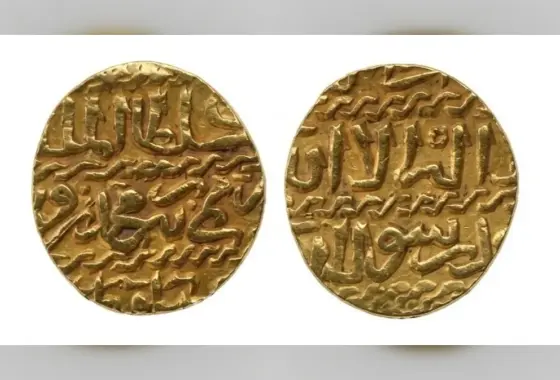
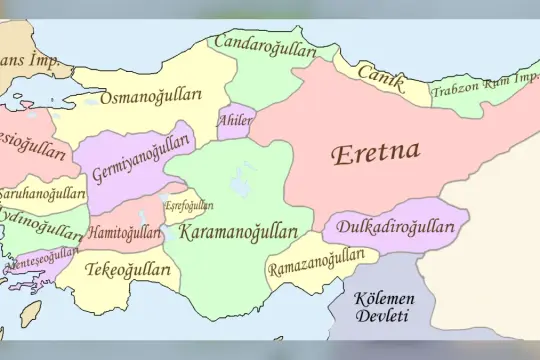
The Karamanids were founded, as the Seljuk Sultanate of Rum weakened, by Karaman Bey, leader of Turkmen tribes living in the Taurus Mountains around Ermenek and Mut. The beylik later made Larende (today’s city of Karaman) its centre and also took Konya.
The 1277 decree
Karaman Bey’s son Mehmed Bey briefly captured the Seljuk capital Konya in 1277. According to the sources, he issued a decree there that no language other than Turkish should be used in the court, the lodge, the assembly or the public square. This decree is the basis of Turkish Language Day, celebrated in Türkiye every 13 May.
Rivalry with the Ottomans
Seeing themselves as heirs of the Seljuks, the Karamanids long competed with the Ottomans for leadership of Anatolia. Alaeddin Ali Bey, although married to a daughter of Murad I, fought the Ottomans several times and was defeated by Bayezid I in 1397. After the Battle of Ankara in 1402, Timur restored the beylik.
The final years
The beylik grew stronger for a time under Ibrahim II Bey. After his death, however, Mehmed II took advantage of succession disputes and conquered most Karamanid lands between 1468 and 1474. The last resistance of the Karamanid beys ended in the 1480s, and the region became the Ottoman province of Karaman.
Legacy
The Karamanid period left important marks on Anatolian Turkish architecture, such as the Hatuniye Madrasa in Karaman and mosques in Ermenek and Konya. Traditions also link the poet Yunus Emre to the region.
Nure Sufi and Karaman Bey: the roots of the beylik
The sources name a Turkmen leader called Nure Sufi as the ancestor of the dynasty. His son Karaman Bey became head of the tribes around Ermenek and Mut in the Taurus Mountains in the mid-13th century, and the Anatolian Seljuk sultans used this powerful Turkmen group as a frontier force on the border of the Armenian Kingdom of Cilicia. Its origin in a mountainous, well-protected region is one reason the beylik was able to resist Mongol pressure and Ottoman attacks for so long.
Monuments in Karaman and Ermenek
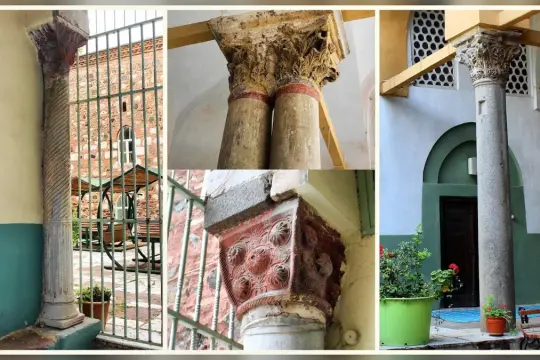
The Karamanid period is known for buildings that carried Seljuk architecture into the age of the beyliks. The Great Mosque of Ermenek was built in 1302 under Mahmud Bey. The İbrahim Bey İmaret in Karaman (1432) is a complex that brings together a mosque, a madrasa and a tomb. Before settling in Konya, the family of Rumi lived for several years in Larende, where his mother Mümine Hatun died; her grave is today in the Aktekke (Mader-i Mevlana) Mosque in Karaman.
Alliances with Venice and the Aq Qoyunlu
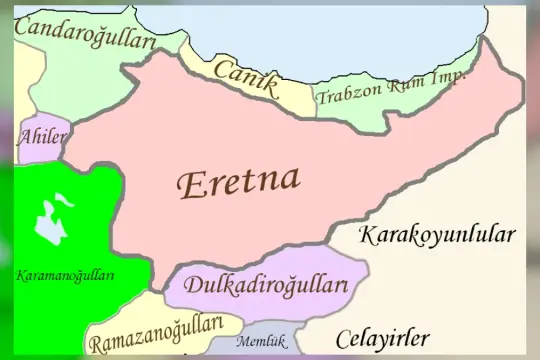
In the beylik's final years, Karamanid princes looked for outside support against Mehmed II. The Aq Qoyunlu ruler Uzun Hasan and the Republic of Venice, then at war with the Ottomans, were the main partners in this alliance. In 1472 a Venetian fleet reached the coast of Cilicia and helped return several fortresses to the Karamanids. But when Uzun Hasan was defeated at Otlukbeli in 1473 the alliance fell apart, and the beylik's coastal lands soon passed to Ottoman rule as well.
The later life of the name "Karamanli"
The beylik's name survived its fall as the name of the region: in Ottoman times the south of Central Anatolia was known as the "Karaman Eyalet". The name "Karamanli" was also used for Turkish-speaking Orthodox Christians; this community wrote Turkish in Greek letters, a script known as Karamanlidika. The printed books of the Karamanlides, who were sent to Greece in the 1923 population exchange, are now an important source for historians of the language. Karaman became a province in 1989.
Frequently asked questions
Why is Turkish Language Day on 13 May? It is accepted as the date of Karamanoğlu Mehmed Bey’s decree.
Where does the name Karaman come from? From the founder, Karaman Bey; the city of Larende came to be called after him.
Sources and further reading
- Şikârî, Karamanname.
- Türkiye Diyanet Vakfı İslâm Ansiklopedisi, “Karamanoğulları”.
- Turkish Language Association, statements on Turkish Language Day.
- Encyclopaedia Britannica, “Karaman”.
- TDV Encyclopedia of Islam – "Karamanoğulları" entry
- Encyclopaedia Britannica – "Karaman"
- Evangelia Balta – studies on Karamanlidika books (Karamanlidika bibliography)
People also ask
What was the Karamanids? The Karamanids were a Turkmen principality founded in the mid-13th century around Ermenek and Larende (Karaman) in Anatolia.
When was the Karamanids founded? Founded: Mid-13th century (c. 1256), Karaman Bey.



Leave a comment
Your email address will not be published. Required fields are marked *