



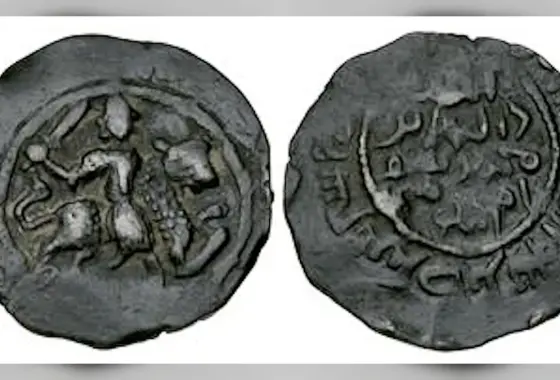
The Danishmendids were founded by Danishmend Ahmad Gazi, one of the Turkmen chiefs who came to Anatolia after the victory at Manzikert in 1071. Known in the sources by the epithet “danishmend” (scholar), he established a principality centred on Sivas.
Against the Crusaders
During the First Crusade the Danishmendids cooperated with the Seljuk sultan Kilij Arslan I. In 1100 near Malatya they captured Bohemond, Prince of Antioch, who was released only in 1103 for a ransom. The Danishmendids also played a large part in defeating the new crusader armies that entered Anatolia in 1101.
The era of Malik Gazi
Under Danishmend Gazi’s son Malik Gazi (Gümüshtegin) the principality reached its peak, ruling a wide area reaching Malatya, Kayseri and Kastamonu. The Abbasid caliph and the Seljuk sultan recognised him with the title “malik” (king).
Culture
Mosques, tombs and madrasas from the Danishmendid period survive in Niksar, Tokat and Kayseri. The Danishmendname, recounting Danishmend Gazi’s campaigns in Anatolia, is an important example of the Turkish epic tradition; it was written down in later centuries.
End
From the mid-12th century family divisions weakened the principality. In the 1170s the Seljuk sultan Kilij Arslan II took the Danishmendid lands step by step, and with the elimination of the Malatya branch in 1178 the Danishmendids passed into history.
Founding and position in Anatolia
The Danishmendids were one of the main political organisations of the Turkmen groups that came to Anatolia after the Battle of Manzikert in 1071. The founder of the beylik, Danishmend Ahmed Gazi, is called in the sources by the epithet “danishmend”, meaning scholar. Their centres were initially around Sivas and Tokat; cities such as Niksar, Amasya and Çorum were also important points in the beylik’s lands. This region is a transit area where trade routes from the Black Sea to central and eastern Anatolia intersect, so the Danishmendids held a strategically important geography both militarily and economically.
In the same period other Turkmen beyliks and the Anatolian Seljuk state were also gaining strength. Relations between the Danishmendids and the Anatolian Seljuks turned at times to cooperation and at times to fierce rivalry. Both sides wanted to fill the vacuum created by Byzantine withdrawal. Turkmen tribes living in the frontier areas carried out constant raids within the ghaza tradition, and these raids were among the basic elements of the process of Turkification of Anatolia. Because some sources mix information about the Danishmendids with legendary narratives, historians must compare different sources when establishing the chronology of events.
Relations with Byzantium, the Crusaders and neighbouring powers
After the First Crusade, the Danishmendids emerged as one of the main Turkish powers resisting the Crusader armies in Anatolia. The sources describe the capture of Bohemond, Prince of Antioch, near Malatya in 1100 and his release for ransom a few years later. This event both slowed the Crusader states’ advance in Anatolia and showed the weight of the Danishmendid ruler in eastern Mediterranean diplomacy. The ransom bargaining also drew the Byzantine Empire into the process, because Byzantium followed Crusader movements in Anatolia closely in its own interest.
Relations with Byzantium were also complex. The beylik at times fought Byzantium and at times made agreements. It also had border problems with surrounding powers such as the Kingdom of Georgia, Armenian principalities and the Crusader states in Syria. In its strong period the beylik controlled a wide area reaching Malatya, Kayseri and Kastamonu. These broad borders made administration difficult, because relatives serving in various regions sometimes quarrelled with each other. These divisions within the family later became one of the factors that made it easier for the Anatolian Seljuks to eliminate the beylik.
Cultural legacy, the Danishmendname and the end
From the Danishmendid period, mosques, tombs and madrasas have survived in Niksar, Tokat, Sivas and Kayseri. The Great Mosque and the Yağıbasan Madrasa in Niksar are counted among the early examples of Turkish architecture in Anatolia. These buildings show that the beylik was concerned not only with military affairs but also with construction and education. They share features with other Seljuk buildings of the period in terms of stonework and the use of arches and domes.
The Danishmendname, on the other hand, belongs to the tradition of folk narrative compiled in the 13th century, telling the struggles of Danishmend Gazi and his successors. The work interweaves historical events with legend, so it should be assessed not as a firm historical source but as a product of Anatolia’s ghaza tradition and popular memory. The end of the beylik came in the 1170s: the Anatolian Seljuk sultan Kılıç Arslan II took the Danishmendid lands and brought the region under his rule. Thus Turkish political unity in Anatolia became concentrated around the Seljuks. Historians see the Danishmendids as a beylik with a distinct cultural and political identity that played a role, together with the Seljuks, in Anatolia becoming a Turkish homeland.
The Danishmendids and the Turkification of Anatolia
The Danishmendids formed an important link in the process of Anatolia’s Turkification and Islamisation. The beylik founded institutions supporting settled life around Sivas, Tokat and Niksar, including mosques, madrasas and endowments. While nomadic Turkmen tribes moved between winter and summer pastures, a population engaged in crafts and trade formed in the cities. This dual structure supported both the beylik’s military strength and its economic vitality.
Relations with the Greek and Armenian communities living in the region were also part of the beylik’s social fabric. The sources show that part of the local Christian population continued to live under beylik rule, while mixed settlements formed in some areas. This shows that the Turkification of Anatolia was not a one-way, sudden process but took place through an interaction lasting centuries. Historians, despite limited sources, regard the role of the Danishmendid period in this process as one of the basic subjects of Anatolian history.
Where do we see the Danishmendid legacy today?
Danishmendid traces can be seen today especially in Niksar, Tokat, Sivas and Kayseri. The Great Mosque and Yağıbasan Madrasa in Niksar and early-period buildings in Sivas and Tokat are important examples for those who want to follow the first steps of Turkish architecture in Anatolia. The castle and walls around Niksar also recall the strategic importance of the beylik. The Danishmendname remains a subject of research for the study of folk narratives and the epic tradition. Preserving and documenting this heritage is of great importance for understanding the region’s historical identity; visitors and researchers are advised to assess these buildings together with the sources.
Sources and further reading
- Türkiye Diyanet Vakfı İslâm Ansiklopedisi, “Dânişmendliler”.
- Osman Turan, Selçuklular Zamanında Türkiye.
- Encyclopaedia Britannica, “Dānishmendid dynasty”.
- Türkiye Diyanet Foundation Encyclopaedia of Islam – “Dânişmendliler” entry
- Osman Turan – Selçuklular Zamanında Türkiye
- Encyclopaedia Britannica – Danishmend dynasty
- Türkiye Diyanet Foundation Encyclopaedia of Islam – “Dânişmendliler” entry
- Osman Turan – Selçuklular Zamanında Türkiye
People also ask
What was the Danishmendids? The Danishmendids were a Turkmen principality founded in central and northern Anatolia by Danishmend Gazi after the victory at Manzikert.
When was the Danishmendids founded? Founded: After Manzikert (1071).
When did the Danishmendids end? End: 1178, Kilij Arslan II.





Leave a comment
Your email address will not be published. Required fields are marked *