



How many drones were launched overnight?
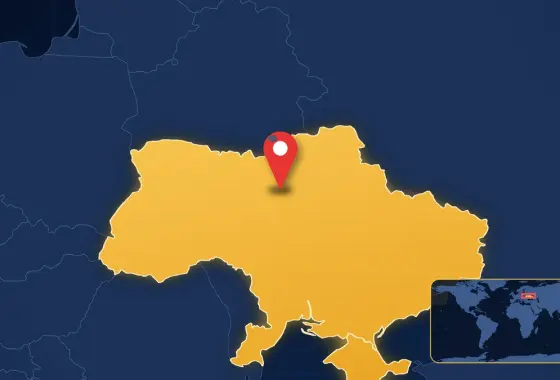
The attack on Ukraine ran without pause from the evening of Thursday 26 November. According to Ukrainian authorities, Russian forces used a total of 155 strike drones, 51 of them jet-powered, alongside Parodiya-type decoy drones. Ukraine’s air defence said it shot down 110 of these drones, though the remaining UAVs struck numerous locations.
Ukrainian Prime Minister Sergey Koretskiy announced on Telegram that the overnight attack targeted railways, the energy sector, civilian enterprises and residential buildings in nine regions. According to Koretskiy, the strike was one of the most intense waves against Russia’s campaign on energy infrastructure in recent months, coinciding with the onset of winter.
Ukraine’s First Deputy Energy Minister Artem Nekrasov said that by morning, part of the consumers in Dnipropetrovsk, Zaporizhzhia, Kirovohrad, Sumy, Kharkiv and Kherson regions were left without power. In Dnipropetrovsk region, he said, engineers were forced to carry out emergency shutdowns after equipment damage and a voltage drop on the high-voltage grid.
Where did the casualties and damage occur?
One of the most severe outcomes was in Nizhyn, Chernihiv region, where a strike on an enterprise killed two people, with officials saying others may be trapped under rubble. In Izium, Kharkiv region, an 86-year-old woman was killed and six people were injured; blocks of flats, private houses, administrative buildings and vehicles were damaged, and fires broke out across parts of the city.
In Dnipropetrovsk region, more than 20 drone strikes across five districts killed one person and wounded two others in Kryvyi Rih. On the morning of 27 November, drone strikes on the Shevchenkivskyi and Kyiv districts of Kharkiv injured three more people. Together, the figures show the attack stretched across a wide arc of eastern and south-eastern Ukraine rather than hitting a single location.
Officials cautioned that these are initial figures compiled by morning, and that casualty and damage counts could be updated as clearance work at the sites continues through the day.
How was the energy system affected, and why was electricity export halted?
According to the November economic overview from the Centre for Economic Strategy (CES), Ukraine completely halted electricity exports after the Russian attack of 20 November, and imports reached their highest level since mid-June. That means Ukrainian producers who earned export revenue during the war have lost that income, while the country must buy more electricity from neighbours to meet rising winter demand at home.
Since September, Russia is reported to have carried out more than 1,000 strikes on Ukraine’s energy system, targeting not only generation facilities but also the high-voltage substations through which electricity reaches consumers. Analysts say this approach aims to disable critical nodes in the distribution network rather than individual power plants, producing wider and longer-lasting blackouts.
Kyiv Independent reported on 27 November that this shift shows how damage to the grid is straining Ukraine, which increasingly relies on imports to meet domestic needs while losing export revenue for Ukrainian producers.
What did Ukraine’s counter-strikes target?
The same night, Ukrainian drones struck a combined heat and power plant belonging to the Rosatom state corporation, as well as a synthetic rubber plant, in Yefremov in Russia’s Tula region. According to Euronews, this was at least the third strike on the chemical complex over the past year.
A separate Kyiv Independent report said Ukraine’s General Staff confirmed the operation was carried out in cooperation with the Black Spark resistance movement operating inside Russia. In September, Ukraine’s military had claimed the Yefremov plant produces components of solid rocket fuel for Iskander operational-tactical missile systems; the plant has been under Ukrainian sanctions since May 2023.
Ukrainian President Volodymyr Zelensky said Ukraine’s strikes on Russian refineries and defence-industry sites had produced "results" in Samara, Nizhny Novgorod, Krasnodar, Rostov, Volgograd, Stavropol, Bryansk, Perm, Bashkortostan and Tatarstan, as well as in the Black Sea. "Ukraine is absolutely right to respond to every Russian strike," Zelensky said, thanking Ukraine’s defence forces for accurate targeting.
What was the impact on the Russian side?
Russian officials reported a heavy overnight drone attack on Saint Petersburg and Leningrad region, with regional authorities saying 45 drones were shot down. In Novorossiysk, three people were injured in a drone attack, while in Bryansk region two people were killed by a drone strike and a dropped explosive device.
Russia’s Defence Ministry said 318 Ukrainian drones were shot down overnight across 10 regions, including over annexed Crimea. These figures have not been verified by an independent source, and both sides in the war tend to report high success rates for their own air defences while downplaying the other side’s hits; the numbers are therefore reported as official claims rather than confirmed facts.
Ukrainian forces also said they destroyed a camouflaged oil depot in occupied territory in Luhansk region that Russian forces were using to supply fuel to their units.
What comes next?
With winter under way, the intensifying strikes on energy infrastructure point to further strain on Ukraine’s heating and electricity supply in the coming weeks. The halt in electricity exports and rise in imports are issues to watch for their impact on both budget revenue and grid reliability.
Ukraine is expected to continue its counter-strikes on Russian energy and defence-industry sites, and international observers are closely watching whether this cycle of mutual strikes continues through the rest of the winter.
Why does Russia’s winter strike strategy target energy infrastructure?
Since the full-scale invasion began in 2022, Russia has launched intense waves of strikes on Ukraine’s energy system every winter. The aim is seen less as hitting direct military targets than as disrupting basic services such as electricity, heating and water supply to put pressure on the civilian population and the economy.
More recently, strikes have shifted from individual power plants toward the high-voltage substations through which electricity reaches consumers; analysts say this approach can cause wider and longer-lasting blackouts with fewer hits. The more than 1,000 strikes reported since September point to the continuity of this strategy.
How do Ukraine’s electricity imports and exports work?
Before the war, Ukraine sold electricity to its neighbours; during periods of intense Russian strikes, it can shift to importing electricity from the European grid (ENTSO-E) instead. These shifts can change quickly depending on the grid’s capacity at the time and the severity of the attacks.
A complete halt in electricity exports means both that Ukrainian energy producers lose foreign-currency revenue, and that rising winter demand at home must be met with more expensive imported electricity, adding further strain on the country’s budget and energy bills.
What does this mean?
The wave of strikes on the night of 26-27 November shows Russia is continuing its strategy of weakening Ukraine’s energy system through the winter months. The complete halt of electricity exports is a concrete sign of how fragile Ukraine’s energy balance has become in the war’s third winter. This assessment rests on the official figures reported; the casualty and damage toll may change as clearance operations continue.
This report was compiled as of 27 November 2026, 19:30 Türkiye time; figures and details may differ between sources and may be updated as events develop.
Frequently asked questions
How many drones were used in the attack and how many were shot down?
Ukrainian authorities said a total of 155 strike drones were launched, 51 of them jet-powered, of which 110 were shot down by air defence.
How many people were killed in the attack?
According to information compiled by morning, deaths were reported in Nizhyn, Izium and Kryvyi Rih; the final toll may be updated as clearance operations continue.
Why did Ukraine halt electricity exports?
According to the Centre for Economic Strategy, exports were completely halted after the 20 November attack due to strain on the grid, with imports reaching their highest level since mid-June.
What did Ukraine’s counter-strike target?
Ukrainian drones struck a Rosatom-linked energy facility and a chemical plant in Russia’s Tula region that has been alleged to produce components for Iskander missiles.
Sources and further reading
- Euronews (Serhiy Dubyna), “Russian drone strikes hit Ukraine’s energy, rail and civilian infrastructure, causing deaths”, 27 Kasım 2026.
- Kyiv Independent, “Ukraine stops electricity exports as Russian attacks strain power grid”, 27 Kasım 2026.
- Kyiv Independent, “Ukrainian forces strike ballistic missile fuel production plant in Russia’s Tula Oblast, military confirms”, 27 Kasım 2026.
- Centre for Economic Strategy (CES), Kasım 2026 ekonomik görünüm raporu (Euronews aktarımı).
Cite this article
Use this article as a source in your work, assignment or blog:
YulaHub Editorial Team. (27 November 2026). Russia Hits Ukraine’s Energy, Rail Infrastructure; Halts Electricity Exports. YulaHub. https://yulahub.com/en/russia-hits-ukraines-energy-rail-infrastructure-halts-electricity-exports
YulaHub Editorial Team. "Russia Hits Ukraine’s Energy, Rail Infrastructure; Halts Electricity Exports." YulaHub, 27 November 2026, https://yulahub.com/en/russia-hits-ukraines-energy-rail-infrastructure-halts-electricity-exports.
<a href="https://yulahub.com/en/russia-hits-ukraines-energy-rail-infrastructure-halts-electricity-exports">Russia Hits Ukraine’s Energy, Rail Infrastructure; Halts Electricity Exports</a> (YulaHub)

Leave a comment
Your email address will not be published. Required fields are marked *