



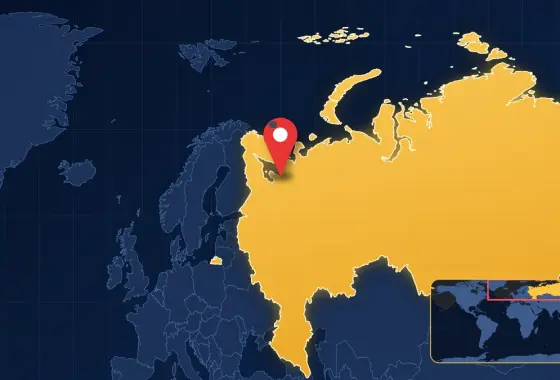
What happened at the Severodvinsk ceremony?
Russian President Vladimir Putin witnessed the formal entry of the country’s newest nuclear-powered submarine, Perm, into the navy during a flag-raising ceremony on Friday at the Sevmash shipyard in Severodvinsk. According to Euronews, Perm is the fifth Yasen-M class submarine to join the Russian fleet in six years.
A flag-raising ceremony marks the point at which a submarine has completed construction and sea trials and formally enters the active naval inventory, moving Perm beyond a symbolic unveiling into an operational naval asset. The vessel can now take part in routine patrol and training missions.
What kind of submarine is Perm?
Perm belongs to the Yasen-M class, known as Project 885M, and is the first nuclear-powered attack submarine specifically designed to carry Zircon hypersonic cruise missiles. These missiles are known for travelling at several times the speed of sound, posing a challenge to existing air defence systems.
Some military analysis sources suggest Perm is also configured to carry the nuclear-capable underwater drone Poseidon, a feature that positions the vessel as part of Russia’s strategic deterrence capability as well, drawing attention to the vessel on a global, not just regional, scale.
How did this submarine’s timeline unfold?
Perm’s construction was first publicly marked when it was launched in March 2025, with Putin taking part by video link from Murmansk, where he met Navy Commander Admiral Aleksandr Moiseev aboard the submarine’s sister vessel, Arkhangelsk. A launch marks the stage where a ship’s construction is complete but sea trials have not yet begun.
In July 2026, at an event marking Russia’s Navy Day, naval officials told Putin that Perm would join the fleet by the end of the year; the 28 November flag-raising ceremony largely matches that timeline. The roughly one year and eight months in between indicates the vessel went through extensive sea trials and systems testing, a process that typically also covers safety checks on weapons systems and the reactor.
What did Putin say at the ceremony?
At the ceremony, Putin stressed that Russia is among the few countries capable of building such powerful nuclear-powered submarines, a group generally understood to also include the United States, China, the United Kingdom and France. With that statement, the Russian leader framed submarine technology as a matter of prestige in both military and industrial capacity.
Putin also announced that a total of five missile-carrying submarines, including three Yasen-M class vessels, are scheduled to be delivered to the Navy by 2030. The announcement is read as a sign that Russia plans to keep expanding its nuclear submarine fleet in the years ahead.
Where is Russia’s submarine fleet heading overall?
Perm is part of a broader naval modernisation drive that Russia has accelerated in recent years. In December 2023, Putin attended a similar flag-raising ceremony in Severodvinsk for the submarines Emperor Alexander III and Krasnoyarsk, underlining the pace at which the Yasen-M series has been entering service one after another.
The Sevmash shipyard also held a keel-laying ceremony in June 2026 for Murmansk, which will become the ninth Yasen-M submarine. Taken together, this points to an uninterrupted production tempo in Russia’s nuclear submarine construction line.
What exactly are the Zircon missile and the Poseidon drone?
Zircon (3M22) is known as Russia’s hypersonic cruise missile, and according to official Russian sources it can reach speeds close to eight or nine times the speed of sound; that speed significantly shortens the time existing air-defence systems have to detect and intercept it, positioning the system as a deterrent weapon against both ship and land targets. The Russian military has said the missile is designed to be launched from both surface ships and submarines.
Poseidon, meanwhile, is known as the nuclear-powered underwater drone capable of carrying a large nuclear warhead that Putin first unveiled in a state address in 2018. The vehicle is seen as a strategic weapons system designed to target coastal facilities and port cities; the claim that Perm is configured to carry this system places the vessel within broader discussions of strategic deterrence that go beyond Russia’s conventional attack capability.
Where does the Yasen-M programme fit in Russia’s submarine-building history?
The Yasen-M class is known as an upgraded version of Project 885, designed to replace the Soviet-era Akula class attack submarines; the class is positioned as a multipurpose platform able to launch both torpedoes and cruise missiles. The first vessel in the series, Severodvinsk, joined the navy in 2013 after a long construction process, offering a point of comparison for how much the Yasen-M series has sped up in the decade since.
The pace at which the Sevmash shipyard has been delivering vessel after vessel is read as a sign of Russia’s determination to keep investing in this class. Defence analysts attribute this gain in tempo partly to accumulated experience along the production line, and partly to naval power rising in priority within the state budget.
Why is this development drawing international attention?
Russia’s expansion of its nuclear-powered submarine fleet, particularly as vessels equipped with hypersonic weapons systems such as Zircon enter service, is being closely followed by NATO member states and regional naval analysts. Such developments also affect the scope of undersea surveillance activity in the North Atlantic and European waters.
Analysts note that Perm’s entry into service should not be read as an isolated event, but rather as one link in a systematic naval renewal programme Russia has pursued for years, covering both attack submarines and strategic ballistic missile submarines.
How do Western naval analysts assess this development?
Analysts tracking the regional naval balance view Russia’s successive commissioning of Yasen-M vessels as a factor that directly affects undersea surveillance capacity in the North Atlantic and the Baltic. Under this reading, each new vessel entering service can prompt NATO member states to reconsider the scope and budget of their underwater monitoring programmes.
Analysts also note that the way Russia unveils these submarines, with Putin personally attending ceremonies and making statements, carries a message aimed at both domestic and international audiences, showing that political communication is as much a part of these ceremonies as military capability itself.
What does this mean?
Perm’s formal entry into the navy shows Russia has put its fifth Yasen-M class nuclear submarine into active service in six years, and Putin’s announcement of five more vessels by 2030 signals the programme is continuing at pace. The entry into service of a vessel equipped with Zircon hypersonic missiles, and reportedly capable of carrying the Poseidon drone as well, registers as a concrete development for those tracking the regional naval balance. Observers also note that the ceremony itself carries a political message. This assessment rests on the official ceremony and naval information shared in recent months; the vessel’s full operational capacity will become clearer in the coming months.
This report was compiled as of 28 November 2026, 19:30 Türkiye time; figures and details may differ between sources and may be updated as events develop.
Frequently asked questions
What class of submarine is Perm?
Perm belongs to the Yasen-M class, known as Project 885M, and is the first nuclear-powered attack submarine specifically designed to carry Zircon hypersonic missiles.
When was Perm launched and when did it join the navy?
The submarine was launched in March 2025 and formally joined the navy in a flag-raising ceremony on 28 November 2026.
What else did Putin announce?
Putin said a total of five more missile-carrying submarines, including three Yasen-M class vessels, are scheduled to be delivered to the Navy by 2030.
Sources and further reading
- Euronews, "Video. Putin unveils Russia’s newest nuclear-powered submarine", 28 November 2026.
- Eurasian Times, "Russia confirms imminent induction of Perm nuclear sub with hypersonic Zircon missiles and Poseidon UUV", July 2026.
- The Barents Observer, "Sevmash launches Perm multipurpose nuclear-powered submarine", 27 March 2025.
Cite this article
Use this article as a source in your work, assignment or blog:
YulaHub Editorial Team. (28 November 2026). Putin Attends Commissioning Ceremony for Russia’s New Nuclear Submarine Perm. YulaHub. https://yulahub.com/en/putin-attends-commissioning-ceremony-for-russias-new-nuclear-submarine-perm
YulaHub Editorial Team. "Putin Attends Commissioning Ceremony for Russia’s New Nuclear Submarine Perm." YulaHub, 28 November 2026, https://yulahub.com/en/putin-attends-commissioning-ceremony-for-russias-new-nuclear-submarine-perm.
<a href="https://yulahub.com/en/putin-attends-commissioning-ceremony-for-russias-new-nuclear-submarine-perm">Putin Attends Commissioning Ceremony for Russia’s New Nuclear Submarine Perm</a> (YulaHub)



Leave a comment
Your email address will not be published. Required fields are marked *