



How did the Bundestag vote go?
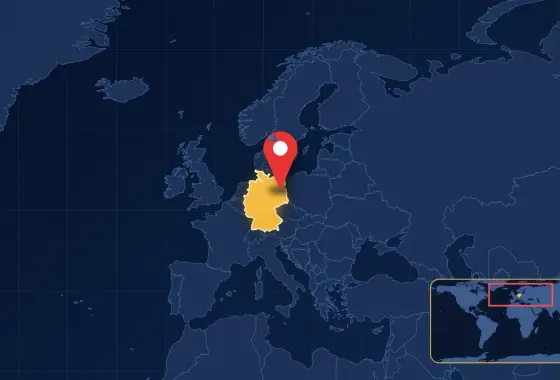
Germany’s federal parliament, the Bundestag, put the 2027 federal budget to its third and final reading on Friday, 27 November. The governing coalition of the Christian Democratic Union (CDU), its Bavarian sister party the Christian Social Union (CSU) and the Social Democratic Party (SPD) backed the bill; according to media reports, 317 MPs voted in favour and 260 against. The Bundestag’s official voting record lists the figure as 316 in favour and 260 against; the small discrepancy may stem from MPs who were not in the chamber at the time of the vote.
Opposition parties the Greens, the Left and the far-right Alternative for Germany (AfD) voted against the budget. The 2027 Budget Accompanying Act (Haushaltsbegleitgesetz), passed the same day, also includes cutting the electricity tax for households to the EU’s minimum rate from 2027. The budget is set to take effect as planned on 1 January 2027.
Where does the total spending and borrowing come from?
Under the government’s plan, total spending in the 2027 core federal budget rises to around €556 billion, an increase of €31.4 billion, or roughly 6%, compared with 2026. Projected tax revenue, at €391.3 billion, falls short of the government’s earlier forecasts.
To close that gap, the government plans to take on a total of €210.4 billion in new borrowing in 2027, the second-highest level in the history of the Federal Republic after the pandemic-year record of €215.4 billion in 2021. The borrowing comes from three sources: €123 billion in the core budget, €57.8 billion from the special fund for infrastructure and climate neutrality, and €29.6 billion from the special fund for the armed forces, the Bundeswehr.
These “special funds” are not accumulated reserves sitting in the government’s hands; instead, they work as financing mechanisms that allow additional debt-financed spending outside the core budget. Net borrowing subject to the constitutional debt brake stands at €38.43 billion, exactly at the permitted ceiling.
Why has defence spending risen so sharply?
A substantial share of the overall spending increase comes from the defence budget. The regular defence budget rises from around €82.7 billion in 2026 to €109.7 billion in 2027. On top of that, a further €29.6 billion will be drawn from the €100 billion special fund for the Bundeswehr, set up in 2022 by the then Social Democrat-Green-Liberal coalition under Chancellor Olaf Scholz; the fund is expected to be fully exhausted by the end of 2027.
An additional €11.6 billion has been earmarked for support to Ukraine. According to the Federal Ministry of Finance’s current financial plans, the regular defence budget alone is projected to reach €183.7 billion by 2030, showing that Germany expects to keep raising defence spending sharply in the coming years.
What is the state of social spending and pensions?
Despite the sharp rise in defence spending, the largest item in the federal budget remains the Ministry of Labour and Social Affairs, with €203.3 billion, or around 36.6% of the core budget. Most of that goes to the statutory pension insurance system.
However, the additional federal subsidy to the pension system is being cut by €3 billion, adding to financial pressure on the system and raising the prospect of higher contributions for employees and employers alike. The Federal Employment Agency’s finances also remain strained: budget figures show it needs a €8.2 billion federal loan.
Why does the interest burden and debt ratio matter?
Alongside direct public spending, the cost of servicing existing debt is becoming an increasingly heavy burden on the federal budget. The government’s original draft set aside €41.9 billion for interest payments in 2027, an increase of €11.6 billion compared with 2026. That money is consequently unavailable for other priorities such as education, infrastructure, social security or tax relief.
Public debt is also growing rapidly relative to economic output. According to the Federal Ministry of Finance’s budget projections published in October, Germany’s general government debt-to-GDP ratio could exceed 72% by 2028. The ministry projects a general government deficit of 5.25% of GDP for 2027; even accounting for the EU’s exemption for defence spending, the projected deficit of 4% would remain above the EU’s reference threshold.
How does this relate to the EU’s own budget dispute?
Germany’s national budget is a separate process from the EU’s seven-year 2028-2034 budget, which ended in disarray in Brussels the same week; but the two directly affect each other. As the EU budget’s largest net contributor, Germany sits on the “frugal” side against the “Friends of Cohesion” group that wants the bloc’s budget to grow; pushing its own national borrowing to a record level while seeking spending restraint at EU level highlights the tension between Berlin’s domestic and external fiscal policies.
Germany’s rapid rise in defence spending also aligns with the EU’s joint defence and competitiveness goals; but whether that investment is financed through national budgets or joint EU-level borrowing remains at the centre of the debate in Brussels. The German government continues to raise its own defence spending while still pushing for agricultural and regional funds to be trimmed in the EU’s seven-year budget.
How have the opposition and industry reacted?
Opposition parties accused the government of using “brazen tricks” to conceal borrowing and spending on basic income support. The Left Party called the budget “unserious”, while the Greens accused the CDU/CSU-SPD coalition of budget trickery.
Industry groups, including the Federation of German Industries (BDI) and the SME association DMB, were also among those criticising the high level of borrowing. The government side maintains that the budget aims to strike a balance between “prosperity and security” in the face of rising security threats and infrastructure needs. Finance Ministry officials stress that most of the rise in borrowing comes from one-off defence and infrastructure investment, and that the core budget itself remains relatively disciplined.
What comes next?
Having passed the Bundestag, the budget law now goes to the Bundesrat, the chamber representing Germany’s states; since the Bundesrat’s veto power over budget laws is limited, the bill is expected to take effect as planned on 1 January 2027.
Analysts note that Germany’s 4% deficit figure remaining above the EU’s Maastricht threshold could also feed into fiscal-rule debates in Brussels; how the European Commission responds to these figures is among the items to watch in the coming months.
Government spokespeople said twelve sitting weeks went into drawing up the budget, and that the final Bundestag debate lasted around ninety minutes. Fiscal analysts expect similar borrowing pressure to build for the 2028 budget already, since the Bundeswehr special fund running out at the end of 2027 means defence spending will largely shift onto the core budget.
What does this mean?
Germany’s 2027 budget shows that Europe’s largest economy is continuing to finance growing defence and infrastructure investment with rising debt. Borrowing reaching its highest level since the pandemic, and public debt approaching 72% of GDP, point to budget debates becoming even sharper in the years ahead. This assessment rests on the official figures released; final implementation numbers may be revised during the year. Once the budget clears the Bundesrat and takes effect on 1 January, negotiations on the 2028 budget are expected to begin in the early months of the new year.
This report was compiled as of 28 November 2026, 09:00 Türkiye time; figures and details may differ between sources and may be updated as events develop.
Frequently asked questions
When was Germany’s 2027 budget approved?
It was approved in its third reading in the Bundestag on 27 November 2026; the budget takes effect on 1 January 2027.
How much new borrowing is planned for 2027?
A total of €210.4 billion, the second-highest level in history after the 2021 pandemic record.
How much was allocated to defence?
€109.7 billion from the regular budget, plus €29.6 billion from the Bundeswehr special fund and €11.6 billion for support to Ukraine.
Sources and further reading
- Euronews, “German Bundestag approves record 2027 budget as borrowing hits €210bn”, 27 November 2026.
- German Bundestag, “The path to the 2027 federal budget: from draft to decision” and the “Budget Act 2027” vote record, bundestag.de, 27 November 2026.
- German Federal Government, “A budget characterised by prosperity and security” (official summary of the 2027 federal budget), bundesregierung.de, 27 November 2026.
Cite this article
Use this article as a source in your work, assignment or blog:
YulaHub Editorial Team. (28 November 2026). Germany Approves 2027 Budget as Borrowing Rises to €210bn. YulaHub. https://yulahub.com/en/germany-approves-2027-budget-as-borrowing-rises-to-eur210bn
YulaHub Editorial Team. "Germany Approves 2027 Budget as Borrowing Rises to €210bn." YulaHub, 28 November 2026, https://yulahub.com/en/germany-approves-2027-budget-as-borrowing-rises-to-eur210bn.
<a href="https://yulahub.com/en/germany-approves-2027-budget-as-borrowing-rises-to-eur210bn">Germany Approves 2027 Budget as Borrowing Rises to €210bn</a> (YulaHub)



Leave a comment
Your email address will not be published. Required fields are marked *