



What happened to the ship?
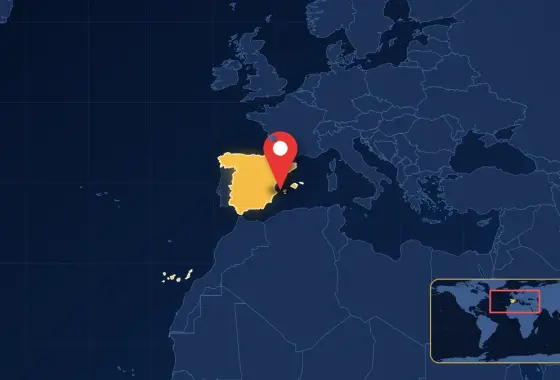
The Malta-flagged chemical tanker Med Emre capsized on Wednesday in waters between Valencia and the holiday island of Ibiza. The vessel was carrying a cargo of about 7,000 tonnes of diesel fuel; the incident occurred during a period of stormy weather, and most of the crew were rescued quickly.
Valencia’s harbourmaster, Elena Delgado, said wave heights exceeded four metres during the storm. One possible explanation, she said, is that inspection hatches on one side of the vessel had been left open, allowing water into the ballast tanks and causing the ship to list and eventually capsize. The official investigation is expected to confirm this theory in the coming weeks.
What is being done now?
Spain’s Ministry of Transport announced on Friday that the ship would be towed "immediately" to the Spanish port of Cartagena. According to the ministry, the decision was made despite objections from regional officials and would take place "taking advantage of favourable weather conditions."
The statement said the towing operation would begin after checking the vessel’s structural integrity and seaworthiness. The tanker is expected to reach Cartagena as early as Monday, 30 November; it will remain on its side throughout the tow, as it has been since it sank on Wednesday.
Why was Cartagena chosen?
According to the ministry, the port of Cartagena, in an industrial area of the Murcia region, meets the depth, size and safety requirements for unloading the fuel. With conditions at sea liable to worsen, Cartagena was said to offer a "calm environment" close to pollution response, logistics and petrochemical facilities.
Officials stressed that, given weather conditions that could raise the risk of waiting at sea, getting the ship to a port as quickly as possible was the priority. The ministry said unloading the fuel and bringing the ship upright would take "several weeks."
Why did the regional government object?
Murcia’s regional president, Fernando López Miras, objected to the decision being made by the central government, saying it posed "a potential risk to our coastline and our marine ecosystems," and demanded another location be found.
López Miras said ten protected areas in Cartagena could be affected by the operation. The regional president also warned of risk to the Valle de Escombreras, which he said accounts for "approximately 40%" of the country’s fuel supply. López Miras also described the central government’s decision as "unilateral," saying the regional authority had not been consulted beforehand.
How often do such tanker accidents happen in the Mediterranean?
The Mediterranean is known as one of the world’s busiest shipping routes, which makes the region particularly exposed to fuel spill risk. Spain’s best-known example is the Prestige tanker, which broke apart off Galicia in 2002; that accident is considered the country’s worst environmental disaster and led to a clean-up operation along the coastline that lasted for years.
The Valencia-Ibiza route is frequently used by both tourist ship traffic and fuel-carrying tankers, which is why the Med Emre accident is being read as once again raising the risks that can arise when heavy maritime traffic in the area coincides with bad weather.
How does Spain’s maritime rescue system work?
In Spain, the response to this kind of incident is coordinated by the state maritime rescue agency, Salvamento Marítimo, which continuously monitors the coastline with rescue vessels, helicopters and pollution-response equipment. Med Emre being stabilised in open water also took place under this agency’s coordination.
Officials say that in similar incidents, the priority is first to save human life, then to stabilise the vessel, and finally to safely unload the fuel. The sequence followed with Med Emre largely matches this standard protocol.
What does sailing under the Malta flag mean?
Med Emre sailing under the Malta flag means the vessel is subject to Malta’s maritime safety rules and oversight under international law; Malta is known as one of the world’s largest flag-state ship registries. Under such "flag of convenience" registration systems, the country operating the ship and the flag state can differ.
An investigation following an accident is typically carried out jointly by the flag state’s maritime accident board and the authorities of the coastal state where the accident occurred; Spain is expected to work in coordination with Maltese authorities throughout this process. The investigation’s findings are expected to include a review of the vessel’s maintenance records and its most recent inspection dates.
What are environmental groups saying, and was anyone killed?
Environmental organisations have also warned that the area’s flora and fauna, including endangered species, are at risk, pointing to dangers for fishing and tourism. The tanker has been stabilised in open water and the fuel has so far been contained, though fears of a major spill remain.
According to the ship’s owner, the vessel’s chief engineer died in the early hours after the accident. No other deaths or injuries related to the incident have been reported; no further details on the condition of the rescued crew were shared.
Why are ballast tank and hatch safety critical on this kind of tanker?
On chemical and fuel tankers, ballast tanks function as compartments filled and emptied with seawater to adjust the vessel’s balance and draft; when the hatches on these tanks are not kept closed, water entering during rough weather can disrupt the ship’s centre of gravity. This structural sensitivity explains why inspection procedures matter greatly before a storm.
Under International Maritime Organization (IMO) standards, such hatches are required to be tightly closed and regularly inspected before a storm; if the theory put forward by Valencia’s harbourmaster is confirmed, the incident could point to a gap in inspection procedures. The investigation is expected to clarify this point.
How did the ship’s owner respond?
The vessel’s owner, the Turkish company YMN Tankers, said in a statement on LinkedIn that it was "deeply concerned about the incident" and pledged to "take all necessary measures to minimise the possible impact on the marine environment."
The company said: "We are carrying out the rescue plan for the vessel in coordination with the Spanish authorities, maritime rescue experts and other relevant groups." The operation is expected to conclude with the fuel being safely unloaded and the ship eventually being righted.
How could the accident affect local fishing and tourism?
The coastline around Murcia is an important part of both small-scale fishing fleets and coastal tourism that remains active even in winter months. The ten protected areas environmental groups have pointed to largely overlap with the areas where these economic activities take place.
Local fishing cooperatives fear that fishing grounds could be closed for months if a major spill occurs, which could cause serious income loss for small businesses, adding an economic dimension that helps explain why local authorities are so sensitive about where the operation takes place.
What does this mean?
The decision to tow Med Emre to Cartagena shows that the Spanish government is prioritising ending the risk of a major spill as quickly as possible over regional environmental concerns. The Murcia regional government’s objection illustrates a tension often seen between central and regional authorities in similar maritime incidents. This assessment rests on the Spanish Ministry of Transport’s statement and the official comments reported by Euronews; the fuel-unloading process and any environmental impact will become clearer in the coming weeks.
This report was compiled as of 28 November 2026, 19:30 Türkiye time; figures and details may differ between sources and may be updated as events develop.
Frequently asked questions
Why did the Med Emre tanker capsize?
Waves exceeded four metres during the storm; one theory is that open inspection hatches let water into the ballast tanks, causing the ship to list and capsize.
Where is the tanker being taken now?
After a structural check, the ship is being towed immediately to Spain’s port of Cartagena and is expected to arrive as early as Monday, 30 November.
Why did the regional government object?
Murcia’s regional president said ten protected areas and the Valle de Escombreras, which supplies about 40% of the country’s fuel, could be at risk.
Sources and further reading
- Euronews, "Capsized tanker carrying 7,000 tonnes of diesel in Spain to be towed 'immediately' amid spill fears", 28 November 2026.
- Spanish Ministry of Transport, official statement, 28 November 2026.
- YMN Tankers company statement (LinkedIn), 27-28 November 2026.
Cite this article
Use this article as a source in your work, assignment or blog:
YulaHub Editorial Team. (28 November 2026). Capsized Diesel Tanker to Be Towed "Immediately" to Spain’s Cartagena. YulaHub. https://yulahub.com/en/capsized-diesel-tanker-to-be-towed-immediately-to-spains-cartagena
YulaHub Editorial Team. "Capsized Diesel Tanker to Be Towed "Immediately" to Spain’s Cartagena." YulaHub, 28 November 2026, https://yulahub.com/en/capsized-diesel-tanker-to-be-towed-immediately-to-spains-cartagena.
<a href="https://yulahub.com/en/capsized-diesel-tanker-to-be-towed-immediately-to-spains-cartagena">Capsized Diesel Tanker to Be Towed "Immediately" to Spain’s Cartagena</a> (YulaHub)

Leave a comment
Your email address will not be published. Required fields are marked *