



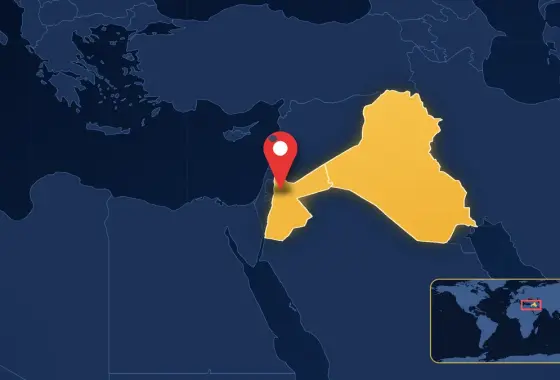
Jordan and Iraq announced on Monday, 16 November, that they had blocked access to the messaging app Telegram. According to Al Jazeera and The National, both countries cited national security in their decisions. Jordan said it wanted to stop the app from being used to spread extremism and cybercrime, while Iraq accused the company of failing to comply with local laws and regulations. Telegram did not immediately comment on the decision.
The fact that two neighbouring countries took a similar step on the same day was the latest sign of tighter state control over digital platforms in the Middle East.
Why did Jordan block Telegram?
In Jordan, the decision was announced in a statement by the Public Security Directorate. According to The National, the directorate said the ban aims to stop the app being used for cybercrime, threats and extortion, or to distribute illegal content that threatens public security or promotes extremism and radicalism. The statement urged citizens to be careful when using social media apps, to avoid accounts and links of unknown origin, and to report illegal content through official channels.
The decision followed a series of security incidents in Jordan in recent weeks. On 23 October, gunmen opened fire during a funeral at a Greek Orthodox church in the village of Hmoud in Karak governorate, about 80 kilometres south of Amman, killing nine people and wounding more than 30. The attack was recorded as the most serious attack on Jordan’s Christian minority since the 1950s. On Sunday, a security court sentenced three men to death for carrying out the attack. Jordan had also carried out air strikes in Syria against ISIL members it said were linked to the attack. Officials did not directly link Telegram to the church attack.
What did Iraq decide?
In Iraq, the decision to block Telegram was announced by the Communications and Media Commission. According to state media, it followed a directive from the prime minister’s office. The commission said the company had failed to take the necessary measures against content that violates Iraqi law and had not met legal and regulatory requirements. Telegram was given 30 days to bring its operations into line with Iraqi legislation, but it was not announced what would happen at the end of that period.
This is the second time this year that Iraq has restricted Telegram. The country also banned the app in April 2026 on security and technical grounds, and the ban was lifted in May after the app pledged to comply with Iraqi legislation. Iraq also blocked Telegram for a time in 2023, citing national security and the protection of user data.
Why is Telegram so controversial?
Founded in 2013, Telegram is very popular in the Middle East and North Africa. According to Al Jazeera, the region accounts for about 8% of the app’s global users, while The National writes that about 10% of the Middle East’s population uses the app. Its ability to host large groups and channels has made Telegram a common tool for sharing news and community communication. But the same features have drawn criticism that the app is also used by armed groups and fraudsters. Telegram offers end-to-end encrypted chats, but not all conversations are encrypted by default.
The company argues that it has more than met its obligations on content moderation and cooperation with authorities to fight crime. Jordan and Iraq are not the only countries to restrict Telegram this year: India temporarily blocked the app in June over exam fraud ahead of a national medical entrance exam, and Russia fully blocked it in August after phased throttling that began in February.
What should users watch out for?
A method cyber fraudsters often use during access blocks is to distribute fake apps and links with promises such as “unblocked Telegram” or “a new version of Telegram”. Such files downloaded outside official app stores carry the risk of malware, account takeover and personal data theft. The statement by Jordan’s Public Security Directorate also asked people to stay away from accounts and links of unknown origin. Backing up important conversations and contact details in another secure place, keeping two-step verification switched on and following only official announcements all reduce the risks for users. Whether the app will become accessible again will depend, especially in Iraq, on the decision taken at the end of the deadline.
What does this mean?
The decision will directly affect the daily communication and news consumption of millions of users in Jordan and Iraq, as well as the customer relations of some businesses. Similar bans have been known to increase VPN use in the past, which raises questions about how enforceable the decisions will be. Iraq’s 30-day deadline will show whether Telegram reaches a new arrangement with local regulators. Overall, the picture shows governments trying to redraw the balance between security concerns and freedom of expression and communication through digital platforms.
This report was compiled as of 17 November 2026, 09:15 Türkiye time; follow developments as they are updated.
Frequently asked questions
Why was Telegram blocked in Jordan?
Jordan’s Public Security Directorate said it wanted to stop the app being used for cybercrime, extortion and content that spreads extremism.
How long did Iraq give Telegram?
Iraq’s Communications and Media Commission gave Telegram 30 days to comply with local laws.
Which other countries restricted Telegram?
This year India temporarily blocked the app, and Russia fully blocked it in August after phased throttling.
Sources and further reading
- Al Jazeera, “Jordan and Iraq block Telegram over national security concerns”, 16 November 2026.
- The National, “Jordan and Iraq ban Telegram over national security concerns”, 16 November 2026.
- Al-Monitor, “Jordan and Iraq block Telegram app over national security concerns”, 16 November 2026.
Leave a comment
Your email address will not be published. Required fields are marked *