



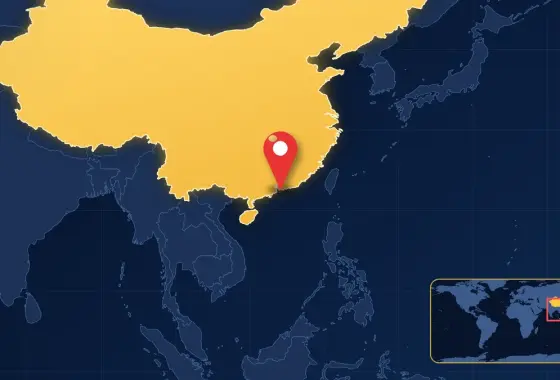
US President Donald Trump, Chinese President Xi Jinping and Russian President Vladimir Putin met in a trilateral format for the first time on Thursday, 19 November 2026, in the southern Chinese city of Shenzhen, on the sidelines of the Asia-Pacific Economic Cooperation (APEC) summit. According to the Kyiv Independent and The Globe and Mail, after a meeting lasting about 90 minutes the three countries adopted a four-point joint declaration of roughly 250 words, released by China. The document was called a “declaration towards peace” in Chinese media and the “China-Russia-U.S. Declaration on Peace” in some other outlets.
According to The Hill, nearly identical versions of the declaration were published by Russia’s Ministry of Foreign Affairs and China’s Ministry of Foreign Affairs, while the White House was expected to release its own version later. Opening the meeting, Trump said it was the “first-ever trilateral meeting” between the three countries and added: “We are really making history.” Besides holding the world’s largest nuclear arsenals, the three countries make up three of the five permanent members of the UN Security Council.
What does the declaration contain?
According to the published text, the three countries made joint commitments on four issues:
- UN reform: Supporting reform efforts so that the United Nations can “respond more effectively to global challenges.”
- Energy: Increasing the production and supply of refined petroleum products.
- International courts: Stressing the immunity of state officials and warning the International Criminal Court (ICC) “and similar bodies” not to abuse their jurisdiction.
- Nuclear security: Reaffirming that a nuclear war cannot be won and must never be fought, and launching a dialogue on reducing nuclear risks and preventing proliferation.
The Globe and Mail stressed that the text makes no mention of the conflicts in Ukraine and Iran or of the global economic turmoil they have caused. The newspaper assessed the summit as ambitious in rhetoric but limited in terms of concrete agreements.
What was said about nuclear weapons?
According to the reports, the most notable outcome of the summit was the pledge of dialogue on nuclear risks. Xi Jinping described nuclear weapons as a “sword of Damocles hanging over humanity” and said they should be prohibited and destroyed. Although the leaders referred to the goal of a world free of nuclear weapons, the declaration was limited to a call for “dialogue on reducing nuclear risks.” The text did not include inspection mechanisms or reductions in stockpiles, steps that could be contentious for all three sides. Trump, for his part, acknowledged that once a country has nuclear weapons, it is very hard to give them up.
This issue comes at a time when the international arms-control architecture has weakened. New START, the last treaty limiting US and Russian strategic nuclear weapons, expired in February 2026. China has so far refused to accept any limits on its arsenal and argues that its nuclear capacity is still far smaller than those of the United States and Russia. Opening a trilateral channel for dialogue is therefore seen as a new beginning, even though its content remains unclear.
Why did the International Criminal Court clause attract attention?
The declaration’s clause on the ICC sparked debate because none of the three countries is a party to the Rome Statute, the court’s founding document. In 2023 the ICC issued an arrest warrant for Putin over the transfer of children from occupied areas of Ukraine to Russia. The US administration, meanwhile, has imposed sanctions on ICC officials over the court’s investigation of alleged Israeli war crimes. At the summit, Trump harshly criticised the ICC. The fact that three major powers that are not parties to the court included language aimed at limiting its jurisdiction in a joint text has begun to be debated in international law circles.
Was Ukraine on the agenda?
Before the trilateral meeting, Trump and Putin held an unannounced bilateral meeting of about 40 minutes. Kremlin aide Yuri Ushakov said the main topic of that meeting was the settlement of the conflict in Ukraine. The Kremlin said Ukraine was not a central topic of the trilateral meeting. Trump said “things are happening” towards ending the war, while Putin said it was up to the Ukrainian side to take steps to end the war and make compromises. The two leaders’ previous face-to-face meeting took place on 15 August 2025.
Kyiv criticised the format of the meeting. Ukrainian Foreign Minister Andrii Sybiha said a meeting in a Ukraine-US-Russia format could help end the war sooner, and that no decisions about Ukraine can be made in a format without Ukraine. Australian Prime Minister Anthony Albanese called on Putin to end the war, pointing to its impact on global inflation. Japanese Prime Minister Sanae Takaichi also said she had held talks with Putin and that the two sides had agreed to keep communicating; she reportedly raised the case of a Japanese journalist detained in Russia on espionage charges.
What came out of the US-China bilateral meeting?
Trump and Xi Jinping also met separately during the summit. According to The Globe and Mail, the two leaders agreed to extend the fragile trade truce the two countries reached after last year’s tit-for-tat tariff increases. According to the Chinese readout, strategic stability and risks stemming from artificial intelligence were also discussed. Xi is expected to travel to the United States next month for the G20 summit. Putin first proposed the idea of the summit in October, and the Kremlin later confirmed that the meeting would take place in Shenzhen on 19 November.
What does this mean?
The Shenzhen declaration shows that the world’s three largest military and nuclear powers have, for the first time, been able to agree on a trilateral text; in this respect it is seen as a symbolic threshold. However, the text contains no binding steps on nuclear issues such as inspections and reductions, and it does not address the most pressing current conflicts at all. In the coming period, the level and frequency at which the nuclear-risk dialogue convenes, the official text to be released by the White House and the steps taken on Ukraine through bilateral channels will determine the declaration’s real weight.
This report was compiled as of 19 November 2026, 20:30 Türkiye time; follow developments as they are updated.
Frequently asked questions
Who attended the Shenzhen summit?
US President Donald Trump, Chinese President Xi Jinping and Russian President Vladimir Putin met in a trilateral format for the first time on 19 November 2026, on the sidelines of APEC.
What issues does the declaration cover?
It has four points: support for UN reform, increasing the supply of refined petroleum products, a warning to the ICC and similar bodies not to abuse their jurisdiction, and a dialogue on reducing nuclear risks.
Does the declaration mention the war in Ukraine?
No. Ukraine was the main topic of a separate bilateral meeting between Trump and Putin, but the joint declaration does not mention the conflicts in Ukraine or Iran.
Sources and further reading
- Kyiv Independent, “Trump joins Putin, Xi in signing ‘declaration of peace’ as summit largely sidesteps Ukraine”, 19 November 2026.
- The Globe and Mail, “Trump, Xi and Putin meet for historic trilateral summit in China”, 19 November 2026.
- The Hill, “Donald Trump, Xi Jinping, Vladimir Putin reach peace declaration during rare summit in China”, 19 November 2026.

Leave a comment
Your email address will not be published. Required fields are marked *