



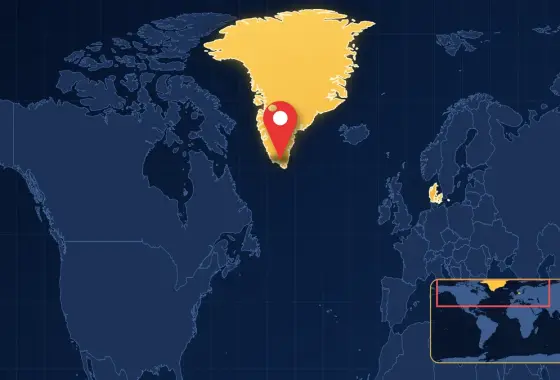
Denmark’s parliament, the Folketing, on Thursday, 19 November 2026, approved the security and defence agreement signed between the United States, Denmark and Greenland by 109 votes to 0. According to ArcticToday, citing Danish broadcaster DR, no one voted against it. The Copenhagen Post wrote that the vote took place without debate and that no MPs asked to speak during the final vote. This removed the last parliamentary hurdle on the Copenhagen side, after months of diplomatic tension over US interest in the island.
The agreement was signed on 22 September in New York, on the sidelines of the UN General Assembly, by Danish Prime Minister Mette Frederiksen, Greenland Premier Jens-Frederik Nielsen and US President Donald Trump. Greenland’s own parliament, Inatsisartut, approved the text earlier in November. With both parliaments on board, the agreement will enter into force once Denmark formally notifies the United States that its approval procedures are complete.
What does the agreement contain?
The text amends and supplements the 1951 agreement on the defence of Greenland and has no end date. The main provisions reported by ArcticToday and The Copenhagen Post are as follows:
- New defence areas: It opens the way for the US to establish new defence areas at Narsarsuaq in the south and Mestersvig in the northeast; however, the terms for these areas have not yet been agreed.
- Pituffik Space Base: The US is allowed to expand its activities at its existing base in the island’s northwest.
- Missile defence: The agreement also allows the US to establish part of its “Golden Dome” missile defence system in Greenland. According to ArcticToday, the US portion of the system is slated for completion in 2028.
- Sovereignty guarantee: The text reaffirms the sovereignty and territorial integrity of the Kingdom of Denmark and recognises the Greenlandic people as a people with the right to self-determination under international law.
- Foreign investment limit: States outside NATO and the EU, and their investors, are barred from gaining “significant influence” in “sensitive sectors”.
- Independence clause: If Greenland becomes independent, the agreement remains in force provided Greenland joins NATO.
There is also an important limitation: according to The Copenhagen Post, the agreement does not give the US the right to set up facilities unilaterally. Denmark, Greenland and the US will negotiate the terms of each new area together, and any other location not on the list will require the approval of both Denmark and Greenland.
A cautious message from Copenhagen
Right after the approval, Danish Foreign Minister Lars Løkke Rasmussen told the Greenlandic newspaper Sermitsiaq that Washington’s intentions are still not clear. As reported by The Copenhagen Post, Løkke Rasmussen said there is “an underlying American interest in Greenland” and that much of it is positive because Greenland is “open for business”; but he said, “We have yet to see what ambitions the Americans actually have,” and added that he would keep watching developments.
According to the same report, there have been no further talks with the US about the two new base areas since the September signing. Concrete US proposals must be submitted to a permanent committee involving the three parties, which is due to meet next in December. US Ambassador to Denmark Ken Howery, according to ArcticToday, called the agreement “a significant achievement that modernizes our partnership” and thanked the negotiators in Denmark and Greenland.
Opposition objections in Greenland
Greenland’s parliament, Inatsisartut, adopted the agreement earlier in November by 16 votes to 0, with 7 abstentions. The opposition party Naleraq, which won about 25% of the vote in the 2025 election, criticised the agreement and called for a referendum. The party argues that Greenland gains no direct financial benefit from the deal.
The process also caused domestic political tension in Nuuk. Greenland’s Minister for Foreign Affairs, Business and Mineral Resources, Múte B. Egede, accused Naleraq of leaking confidential information about the agreement, and parliament filed a police report against the party. Naleraq’s no-confidence motion against Egede failed to win a majority.
After a tense year
The agreement follows a long period of tension between the US and Denmark over Greenland. Trump first raised the idea of buying Greenland in 2019, revived it before returning to office in 2025 and did not rule out military or economic pressure. According to ArcticToday, Trump said in January 2026 that Washington would act on Greenland “whether they like it or not” and threatened escalating tariffs on European allies until the island could be bought.
Then, at the World Economic Forum in Davos, Trump dropped the tariff threat, also ruled out the use of force and announced that he and NATO Secretary General Mark Rutte had formed “the framework of a future deal”. Formal talks between Washington, Copenhagen and Nuuk on updating the 1951 agreement began at the end of January and concluded with the September signing.
What does this mean?
For Denmark, the approval means placing months of pressure into a diplomatic framework: the US gains room to expand its military presence in the Arctic, while the text confirms in writing Danish sovereignty and the Greenlandic people’s right to self-determination. The size, cost and timetable of the areas at Narsarsuaq and Mestersvig are not yet known; the practical effect of the agreement will therefore be determined by the concrete proposals that reach the committee meeting in December. The referendum debate in Greenland and the opposition’s “no economic benefit” objection may also remain on the island’s domestic political agenda in the coming period.
This report was compiled as of 20 November 2026, 10:30 Türkiye time; follow developments as they are updated.
Frequently asked questions
What did the Danish parliament approve?
On 19 November 2026, Denmark’s parliament, the Folketing, approved the security and defence agreement between the US, Denmark and Greenland by 109 votes to 0. The agreement amends the 1951 Greenland defence agreement and has no end date.
Where can the US set up new areas in Greenland?
The agreement opens the way for new defence areas at Narsarsuaq in the south and Mestersvig in the northeast and for the expansion of Pituffik Space Base. The terms of the areas have not yet been agreed, and the US cannot set up facilities unilaterally.
When will the agreement take effect?
The parliaments of Greenland and Denmark have approved it. The agreement will enter into force once Denmark formally notifies the US that its approval procedures are complete.
Sources and further reading
- ArcticToday, “Danish parliament ratifies expanded US military access to Greenland”, 19 November 2026.
- The Copenhagen Post, “Denmark approves US military expansion in Greenland, but foreign minister says American ambitions remain unclear”, 20 November 2026.
- CBS News, “Greenland security deal with U.S. and Denmark OK’d by Danish lawmakers”, 19 November 2026.
- CNBC, “Denmark ratifies Trump security deal over Greenland after months of diplomatic tensions”, 19 November 2026.

Leave a comment
Your email address will not be published. Required fields are marked *