



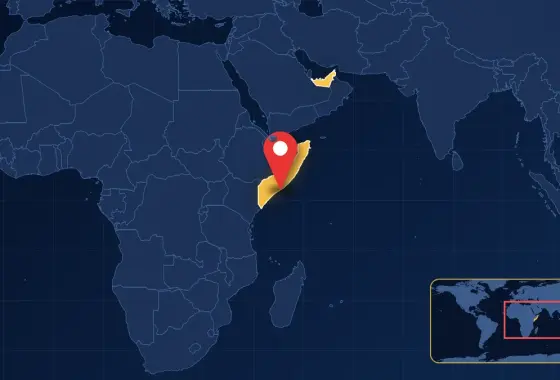
Somalia’s government on Thursday, 19 November 2026, told the United Arab Emirates’ (UAE) ambassador to Somalia to leave the country within 72 hours. According to Anadolu Agency, the Cabinet meeting in Mogadishu also instructed the Foreign Ministry to recall Somalia’s ambassador to the UAE for consultations. According to Al Jazeera’s report, published together with Reuters, this is the strongest step Mogadishu has taken against Abu Dhabi since January.
Somali Information Minister Abdifatah Kasim Mohamud said in a statement broadcast on the state news agency, “Measures will be taken against anyone who cooperates with UAE in the invasion against Somalia,” and called on all Somalis to defend their country and unite against what he called the UAE’s “open invasion”. Al Jazeera noted that the minister did not say what directly prompted the expulsion decision.
Defence Minister Ahmed Moalim Fiqi used sharp language on the social media platform X after the Cabinet meeting. According to Anadolu Agency, Fiqi told the ambassador, “Pack your bags and leave,” and wrote, “Whoever does not respect our sovereignty has no place interfering on our land.”
Where did the crisis come from?
The decision followed a speech by President Hassan Sheikh Mohamud on Tuesday, 17 November. According to Al Jazeera, the president accused the UAE of giving economic and political support to some regional Somali administrations that oppose the federal government. Hassan Sheikh Mohamud said Abu Dhabi signed agreements for the ports of Berbera (Somaliland), Bosaso (Puntland) and Kismayo (Jubaland) with these regional administrations rather than with the federal government.
The president also claimed that, while the Somali army fights the al-Shabab group, the UAE helped set up military bases and forces outside the national command structure. According to Anadolu Agency, Hassan Sheikh Mohamud also stressed that his government is open to relations based on equality and mutual respect.
The UAE’s response
The UAE Foreign Ministry condemned the Somali government’s “escalatory and hostile approach” and accused Mogadishu of undermining relations and cooperation between the two countries. In the statement reported by Anadolu Agency, it said relations should be guided by shared interests and kept free of political considerations and internal conflicts, and it expressed regret over the Somali government’s attempts to bring internal power struggles into bilateral ties.
In the same statement, the UAE recalled that it had closed its embassy in Mogadishu in January and withdrawn its diplomatic staff, citing the Somali government’s “hostile practices” towards the embassy and UAE policies and the cancellation of bilateral agreements. Al Jazeera recalled that the UAE has long denied accusations of interfering in Somalia’s internal affairs. Officials from both countries also traded accusations on social media.
Tension escalating since January
Relations have been strained since Somalia cancelled all its agreements with the UAE in January 2026. According to Al Jazeera, Mogadishu at the time terminated all agreements, including port deals and defence and security cooperation, citing “harmful actions” that undermine its unity and sovereignty. According to Anadolu Agency, Somalia also closed its airspace to UAE military and cargo aircraft.
Relations between the two countries have also swung between friction and reconciliation in the past. The UAE trained hundreds of Somali troops between 2014 and 2018. In 2018, Somali authorities seized $9.6 million from a UAE aircraft at Mogadishu airport; Abu Dhabi called the seizure illegal and said the money was meant to support the Somali army and its trainees. According to Anadolu Agency, the UAE then ended its military training mission in Somalia. According to information Al Jazeera attributed to senior Somali sources, the UAE still pays the salaries and logistics of about 3,400 military police and special forces personnel in and around Mogadishu.
Why do the ports matter so much?
Omar Mahmood of the International Crisis Group (ICG) told Al Jazeera that the coastal ports are key sources of revenue for the regional administrations and that this independent revenue gives them more autonomy from Mogadishu. According to Mahmood, the federal government, as the internationally recognised government, believes all international agreements should go through it; because it does not recognise agreements signed directly with other administrations, it treats any UAE presence tied to them as a violation of territorial sovereignty.
Al Jazeera also recalls that the UAE has used its wealth to expand its influence in the Horn of Africa through economic, military and diplomatic means. The region, where the Red Sea meets the Gulf of Aden, is of strategic importance for international maritime trade.
What does this mean?
The 72-hour deadline given to the ambassador shows that the crisis between the two countries has moved from January’s cancellation of agreements to the level of diplomatic representation. At the centre of the dispute is the question of whether port and security agreements should be made with the federal government or with regional administrations; this turns the issue from a purely bilateral dispute into one directly linked to Somalia’s internal political balance. Whether the decision is implemented, whether the UAE takes a counter-step and what happens to UAE-backed units in the ongoing fight against al-Shabab will become clearer in the coming days.
This report was compiled as of 20 November 2026, 10:30 Türkiye time; follow developments as they are updated.
Frequently asked questions
Why did Somalia give the UAE ambassador 72 hours?
Somalia’s government accuses the UAE of violating its sovereignty and backing regional administrations that oppose the federal government. The Information Minister called the situation an “open invasion”; the decision was announced after the 19 November Cabinet meeting.
How did the UAE respond?
The UAE Foreign Ministry condemned the Somali government’s “escalatory and hostile approach”, expressed regret at internal power struggles being carried into bilateral ties and recalled that it closed its embassy in Mogadishu in January.
What is behind the tension?
In January 2026 Somalia cancelled all agreements with the UAE, including port and defence deals. Mogadishu says the UAE signed agreements for the ports of Berbera, Bosaso and Kismayo with regional administrations instead of the federal government.
Sources and further reading
- Anadolu Agency, “Somalia orders UAE ambassador to leave within 72 hours”, 19 November 2026 (updated 20 November).
- Al Jazeera / Reuters, “Somalia expels UAE ambassador, accuses Abu Dhabi of violating sovereignty”, 19 November 2026.
- ABC News (AP), “Somalia orders the UAE ambassador to leave as a diplomatic dispute escalates”, 19 November 2026.
- U.S. News & World Report (Reuters), “Somalia Orders UAE Ambassador to Leave, Citing ‘Invasion’”, 19 November 2026.

Leave a comment
Your email address will not be published. Required fields are marked *