



The Manchus were a people of Manchuria in north-east Asia. Nurhaci united the Manchu tribes in 1616, and his son Hong Taiji renamed the state Qing (“Pure”) in 1636. Taking advantage of the collapse of the Ming in 1644, the Manchus entered Beijing and soon conquered all of China.
The golden age
The reigns of Kangxi (1661–1722), Yongzheng and Qianlong (1735–1796) were the Qing dynasty’s most brilliant years. In this period Taiwan, Mongolia, Tibet and, in Central Asia, Dzungaria and East Turkestan (Xinjiang) came under Qing rule. The population grew rapidly, and literature, painting and great encyclopedia projects were supported. The Manchus required Chinese men to wear the Manchu braided queue.
Encounter with the West
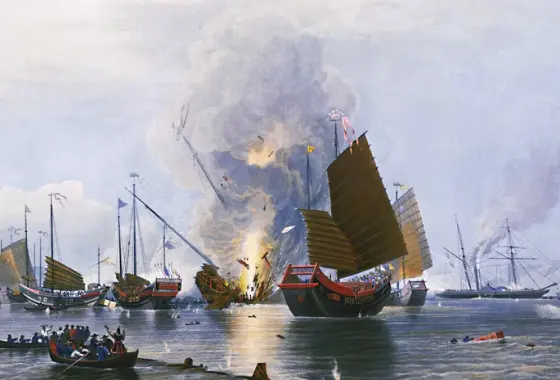
In the 19th century Britain’s determination to keep selling opium to China led to the First Opium War (1839–1842); China was defeated and Hong Kong was ceded to Britain. The Second Opium War and “unequal treaties” granting trading privileges to Western powers followed. The Taiping Rebellion of 1850–1864 was one of the bloodiest civil wars in world history.
End
Defeat by Japan in 1894–1895 and the Boxer Uprising of 1900 further weakened the state. The revolution that began at Wuchang in 1911 spread quickly, and the Republic of China was proclaimed under the leadership of Sun Yat-sen. The six-year-old last emperor, Puyi, abdicated on 12 February 1912, ending more than two thousand years of imperial rule in China.
Sources and further reading
- Encyclopaedia Britannica, “Qing dynasty”.
- UNESCO World Heritage, “Imperial Palaces of the Ming and Qing Dynasties in Beijing and Shenyang”.
- Jonathan D. Spence, The Search for Modern China.
People also ask
What was the Qing Dynasty? The Qing dynasty was founded by the Manchus and ruled China from 1644 to 1912.
When was the Qing Dynasty founded? Founded: Named Qing in 1636; capture of Beijing in 1644.
When did the Qing Dynasty end? End: 12 February 1912.

Leave a comment
Your email address will not be published. Required fields are marked *