



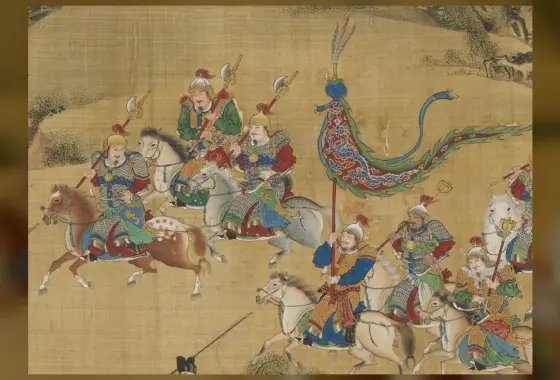
Zhu Yuanzhang, leader of one of the peasant uprisings against the Mongol Yuan dynasty in the mid-14th century, drove the Mongols from Beijing in 1368 and founded the Ming (“Bright”) dynasty, with Nanjing as its first capital.
Yongle and the Forbidden City
The third emperor, Yongle (1402–1424), moved the capital north to Beijing and built the imperial palace, the Forbidden City (1406–1420). This vast palace complex is now on the UNESCO World Heritage List.
Zheng He’s voyages
Under Yongle the admiral Zheng He, of Muslim background, led seven great voyages between 1405 and 1433 with fleets of hundreds of ships. They reached Southeast Asia, India, the Arabian Peninsula and the coast of East Africa, but later emperors did not continue them.
The Great Wall and culture
Against Mongol attacks, the northern frontier walls were largely rebuilt in brick and stone; most of the Great Wall sections visited today date from the Ming. In 1449 the Oirats captured a Ming emperor at Tumu. The Ming period is also known for the blue-and-white porcelain made at the Jingdezhen workshops, examples of which are in the Topkapı Palace collection, and for its classic novels.
End
In the 17th century famines, financial problems and peasant revolts shook the state. In 1644 the rebel leader Li Zicheng took Beijing and the last Ming emperor took his own life. Soon afterwards the Manchus entered Beijing and founded the Qing dynasty.
Sources and further reading
- Encyclopaedia Britannica, “Ming dynasty”.
- UNESCO World Heritage, “Imperial Palaces of the Ming and Qing Dynasties in Beijing and Shenyang” and “The Great Wall”.
- Topkapı Palace Museum, Chinese porcelain collection.
People also ask
What was the Ming Dynasty? The Ming dynasty was founded in 1368 by Zhu Yuanzhang, who overthrew the Mongol Yuan dynasty, and ruled China until 1644.
When was the Ming Dynasty founded? Founded: 1368, Zhu Yuanzhang (the Hongwu Emperor).
What was the Ming Dynasty’s capital? Capitals: Nanjing, Beijing from 1421.
When did the Ming Dynasty end? End: 1644, Li Zicheng’s rebellion and the Manchus.
Leave a comment
Your email address will not be published. Required fields are marked *