



What happened?
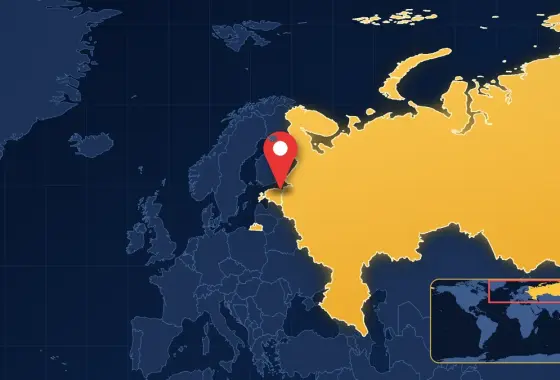
Russia’s Foreign Ministry said on Monday, 23 November 2026, that Estonia, a member of NATO and the European Union, had carried out a series of “hostile actions” that it claimed put the country “on the verge of triggering open war” with Russia. The statement followed Moscow’s summoning of Estonia’s chargé d’affaires to the ministry to protest Tallinn’s decision to close its land border crossings. As reported by CNBC and Reuters, the ministry said the diplomat was once again told that such “provocative and extremely dangerous” actions risk open war.
Russia also said it reserves the right to take “comprehensive political and diplomatic measures” against Estonia. The statement did not spell out what such measures might be. The sources show that the statement is not a decision to take military action but a sharp diplomatic reaction to the border decision; yet the harshness of the language also shows how quickly tension between the two countries is rising.
Because the news originates in an official Russian statement, it should be noted that the wording reflects Moscow’s point of view and that Estonia rejects it. Both Russia’s claims and Tallinn’s response are set out below, as far as the sources report them.
Estonia’s border decision and its background
The starting point was the decision announced by Estonian Foreign Minister Margus Tsahkna on Sunday, 15 November. Estonia said it would close its land border crossings with Russia from 1 December for at least six months. According to Al Jazeera and Reuters, the decision was taken over an attempted arson attack on the Estonian defence company Threod Systems, which Estonian authorities say was ordered by Russia’s military intelligence service, the GRU. Eight people were detained overnight in connection with the attempt.
Latvia’s Interior Minister Janis Dombrava thanked Estonia’s internal security service, saying those detained included “Latvian citizens and non-citizens”. Marko Mihkelson, chairman of the Estonian parliament’s foreign affairs committee, told Al Jazeera that the arrests showed Estonia could respond quickly to such attacks and argued that closing borders is one of Europe’s “asymmetric” responses. Russia rejects the allegations.
Estonia currently has three open crossings with Russia, at Narva, Luhamaa and Koidula, along a border 294 kilometres long. Tsahkna said closing them would reduce Russia’s ability to carry out hostile activity in Estonia and strengthen efforts to prevent sanctions circumvention. Moscow had called the decision “yet another bout of aggressive and unrestrained Russophobia”.
The accusations Russia put forward
According to the list reported by Reuters, Russia’s Foreign Ministry accused Estonia of allowing Ukraine to use Estonian airspace “on the quiet” to attack Russian targets. CNBC also reports that the ministry said Tallinn was “tacitly” providing its airspace for Ukrainian drone flights. The claim continues an accusation that has been made against the Baltic states before.
The ministry further alleged that Estonia was trying to obstruct the movement of Russian cargo ships in the Baltic Sea, had banned the transit of Russian and Belarusian grain, was seeking a ban on the Russian language and was threatening to close the Russian Orthodox Church. According to CNBC, Moscow also objected sharply to the grain transit ban, which took effect at the start of October. The ministry also claimed that Estonia was imposing a kind of “naval blockade”.
Some of these accusations concern political and cultural matters, others trade and military activity. The sources offer no independent evidence supporting the airspace claim; they contain only the official statements of Russia and Estonia and the reports of news agencies. The accuracy of the claims therefore could not be verified within the scope of this report.
Tallinn’s response
Estonia’s Foreign Ministry did not respond to every accusation, but it expressly denied that it allows its territory to be used for military operations by another country. The ministry’s statement said Estonia has never allowed, and will never allow, its territory to be used for military operations by another country, adding that other countries in the region have made the same position clear. It also said that it generally does not engage with Russian propaganda narratives.
Foreign Minister Tsahkna argued that Moscow’s statement was meant to divert attention. He listed that Russian missiles had reached Polish territory, that Danish security services had identified an assassination plot orchestrated by Russian intelligence, that merchant vessels in the Black Sea are under constant threat from Russian attacks, and that in Estonia an arson attack planned on the orders of Russian military intelligence was foiled. He stressed that all of this was happening while Russia continued its war of aggression against Ukraine.
Tallinn’s approach is to list counter-accusations and restate Estonia’s legal position clearly rather than debate the claims in detail. That is the official line reported in the sources; differing views within Estonian politics or additional details are not found in them.
The Finland and Gulf of Finland dimension
The tension is not limited to Estonia. According to Reuters, Finland summoned Russia’s ambassador days after a Russian helicopter was suspected of violating Finnish airspace. Finland’s Foreign Ministry also strongly condemned Russia’s “illegal war of aggression” and its escalating strikes on civilian targets in Ukraine, and expressed solidarity with Denmark, Poland and other European partners.
In the background is the Russian cargo ship Sparta II, reported to have been hit by a Ukrainian drone attack in international waters in the Gulf of Finland on Saturday. A fire broke out, the crew was evacuated and one crew member suffered minor injuries. The drifting ship entered Finnish waters and anchored about 90 kilometres east of Helsinki; Finnish authorities, with help from Estonian and Russian rescue vessels, put out the fire. The vessel was later towed from Finnish waters to Russia.
Finnish Prime Minister Petteri Orpo warned after the attack that the war in Ukraine is “spilling over” into its immediate neighbourhood. Finland has also closed its land border crossings with Russia. An assessment that the war is no longer confined to Ukraine itself is therefore gaining prominence in the Baltic and northern Europe.
Drone claims and the airspace problem
Russia has long accused Estonia and other NATO countries in the Baltic region of letting Ukrainian drones use their airspace. Ukrainian drones do frequently enter NATO airspace, which Kyiv says is the result of Russian signal jamming. NATO countries have repeatedly denied intentionally allowing their airspace to be used for this purpose and have blamed Russia, which launched the war in 2022, for the incursions.
In March 2026 a drone struck the chimney of a power plant in Estonia; Tsahkna said in that case that the drone was not aimed at Estonia. Such incidents show the risks created by the Baltic lying on a possible route for drones heading for targets in north-western Russia. Yet the sources contain no evidence that Estonia gave deliberate permission; there are only the opposing statements of the two sides.
The dispute also shows how decisive the distinction between “intent” and “accidental entry” can be in political tensions. From Russia’s point of view, any entry into airspace is a sign of permission or cooperation; for Estonia and NATO it is a natural consequence of signal jamming. With no independent verification, both accounts appear in the sources only as claims.
What are analysts saying?
According to the analysis relayed by CNBC, Mario Bikarski, senior analyst at the risk consultancy Verisk Maplecroft, said Ukraine’s recent attacks on some of Russia’s best-protected targets show that Kyiv can hurt Moscow even without ample US military support. In Bikarski’s view Ukraine will keep looking for ways to degrade not only Russia’s economy but also its geostrategic interests in the wider region, including the Mediterranean and the Middle East.
The same analyst said the prospect of an imminent peace deal between Russia and Ukraine appears slim, but that the latest surge in diplomatic activity and the mounting losses on both sides may signal an appetite to reach an agreement. That assessment suggests that the harsh Russian rhetoric towards Estonia should be read together with the broader diplomacy and the pressure at the front.
These analyses appear in the sources as the view of a single expert; other experts may reach different conclusions. The aim of this report is not to make a forecast but to relay stated positions and verifiable developments.
What does it mean for NATO?
Estonia has been a NATO member since 2004, and Article 5 of the alliance’s founding treaty treats an armed attack on one member as an attack on all. In that context the phrase “open war” is seen as heavy rhetoric that concerns not only Tallinn but the whole alliance. The sources, however, contain no information that NATO has given an official reply to the statement, so nothing can be said about the alliance’s position.
The steps Estonia has taken in this process are domestic legal and security measures such as the border closure, the ban on grain transit and the detentions. The sources contain no information about a military escalation. The phrase “political and diplomatic measures” in Russia’s statement likewise outlines a diplomatic rather than a military framework.
The main points to watch in the coming days are the actual closure of the crossings on 1 December, the concrete form of the “measures” Russia has announced, the progress of the investigation into the arson attempt in Estonia, and any new incidents involving maritime traffic in the Gulf of Finland. These are follow-up points consistent with the sources and may change as events develop.
What does this mean?
The episode shows that rhetoric between Russia and the countries on NATO’s eastern flank has hardened markedly, though for now the steps are a diplomatic protest and mutual accusations rather than a concrete military move. Estonia rejects the claims and continues its own security measures, while Russia reserves the right to counter-measures. With no independent verification, the airspace claims remain uncertain; what will matter most is how the border is run after 1 December and how new incidents in the Baltic develop. These readings rest on the information in the sources and are not firm forecasts.
This report was compiled as of 24 November 2026, 19:00 Türkiye time; figures and details may differ between sources and should be followed as developments are updated.
Frequently asked questions
What exactly did Russia say?
The Foreign Ministry claimed Estonia’s decisions and actions are “on the verge of triggering open war” with Russia and said it reserves the right to take political and diplomatic measures.
Why is Estonia closing its border crossings?
Estonia will close them for at least six months from 1 December over an attempted arson attack on Threod Systems that it says was ordered by the GRU; Russia rejects the accusation.
How did Estonia answer the drone claim?
Estonia rejected it, saying it has never allowed, and will never allow, its territory to be used for military operations by another country.
What does this mean for NATO?
Estonia is a NATO member, so the rhetoric concerns the alliance too; the sources, however, contain no official NATO reply or military step.
Sources and further reading
- CNBC, “Russia accuses NATO member Estonia of hostile actions ‘on the verge of unleashing open war’”, 24 November 2026.
- RTE (Reuters), “Estonia action on ‘verge of triggering open war’ – Russia”, 23 November 2026.
- Al Jazeera and Reuters, “Estonia to close border crossings with Russia after attack on drone maker”, 15 November 2026.
- TimesLIVE, “Moscow accuses Estonia of hostile actions on ‘verge of triggering open war’”, 24 November 2026.
- Democracy Now!, “Headlines for November 24, 2026”, 24 November 2026.
Leave a comment
Your email address will not be published. Required fields are marked *