



What happened?
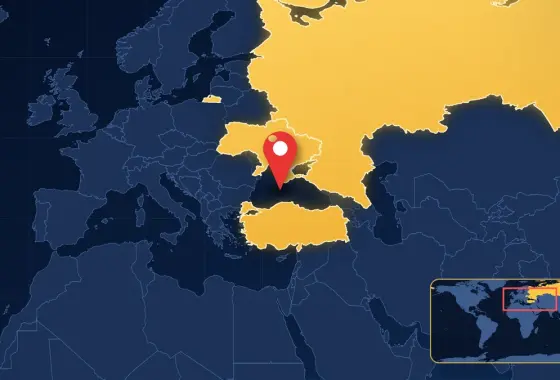
Russia and Ukraine traded accusations on Monday, 23 November 2026, at the United Nations Security Council during a briefing on Ukraine’s energy infrastructure and Black Sea shipping. According to Anadolu Agency, Moscow firmly ruled out reviving a grain deal. Russia’s representative said that in practice such a deal is nothing other than a scheme of Ukrainian food in exchange for Western weapons.
Both sides presented their own narrative at the session: Russia accused Ukraine of “opening Pandora’s box” with attacks on commercial vessels, while Ukraine said Russia has been attacking its energy system since mid-July and targeting civilian ships. The US representative called on both sides to stop immediately strikes on power grids, civilian ports, food distribution sites and commercial shipping.
The figures and accusations in the report are the parties’ own statements; they have not become independently verified data. Each side’s claims are set out below, as far as the sources report them and with an indication of who said what.
Russia’s position: no grain deal
The Russian representative said at the session that he had dwelt on the matter in detail so that nobody has any doubt that Russia will not accept any new grain deal. He claimed that under the earlier arrangement countries in need received only 3 percent of exported grain, while up to 70 percent of Ukrainian agricultural products entered EU and Western markets. These figures are reported as Russia’s statement; the report contains no comparison with United Nations or Ukrainian data.
Moscow also said the Ukrainian military had targeted more than 200 commercial vessels in the Black, Azov, Caspian, Baltic and Mediterranean seas since July, killing or wounding 12 seafarers. The Russian envoy maintained that Russia strikes only military-logistical vessels and dual-purpose facilities and described calls for an energy and maritime truce as a pretext to arm Ukraine while restricting Russian exports.
The envoy added that Russia supplies food to 160 countries, is “one of the chief guarantors of global food security” and is ready to help make up any possible grain deficit. Türkiye Today reports that in ruling out a grain deal Russia also referred to attacks on Turkish-owned ships.
Ukraine’s account: energy and shipping
Ukraine’s representative said Russia has been targeting the civilian power grid since mid-July, damaging virtually every power plant in the country and more than 800 units of energy equipment. “Since mid-July, not a single day has passed without a Russian attack on Ukraine’s energy system,” he said. According to the envoy, the November barrages shut down three thermal plants and plunged more than 850,000 people into darkness.
Ukraine also said the Zaporizhzhia Nuclear Power Plant lost off-site power for the 28th time yet receives far less attention than its implications for international peace and security warrant, and called for its urgent return to Kyiv’s control. It was also stressed that the Ukraine Energy Support Fund has raised more than 2.4 billion euros from 41 donors, but that with winter approaching air defence is the priority, in particular Patriot systems and PAC-3 missiles.
On maritime security Kyiv said it recorded 89 attacks on civilian vessels between June and August, compared with 25 in the whole of 2025. Ukraine accused Russia of looting Ukrainian grain through a “shadow grain fleet” and said that grain stolen from Ukrainian land must be seized, not bought. These figures are Ukraine’s own statements.
The United States and other parties
The US representative called on Russia and Ukraine to stop immediately striking power networks, civilian ports, food distribution sites and commercial shipping. “Food distribution sites must not be hit. Colleagues, the best way to protect food supplies on the Black Sea is for the war to end,” he said. He repeated the warning that the ongoing attacks sink ships carrying grain and fertiliser and endanger merchant sailors.
Washington also highlighted progress with Kyiv and European partners on four pillars, security guarantees, an EU membership path, a post-war prosperity plan and post-settlement security arrangements, aimed at building on the recent talks in Abu Dhabi toward a lasting peace. Türkiye, through its permanent representative to the United Nations, said it is developing an effective mechanism to ensure the safe navigation of commercial vessels in the Black Sea and the uninterrupted flow of food and agricultural supplies.
These positions show that maritime security in the Black Sea affects not only Russia and Ukraine but many third countries that trade there; yet the session ended without a decision or statement, and the sources contain no information on any joint understanding.
The claim about the attack off Libya
At the close of the session the Russian representative accused Kyiv of “criminally expanding the scope and geography” of maritime attacks. He said two logistics vessels and an accompanying military boat had been struck off the coast of Libya over the weekend. Russia’s claim referred to Ukrainian President Volodymyr Zelenskyy’s public acknowledgement of the strike and to an earlier Mediterranean attack on the carrier Arctic Metagaz. The Russian envoy described these as proof of the “terrorist nature of the Kyiv regime”.
According to Democracy Now, the Kremlin warned on Monday that Ukraine would face “painful consequences” for drone attacks on Russian ships in Libya and the Baltic. Anadolu Agency reported that Libya’s Presidential Council warned that attempts to turn the country into an arena for international conflicts threaten Mediterranean security and the safety of energy supplies; Libyan Prime Minister Abdul Hamid Dbeibah said military groups operating independently risk dragging Libya into both the Russia-Ukraine war and the conflict in Sudan.
Ukraine’s representative immediately dismissed Russia’s claims as “distortion and finger pointing” and said “Russia chose to invade Ukraine. Russia continues its aggression, and Russia bears full responsibility for this war,” urging Moscow to withdraw its forces. The details of the incident off Libya have not been independently verified by other sources.
Energy and children: the toll on the ground
The energy attacks on the session’s agenda are visible in their consequences on the ground. According to Democracy Now, Russian drone and missile attacks the previous night killed two people and injured more than 40 in Zaporizhzhia, after a guided aerial bomb hit an apartment building near a bridge over the Dnipro River. The detail shows that the full facts of the attack depend on the statements of Ukraine and Russia.
The same day Zelenskyy said in his evening address that Ukrainian intelligence had detected preparations for new Russian strikes, and asked partners for more air-defence missiles. “Every missile for our Patriot systems represents a setback for Russia, a setback for its contempt for diplomacy and for human life,” he said. He also said work was under way to strengthen defences against jet-powered attack drones, including Shahed-type ones.
These developments show that the energy and shipping debate at the United Nations is not an abstract diplomatic matter but one with a direct effect on the civilian population as winter approaches.
Why does the grain deal matter?
The Black Sea Grain Initiative, which took effect in 2022 through mediation by the United Nations and Türkiye, made grain exports from Ukrainian ports possible and ended when Russia withdrew from it in July 2023. Russia’s statement today closes the prospect of re-creating a similar mechanism for now; the Russian envoy also said Russia rejects the energy and maritime truce that the West is demanding. This is general background and is not set out in detail in this report’s sources.
Because Ukraine and Russia hold a large share of world trade in wheat and sunflower oil, attacks in the Black Sea can affect prices and food supplies. The report contains no new figure showing that effect; it contains only the US representative’s warning that the attacks sink ships carrying grain and fertiliser and endanger sailors.
The main points to watch are any effort to produce a joint statement or resolution in the Security Council, the materialisation of the safe-navigation mechanism that Türkiye says it is developing, new ship attacks in the Black Sea and the Mediterranean, and the progress of the diplomatic track in Abu Dhabi. These are follow-up points consistent with the sources and may change as events develop.
What does this mean?
The session shows that tension over shipping in the Black Sea, now reaching into the Mediterranean, has merged with the attacks on Ukraine’s energy system into a single conflict theme. Russia rejects a new grain deal, Ukraine wants the strikes on civilian ships and the grid stopped, and the United States calls on both sides to halt attacks. Because the figures are all the parties’ own statements, they should not be taken as settled without independent verification. These readings rest on the information in the sources and are not firm forecasts.
This report was compiled as of 24 November 2026, 19:00 Türkiye time; figures and details may differ between sources and should be followed as developments are updated.
Frequently asked questions
What did Russia say about a grain deal?
Russia’s representative said Moscow will not accept a new grain deal and that in practice it is a scheme of Ukrainian food in exchange for Western weapons.
What did Ukraine say about the energy attacks?
Ukraine said Russia has attacked its energy system every day since mid-July, that the November barrages shut three thermal plants and left more than 850,000 people in the dark.
What did the US ask for?
The US representative urged both sides to stop immediately attacks on power networks, civilian ports, food distribution sites and commercial shipping.
Have these figures been verified?
No. The figures in the report are the parties’ own statements and have not been independently verified.
Sources and further reading
- Anadolu Agency, “Russia, Ukraine clash at UN over attacks on Black Sea shipping, energy strikes”, 24 November 2026.
- Türkiye Today, “Russia rules out new Black Sea grain deal at UN, cites strikes on Turkish ships”, 24 November 2026.
- Anadolu Agency, “Morning Briefing: Nov. 24, 2026”, 24 November 2026.
- Democracy Now!, “Headlines for November 24, 2026”, 24 November 2026.
Leave a comment
Your email address will not be published. Required fields are marked *