



Tedros’s statement: what happened?
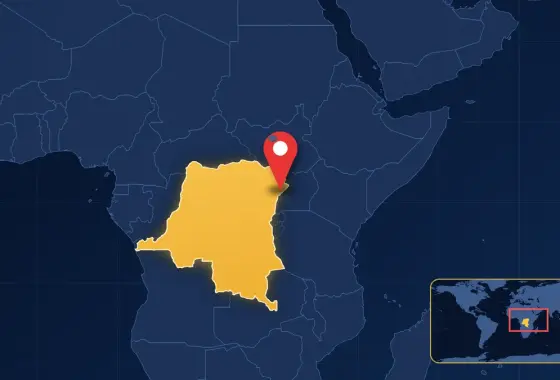
World Health Organization (WHO) Director-General Tedros Adhanom Ghebreyesus said in a post on X on 22 November 2026 that heavy fighting was under way around a hospital in Ituri province in eastern Democratic Republic of the Congo. According to Tedros, the fighting had been going on since the previous day, in an area close to where the Ebola outbreak first emerged, and had disrupted the work of the hospital and the wider Ebola response. WHO staff and partners had been sheltering in the hospital’s maternity ward for more than 24 hours.
Tedros said the situation put “patients, families and health workers at grave risk” and that WHO was working with humanitarian partners to secure a safe exit for the team. The statement did not identify the parties to the fighting or give any casualty information; the texts relayed by Al Jazeera, Reuters and AFP contain no figure either. The scale of the incident and who is responsible are therefore unclear for now.
“The best medicine is peace”
Tedros called on all sides to protect health workers, patients and health facilities and said “the best medicine is peace”. According to WHO, attacks in the east of the country have increased since the end of October, and this is seriously affecting the Ebola response. The organisation’s data show that more than 87 attacks on health care have been verified in the DRC since the start of January.
The figure indicates that violence against health infrastructure is not unique to outbreak periods but can have far more devastating consequences under outbreak conditions. An Ebola response depends on contact tracing, isolation units and vaccination, and disruption of any link in that chain can make it easier for the virus to spread. The sources do not calculate this relationship directly; the assessment rests on general public-health knowledge.
The outbreak’s current picture
According to WHO figures relayed by Hurriyet Daily News, 11,613 cases have been confirmed in the DRC so far and 5,678 of those people have died. The most affected provinces are Ituri and North Kivu. Another report cites more than 8,000 cases and 3,791 deaths in Ituri, a fatality rate of around 47 percent, while another source, citing government data, puts the national total at over 11,000 infected and over 5,500 dead. Not all of these figures relate to the same date, and their methodologies differ.
The outbreak was declared on 15 May 2026 and, according to the sources, is still not under control six months on; case and death numbers continue to rise quickly. Tedros has determined that the outbreak remains a public health emergency of international concern (PHEIC). A report published earlier on our site noted that cases had passed 11,000; this report describes a new security dimension of that picture.
Why the maternity ward?
One detail in the sources is that the place where WHO staff took shelter was the hospital’s maternity ward. This gives an idea of how close the fighting came to the hospital, but the sources do not give the number of patients in the ward, the exact location of the fighting or any hits to the building. It would therefore be wrong to infer that “the hospital was hit”; the reports say only that fighting continued around the hospital and that its operations were disrupted.
When a hospital shuts down, suspected and confirmed Ebola patients can leave isolation or treatment can be interrupted. Tedros’s phrase “grave risk” may cover that possibility, but no such event is confirmed in the sources. To avoid unverified inferences, this section gives general context only.
Security and the humanitarian situation in eastern Congo
Eastern DRC has for many years been home to armed groups and millions of displaced people. Ituri and North Kivu are both the epicentre of the Ebola outbreak and the provinces where security problems are most concentrated. Tedros’s phrase “increased since the end of October” shows that the outbreak response is struggling not only with medical difficulties but also with security-driven ones. Which groups or forces are involved in the fighting is not stated in the 22–23 November sources.
Attacks on health workers can cause trained staff to leave an area and weaken community trust. That mechanism has been reported in earlier Ebola outbreaks; still, this report has no measurement specific to the 2026 outbreak. It is important for readers to distinguish between drawing a general lesson from past outbreaks and matching it directly to today’s incident.
International reaction and the call for help
WHO’s call is aimed not only at stopping the fighting but at protecting health facilities and their staff. The sources contain no new statement on the incident from the United Nations, the African Union or the DRC government. The outcome of WHO’s evacuation effort and the course of the fighting were therefore not known at the time the sources were published.
It is also unclear under what conditions aid organisations will continue to work. Even if Tedros’s effort to bring the team out safely succeeds, it remains an open question how soon service at the hospital will return to normal. These uncertainties are points to follow as developments are updated.
What to watch in the coming days
The main points to follow are whether the WHO team has been safely evacuated, whether service at the hospital has resumed, between which parties the fighting took place and whether there were casualties, new case and death data, and how the Ebola response will be reorganised after this interruption. These are follow-up points consistent with the sources and may change as events develop.
For readers abroad interested in the situation, the most reliable sources are WHO’s official statements and announcements from the DRC Ministry of Health. This report contains no medical advice.
What does this mean?
In the short term the incident shows that the Ebola outbreak is not only a health problem but is intertwined with armed conflict in eastern Congo. A hospital in which health workers had to take shelter is a stark example of how fragile the security ground beneath the response is. As the fighting continues, case tracking and isolation may become harder, though the real effect has not yet been measured. These readings rest on information relayed by the sources and are not firm forecasts.
This report was compiled as of 24 November 2026, 09:00 Türkiye time; figures and details may differ between sources and should be followed as developments are updated.
Frequently asked questions
What did Tedros say?
That heavy fighting continued around a hospital in Ituri, disrupting the Ebola response; he said “the best medicine is peace” and urged all sides to protect health workers.
Is the WHO team safe?
WHO said it was working with humanitarian partners to get staff out safely; the outcome of the evacuation was not known when the sources were published.
Who is fighting?
The sources do not identify the parties or give casualty information, so no inference can be made.
How many Ebola cases are there?
According to WHO data relayed by Hurriyet Daily News, 11,613 cases and 5,678 deaths in the DRC; figures differ between sources.
Sources and further reading
- Al Jazeera, “WHO chief calls for peace amid heavy fighting in Ebola-hit DR Congo region”, 23 November 2026.
- Reuters via Arab News and TimesLIVE, “WHO chief says fighting near Congo Ebola outbreak area disrupts response efforts”, 23 November 2026.
- Hürriyet Daily News (AFP), “WHO chief pleads for peace in Ebola-hit DR Congo area”, 23 November 2026.
- Eastleigh Voice, “Heavy fighting in Ituri traps DR Congo Ebola responders: WHO”, 23 November 2026.
Leave a comment
Your email address will not be published. Required fields are marked *