



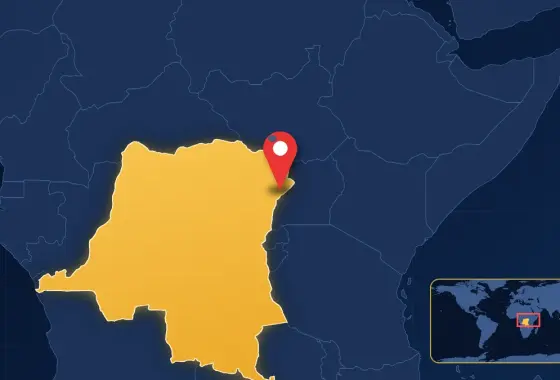
World Health Organization (WHO) Director-General Tedros Adhanom Ghebreyesus has said the Ebola outbreak in the Democratic Republic of the Congo (DRC) remains a public health emergency of international concern. The decision followed recommendations from the third meeting of the WHO Emergency Committee, which began on 17 November to assess the outbreak. Tedros called on all governments and partners to “scale up the response further” and to commit resources to protect communities over the coming months.
According to figures reported by UN News, the outbreak has more than doubled in the past three months. To date, more than 11,000 cases and about 5,400–5,500 deaths have been reported. The disease has spread to 67 health zones in eight provinces, and 400 to 500 new cases are recorded every week. Tedros warned that “progress in some places is not control of the outbreak as a whole.”
Why is the outbreak so hard to control?
The outbreak is caused not by Zaire, the best-known type of Ebola, but by Bundibugyo virus. According to Médecins Sans Frontières (MSF), the difference is critical: while there is an approved vaccine (Ervebo) and two approved monoclonal antibody treatments for the Zaire strain, there is no approved vaccine or treatment for Bundibugyo. Patients therefore receive supportive care, chiefly fluid replacement, oxygen and close monitoring. The drugs remdesivir and MBP134 are being evaluated in a clinical trial called PARTNERS. This is the third Bundibugyo outbreak ever detected; the earlier ones occurred in Uganda in 2007–2008 and in the DRC in 2012.
The provinces at the centre of the outbreak, Ituri and North Kivu, have struggled with armed conflict and repeated displacement for decades. According to MSF, armed checkpoints, shifting front lines and mountainous, forested terrain make it harder to transport samples to laboratories, reach communities, isolate patients and trace contacts. Cholera, malaria, measles and malnutrition are also widespread in the region.
Who is most affected?
WHO data reveal the heavy toll of the outbreak on children. Children make up more than a quarter of confirmed cases and a third of deaths. Seven in ten confirmed cases among children under five have died. The fact that two-thirds of confirmed deaths occur outside Ebola treatment centres suggests that infections are being detected far too late. MSF says the outbreak is “out of control” and is the second-largest Ebola outbreak in history. The largest was the 2014–2016 outbreak in West Africa, in which more than 11,000 people died.
How does Ebola spread?
According to WHO, Ebola is not an airborne disease. The virus spreads through direct contact with the bodily fluids of infected people, such as blood, vomit and faeces, or through surfaces and objects contaminated with these fluids. The incubation period ranges from 2 to 21 days, and people are not infectious before symptoms begin. In a disease that starts with sudden fever, fatigue, muscle pain and headache, early diagnosis and supportive care significantly improve the chances of survival. That is why family members caring for patients and health workers are at the highest risk; safe burial practices also play an important role in breaking transmission.
Has the outbreak spread to other countries?
According to UN News, Kenya has reported nine cases, including two deaths, linked to an imported case, and Nigeria has detected one imported case. Even so, Tedros said he was concerned about blanket travel bans imposed by some countries. According to WHO, such restrictions hamper the response and discourage countries from reporting cases promptly. WHO said updated recommendations for the DRC and other countries will be issued in the coming days.
Where do vaccine efforts stand?
Some positive steps have also been taken since the start of the outbreak. According to WHO, rapid transmission has been halted in most of the early epicentres, and the number of laboratories able to test for the virus has risen from two to more than two dozen. As reported by Ednews, two experimental vaccines developed specifically for Bundibugyo virus are expected to begin phase 2 clinical trials in Congo next week. MSF is also running a vaccine study for frontline health workers; more than 4,100 patients have so far been admitted to the organisation’s eight treatment centres in five provinces.
What does this mean?
The continuation of the emergency declaration shows that the outbreak remains a problem not only for the DRC but also for countries in the region and the global health system. With no approved vaccine or treatment, an ongoing conflict and late diagnosis, hundreds of new cases every week suggest the outbreak will not end soon. In the coming weeks, the results of clinical trials of the candidate vaccines and whether international funding is increased will be decisive. Anyone considering travel to the region should follow the latest announcements from their own country’s health ministry and from WHO.
This report was compiled as of 18 November 2026, 19:00 Türkiye time; follow developments as they are updated.
This report is for general information only and is not a substitute for medical advice. For health questions, consult your doctor and official public health announcements.
Frequently asked questions
How many cases are there in the Ebola outbreak in DR Congo?
According to WHO, more than 11,000 cases and about 5,400–5,500 deaths have been reported; the outbreak has spread to 67 health zones in eight provinces.
Is there a vaccine for Bundibugyo virus?
No. Approved vaccines and treatments apply to the Zaire strain; two candidate vaccines specific to Bundibugyo are entering clinical trials.
Has Ebola spread to other countries?
Kenya has reported nine cases and two deaths linked to an imported case, and Nigeria has reported one imported case.
Sources and further reading
- UN News, “World News in Brief: Ebola cases double in DR Congo…”, 17 November 2026.
- Médecins Sans Frontières (MSF), “Ebola disease outbreak in DR Congo: MSF response, key facts, and timeline”, November 2026.
- Ednews, “WHO says DR Congo Ebola outbreak remains international public health emergency”, 18 November 2026.

Leave a comment
Your email address will not be published. Required fields are marked *