



What happened?
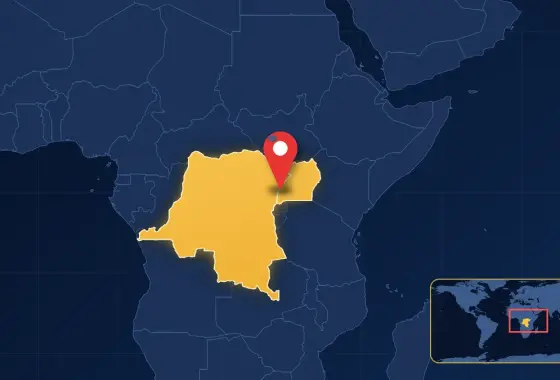
The Uganda Virus Research Institute (UVRI) announced on Friday, 27 November, that it had launched Africa’s first Phase I clinical trial of an experimental mRNA vaccine against the Bundibugyo ebolavirus, in collaboration with US pharmaceutical company Moderna. The trial, designated mRNA-1469-P102, is being carried out following approval from Ugandan regulatory authorities.
The study is the second human trial of Moderna’s Bundibugyo candidate, developed using the same messenger RNA (mRNA) technology used in its Covid-19 vaccine. Moderna began the first human trial of the same candidate in Canada in August 2026, enrolling around 80 adults aged 18 to 65 across three sites.
How does mRNA vaccine technology work?
mRNA vaccines do not carry the virus itself, but a short piece of RNA that gives cells genetic instructions for building a protein found on the virus’s surface. Cells that receive these instructions produce that protein briefly, and the immune system develops antibodies and immune cells against it, allowing it to respond faster if it later encounters the real virus.
This technology was tested extensively, administered billions of times worldwide, through Moderna’s and Pfizer-BioNTech’s vaccines during the Covid-19 pandemic. A key advantage of mRNA vaccines is that they can be developed and manufactured faster than traditional vaccine methods, giving scientists an important time advantage, especially in fast-moving outbreaks.
What is the Ebola virus and the Bundibugyo strain?
The Ebola virus is a viral disease with a high fatality rate, presenting with high fever, severe weakness, muscle pain and, in advanced cases, internal and external bleeding. The virus spreads through direct contact with the body fluids of infected people or animals, putting healthcare workers and patients’ relatives particularly at risk.
The Bundibugyo strain takes its name from the district in western Uganda where it was first identified in an outbreak in 2007; scientists believe this strain may have a different fatality rate and transmission dynamic compared with other Ebola strains. The absence of any approved vaccine or treatment against this strain is cited as one of the main reasons the current outbreak in the DRC has lasted so long and claimed so many lives.
Who is taking part and how is the trial run?
According to UVRI, the study will involve 224 healthy volunteers aged between one and 65, a Phase I trial designed to assess the vaccine’s safety and its ability to trigger an immune response. UVRI specifically highlights that this is the first study to test the vaccine in children, starting from age one.
Phase I trials are the first and most basic stage a vaccine candidate must pass before it can be approved for public use; the trial therefore does not prove the vaccine works, only whether it is safe and how it affects the immune system. Volunteers undergo regular health check-ups throughout the trial, and any side effects are carefully recorded.
How large is the outbreak behind this trial?
The outbreak that prompted the trial has been under way in the Democratic Republic of the Congo (DRC) since May 2026 and is caused by the less common Bundibugyo strain of the Ebola virus. According to the World Health Organization (WHO), the outbreak has recorded more than 11,000 cases so far and claimed more than 5,700 lives, making it the second-largest Ebola outbreak ever recorded globally.
No approved vaccine or treatment currently exists for the Bundibugyo strain, cited as one of the main reasons the outbreak in the DRC has proven so deadly and difficult to control.
What else is happening in the DRC at the same time?
According to UVRI, trials of two experimental vaccines — Moderna’s mRNA candidate and a separate viral-vector candidate developed with the University of Oxford — are set to begin on Monday in the epicentre of the outbreak in eastern DRC. These trials target people who have had contact with infected individuals and those at high risk.
This means the Phase I safety study in Uganda and the field trials in the DRC are proceeding as two parallel but distinct scientific efforts against the same outbreak, at different stages of development.
How has this stage been funded?
The work on Moderna’s mRNA-1469 candidate is supported by the Coalition for Epidemic Preparedness Innovations (CEPI), which has earmarked up to $58.5 million for Moderna for this candidate. A WHO advisory group has also recommended the candidate for the Phase 2/3 “Tumaini” ring vaccination trial to be carried out in the DRC.
This means that, if the Phase I results are positive, the vaccine could move quickly into a much larger next stage; but that transition depends on approval from the WHO and the relevant regulatory authorities.
What about the other vaccine candidate, and Gavi’s role?
The vaccine alliance Gavi has signed a purchase commitment with India’s Serum Institute for 1.5 million doses of the other experimental vaccine against the outbreak, developed in collaboration with the University of Oxford. The alliance aims to have “hundreds of thousands” of doses ready for distribution if clinical trials succeed and the vaccine is approved by the WHO and the DRC government.
Gavi’s director of global health security, Emanuele Capobianco, told AFP: “We’re investing in it, hoping that the signals will be positive, and if that is the case, we’ll have gained months and months on the deployment.” Capobianco said he hoped trials would conclude within the first half of 2027, or within the first quarter in a more optimistic scenario. Gavi also holds a stockpile of 500,000 doses of Ervebo, an existing approved vaccine against the Zaire strain of Ebola, which is being tested to see whether it is also effective against the Bundibugyo strain.
Why is Uganda hosting this trial?
Uganda shares a long, porous border with eastern DRC, a geographic proximity that makes it a key player in the regional Ebola response. Uganda declared itself Ebola-free in August 2026 after bringing an earlier outbreak on its own territory under control; that outbreak had recorded 20 cases and 2 deaths.
The country’s ability to bring its own outbreak under control relatively quickly, combined with its strong virus research infrastructure, makes UVRI a trusted partner for this kind of international clinical trial. UVRI has also hosted trials of vaccine candidates against other Ebola strains in past years, building a track record of international partnerships in this field.
What does this mean?
This trial in Uganda is an important step in the search for a concrete vaccine against the Bundibugyo outbreak; but since it is still only a Phase I safety study, it will not turn into a publicly available vaccine in the short term. Its real impact will depend on the results of both this trial and the parallel field studies in the DRC, as well as the WHO’s approval process. This assessment rests on the official information released; the trial’s progress should become clearer over the coming months. Health officials note that a similar sense of urgency was seen in the development of Covid-19 vaccines, though funding and attention for less widespread outbreaks like Ebola usually take longer to come together.
This report was compiled as of 28 November 2026, 09:00 Türkiye time; figures and details may differ between sources and may be updated as events develop.
Frequently asked questions
Has this vaccine been approved, is it being given to the public now?
No; this is only a Phase I trial measuring safety and immune response, not an approved or publicly available vaccine.
Are children taking part in the trial?
Yes; 224 volunteers aged one to 65 are taking part, making it the first study to test the vaccine in children.
How many people has the outbreak killed so far?
According to the WHO, more than 11,000 cases and over 5,700 deaths have been recorded since May 2026.
When can results be expected?
Gavi officials said they hope trials will conclude in the first half of 2027, or in the first quarter in the most optimistic scenario.
Are mRNA vaccines safe?
The technology has been widely tested, administered billions of times through Covid-19 vaccines; but the Bundibugyo candidate’s safety is being separately assessed through this Phase I trial.
Sources and further reading
- Euronews (Greta Ruffino), “Uganda begins Africa’s first mRNA Ebola vaccine trial”, 27 November 2026.
- BERNAMA, “Uganda Launches Africa’s 1st Trial Of mRNA Vaccine Against Bundibugyo Ebola”, 27 November 2026.
- TRT World, “Uganda launches Africa’s first mRNA Ebola vaccine trial”, 27 November 2026.
Cite this article
Use this article as a source in your work, assignment or blog:
YulaHub Editorial Team. (28 November 2026). Uganda Begins Africa’s First mRNA Ebola Vaccine Trial. YulaHub. https://yulahub.com/en/uganda-begins-africas-first-mrna-ebola-vaccine-trial
YulaHub Editorial Team. "Uganda Begins Africa’s First mRNA Ebola Vaccine Trial." YulaHub, 28 November 2026, https://yulahub.com/en/uganda-begins-africas-first-mrna-ebola-vaccine-trial.
<a href="https://yulahub.com/en/uganda-begins-africas-first-mrna-ebola-vaccine-trial">Uganda Begins Africa’s First mRNA Ebola Vaccine Trial</a> (YulaHub)
Leave a comment
Your email address will not be published. Required fields are marked *