



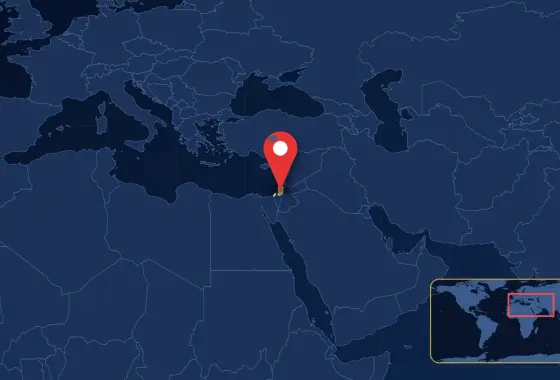
Israeli settlers attacked several Palestinian villages in the central West Bank before dawn on Sunday, 22 November 2026. Al Jazeera, citing the Palestinian news agency Wafa, reports that 12 vehicles were burned and racist slogans were sprayed on the walls of homes in the Ramallah and el-Bireh areas. Anadolu Agency, citing local sources, says four villages were targeted and that vehicles and an agricultural room were set on fire. Neither source reports any injuries. Israeli opposition leader Gadi Eisenkot called the attacks “Jewish terrorism in every sense of the word”; Itamar Ben-Gvir rejected the allegations.
This report is based on the accounts of Al Jazeera and Anadolu Agency of 22 November. Both sources rely on Palestinian sources, and no independent Israeli account of the attacks appears in them. The numbers of villages and vehicles differ between the sources and may change as events develop.
Where did the attacks take place?
Al Jazeera names three places: Kafr Malik, Deir Abu Mash’al and Deir al-Sudan. Anadolu Agency adds Deir Ballut, in the northern Salfit area, and writes that four villages were targeted. According to Anadolu, Deir Abu Mashal and Deir al-Sudan lie north-west of Ramallah and Kafr Malik north-east; in Deir Ballut an agricultural room was burned. The difference between the two sources may come from how the incident was compiled, and the attack in Salfit does not appear in Al Jazeera’s text.
What was burned and what was written?
Al Jazeera, citing Wafa, reports that 12 vehicles were burned in the early hours of Sunday and that racist slogans were sprayed on the walls of homes. Anadolu gives no number of vehicles; it reports that vehicles were burned and hostile slogans written in Deir Abu Mashal, and that Palestinian-owned vehicles were set on fire in Kafr Malik and Deir al-Sudan. Neither source reports a death or injury; Anadolu states explicitly that no injuries were reported in the four attacks.
Eyewitness accounts
Al Jazeera’s correspondent Nour Odeh, reporting from Kafr Malik, said residents were woken at around two in the morning by the sounds of fire and explosions and then realised settlers had set fire to cars. A photograph of a Palestinian inspecting burned cars in Kafr Malik appears in the Reuters image carried with the report. These accounts suggest the attacks took place at night while residents were asleep.
The political reaction in Israel
According to Al Jazeera, Gadi Eisenkot, leader of the Yashar Party, who has been tasked with forming a new government after last month’s election, called the attacks “Jewish terrorism in every sense of the word” in a post on X. He accused Ben-Gvir and Bezalel Smotrich of bringing the West Bank to the “brink of unchecked anarchy”. Ben-Gvir rejected the accusations and said Eisenkot was rushing to conclusions. A related Anadolu headline also shows Israeli lawmakers criticising Netanyahu’s government over “Jewish terrorism”; the details of that report are not used here.
The Israeli military’s response
According to Al Jazeera, the Israeli military said it was sending police and investigators from its Criminal Identification Unit to the area to collect evidence as part of the ongoing investigation. This is the only official Israeli response to the attacks reported in the sources. The texts do not say whether any suspect was detained or charged.
A rights group’s assessment
Shai Parnes of the Israeli rights group B’Tselem told Al Jazeera that settlers are often “escorted by Israeli squads and they do nothing to stop the attackers”. This is a human-rights group’s assessment; the texts contain no independent verification of the army’s role in this particular incident.
Settler violence in figures
Both sources rely on October figures from the Palestinian Colonization and Wall Resistance Commission: the commission recorded 3,133 attacks in the West Bank in October, of which 1,764 were attributed to the Israeli army and 1,369 to settlers. Al Jazeera writes that settler attacks rose from 647 in September to 1,369 in October, an increase of 112 percent. Al Jazeera also reports that at least 1,222 people, including 255 children, have been killed in attacks in the West Bank since October 2023; this figure, for which no source is named, has not been independently verified. Anadolu does not give this death toll.
The terms “occupiers” and “settlers”
Anadolu Agency uses the term “occupiers” for settlers; Al Jazeera says “settlers”. Settlements in the West Bank, which Israel occupied in 1967, are generally regarded as illegal under international law; Israel disputes this view. This article uses the term “settlers”, attributing sources. This is general background and contains no legal judgement on the incident.
Why are such attacks in the news?
Settler attacks on villages, with the burning of vehicles and farmland, are described as increasingly frequent in the West Bank. Anadolu writes that attacks have risen since October 2023, including killings, home demolitions, arson on mosques and vehicles, destruction of farmland and settlement expansion. Palestinian officials and rights groups argue that Israeli security forces do not intervene enough in these attacks; the Israeli government generally rejects such criticism. In this incident the sources carry no detailed response from the Israeli government.
The political context in Israel
According to Al Jazeera, Eisenkot has been tasked with forming a new government after last month’s election. His criticism of Ben-Gvir and Smotrich can therefore be read not only as an opposition leader’s statement but also as part of a government-formation process. The sources give no detail on the state of coalition talks; this reading is an interpretation and contains no firm conclusion.
Consequences for local residents
The burning of vehicles can make it harder for villagers to get to work, for children to reach school and for people to reach health care in emergencies. Slogans sprayed on the walls of homes also create an atmosphere of fear. The sources give no estimate of economic damage specific to this incident. The burning of an agricultural room, as Anadolu reports, suggests that rural livelihoods are also being targeted.
What to watch in the coming days
The main points that can be followed are: whether Israeli police and the military make arrests in their investigation, whether new attacks follow, the effect of the political dispute between Eisenkot and Ben-Gvir on government formation and international reactions. These are follow-up points consistent with the sources and may change as events develop.
What does this mean?
In the short term the incident shows that settler attacks in the West Bank have also become a subject of debate in Israeli domestic politics. In the medium term the frequency of attacks and the stance of the security forces appear to be factors that could affect both tension on the ground and the agenda of the government to be formed in Israel. These readings rest on information relayed by the sources and are not firm forecasts.
This report was compiled as of 22 November 2026, 19:00 Türkiye time; figures and details may differ between sources and should be followed as developments are updated.
Frequently asked questions
Where did the attacks take place?
According to Al Jazeera in Kafr Malik, Deir Abu Mash’al and Deir al-Sudan in the Ramallah and el-Bireh areas; Anadolu also names Deir Ballut in Salfit.
How many vehicles were burned?
Al Jazeera, citing Wafa, writes that 12 vehicles were burned; Anadolu gives no number.
Were there any injuries or deaths?
Neither source reports injuries or deaths.
What did the Israeli military say?
It said it was sending police and Criminal Identification Unit investigators to collect evidence as part of the investigation.
Sources and further reading
- Al Jazeera, “Israeli settlers attack several Palestinian villages in occupied West Bank”, 22 November 2026.
- Anadolu Agency, “Israeli occupiers attack 4 Palestinian villages in occupied West Bank, torch vehicles”, 22 November 2026.
- Anadolu Agency, “Israeli lawmakers blast Netanyahu’s govt over ‘Jewish terrorism’ in occupied West Bank”, 22 November 2026.
Leave a comment
Your email address will not be published. Required fields are marked *