



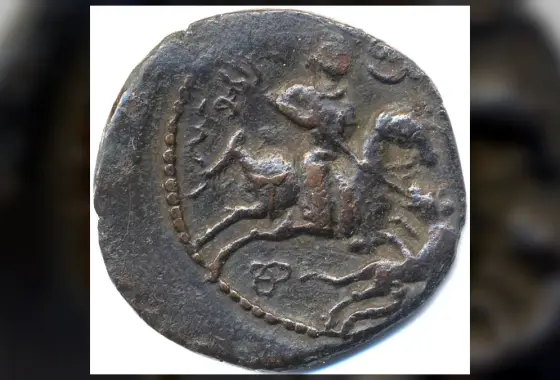
Kayqubad was the son of Sultan Kaykhusraw I. He was imprisoned for a time under his elder brother Kaykaus I and came to the throne on Kaykaus’s death in 1220.
The Mediterranean and the Black Sea
In 1221 he took the fortress of Kalonoros on the Mediterranean coast and renamed the town Alaiye (today’s Alanya), building the Red Tower and a shipyard there. He sent an overseas expedition to Sudak in Crimea, north of the Black Sea, one of the first overseas operations of the Anatolian Turks.
Yassıçemen
When relations soured with the Khwarazmshah Jalal al-Din, who had fled west from the Mongols, Kayqubad defeated him in 1230 at Yassıçemen near Erzincan. The victory strengthened Seljuk rule in eastern Anatolia but also removed the buffer between the Seljuks and the Mongols.
Building and culture
He built the Kubadabad Palace on the shore of Lake Beyşehir and palaces in Konya and Kayseri. Caravanserais, foremost Sultanhanı near Aksaray, were built along trade routes. He welcomed Baha al-Din Walad, father of Rumi, to Konya.
Death
Kayqubad died in Kayseri in 1237; sources report that he was poisoned. He was succeeded by his son Kaykhusraw II, under whom the defeat at Köse Dağ came in 1243.
The Kubadabad Palace and its tiles
The Kubadabad Palace, built by Alaeddin Keykubad on the shore of Lake Beyşehir, is one of the most important surviving examples of Anatolian Seljuk palace architecture. The remains were made known in 1949 by Zeki Oral; excavations in the following years uncovered two main palace buildings, a bathhouse and structures resembling a dockyard.
The palace's most famous finds are its star- and cross-shaped figural tiles. These tiles show motifs such as game animals, birds, mythical creatures, cross-legged courtiers and the double-headed eagle. A large part of the Kubadabad tiles is now displayed in the Karatay Madrasa Tile Museum in Konya.
Caravanserais and trade
In Alaeddin Keykubad's reign Anatolia became an important transit zone for trade between east and west. The sultan and his statesmen had caravanserais built along the main roads, roughly a day's march apart.
- Aksaray Sultanhanı (1229): This han on the Konya–Aksaray road is one of the largest Seljuk caravanserais in Anatolia.
- Kayseri Sultanhanı: It was built on the Kayseri–Sivas road, also in the reign of Alaeddin Keykubad.
- Ports: Alanya and Antalya on the Mediterranean and Sinop on the Black Sea were the sea gates of Seljuk trade. The sources also report that the losses of merchants who suffered harm on the roads were covered by the state.
Konya: the new face of the capital
The reign of Alaeddin Keykubad I coincides with Konya's most brilliant period as the Seljuk capital. The city walls were rebuilt and strengthened in his time, and the great mosque on the citadel hill is still known today by his name as the Alaeddin Mosque.
Many scholars, artists and merchants fleeing the Mongol raids took refuge in Anatolia during these years. The best known of them is Bahaeddin Walad, who set out from Balkh and settled in Konya around 1228 at the sultan's invitation. His son Jalal al-Din Rumi, known as Mevlana, spent the rest of his life in this city.
His tomb and his memory
Keykubad is generally held to be buried in the tomb tower in the courtyard of the Alaeddin Mosque, together with other Seljuk sultans. His name lives on today in Alaiye, the old name of Alanya, in Konya's Alaeddin Hill and in the building inscriptions of caravanserais across Anatolia. It is widely accepted that the state, defeated by the Mongols at Kösedağ in 1243, only six years after his death, never again reached the power it had attained under him.
Sources and further reading
- Türkiye Diyanet Vakfı İslâm Ansiklopedisi, “Keykubad I”.
- Ibn Bibi, al-Awamir al-Ala’iyya.
- Encyclopaedia Britannica, “Kay-Qubadh I”.
- Rüçhan Arık – Kubad Abad: Selçuklu Saray ve Çinileri (Türkiye İş Bankası Kültür Yayınları, 2000)
- Ministry of Culture and Tourism of Türkiye – Konya Karatay Madrasa Tile Museum
- Osman Turan – Selçuklular Zamanında Türkiye
- TDV İslâm Ansiklopedisi – "Keykubad I" (Turkish)
- Claude Cahen – The Formation of Turkey: The Seljukid Sultanate of Rūm (Routledge, 2001)
People also ask
Who was Kayqubad I? Ala al-Din Kayqubad I ruled the Seljuk Sultanate of Rum from 1220 to 1237.
When and where was Kayqubad I born? Born: c. 1190.
When did Kayqubad I reign? Reign: 1220 – 1237.
Who was Kayqubad I’s father? Father: Kaykhusraw I.



Leave a comment
Your email address will not be published. Required fields are marked *