



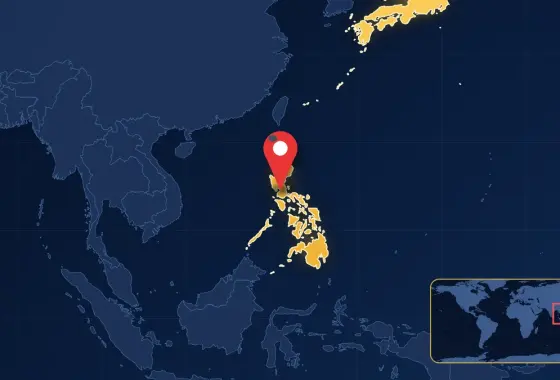
Japanese Prime Minister Sanae Takaichi has proposed setting up a regional energy body to help Asian countries be better prepared for oil crises. According to AP, Takaichi, speaking on Tuesday, 17 November, on the sidelines of the annual summit of the Association of Southeast Asian Nations (ASEAN) in the Philippine capital Manila, called for a regional oil security task force and a Japan-based body similar to the International Energy Agency (IEA). “We would like to position this as an Asian version of the IEA,” Takaichi said.
The proposal comes at a time when the Iran war, which began in late February, has sharpened concerns about energy security in the region. Disruptions to oil shipments from the Persian Gulf through the Strait of Hormuz pushed oil and gas prices sharply higher, and many Asian countries had to take emergency measures to save energy.
What exactly did Japan propose?
According to AP, the proposal has three main elements. The first is a regional oil security task force. Japan would lead it together with the Indonesia-based energy security research body, the Economic Research Institute for ASEAN and East Asia (ERIA). The task force’s job would be to develop rules for emergency releases of oil from national stockpiles and for sharing it between countries.
The second is a joint oil reserve system for South-East Asia. Takaichi said countries in the region should cooperate on stockpiling oil and that idle oil storage tanks in Japan could be used for these reserves. The third is for this work to grow over time into a permanent, Japan-based, IEA-style regional body. Philippine media also reported that Takaichi proposed a task force for regional oil reserves at the meeting in Manila.
What is the International Energy Agency (IEA)?
The IEA is an intergovernmental but independent body founded in 1974 after the severe oil crisis of the early 1970s. The Paris-based agency makes policy recommendations to member countries and, when there is a serious disruption to oil supply, organises coordinated releases of members’ stocks onto the market. IEA members that are net oil importers must hold stocks equal to at least 90 days of their net imports. Japan and South Korea are IEA members, but most South-East Asian countries are not, and their stocks are far more limited.
According to figures shared in June by Japan’s Ministry of Economy, Trade and Industry (METI), the Philippines’ oil stocks covered about 45 days of consumption, Vietnam’s 30 days and Thailand’s 60 days. That gap also explains why disruption in Hormuz shook the region’s economies so badly.
What is the background to the proposal?
Takaichi’s proposal builds on a Japanese-led initiative on energy supply chains and regional cooperation launched in April. On 15 April, Takaichi announced a $10 billion support package under the Asia Zero Emission Community (AZEC) framework to help South-East Asian economies secure oil supplies. According to GMA News, Takaichi said the support could be equivalent to 1.2 billion barrels, or roughly one year of ASEAN’s crude oil imports. According to METI documents, ERIA was tasked with drafting a roadmap, including financing, for joint stockpiling across ASEAN.
In the first weeks of the war, Japan released oil from its own strategic stocks and asked the IEA to prepare for an additional coordinated stock release. Takaichi also spoke at an Asia Zero Emission Community meeting in Manila.
Where do markets stand now?
The oil market has eased somewhat in recent weeks. In its report on 13 November, the IEA said the global oil market was returning to surplus as Gulf exports recovered. OPEC+ output in October also neared its pre-war level, led by Saudi Arabia. Even so, Asian countries are looking for permanent mechanisms so they are not caught unprepared in the next crisis. The crisis has also accelerated the shift to renewable options such as rooftop solar panels and electric vehicles.
What does this mean?
If the proposal is implemented, South-East Asia could for the first time gain a coordinated oil stockpile and emergency mechanism like those in Europe and North America. This could soften price spikes in the next supply shock and reduce the vulnerability of the region’s economies to energy imports. For Japan, the proposal is also a way to increase its economic and diplomatic influence in the region. However, the reaction of other governments, the membership structure, funding and timetable are not yet clear; sensitive questions such as whose tanks will hold the stocks and under which rules may require long negotiations. Readers curious about what drives oil prices can also look at our earlier reports on the Strait of Hormuz and oil markets.
This report was compiled as of 17 November 2026, 19:15 Türkiye time; follow developments as they are updated.
This report is for information only and is not investment advice.
Frequently asked questions
What did Japan propose?
An IEA-style energy body for Asia, an oil security task force to be run together with ERIA, and a joint oil reserve system for South-East Asia.
Why did the proposal come now?
The Iran war and disruption to shipments through the Strait of Hormuz exposed how thin the oil stocks of Asian importing countries are.
Have other countries accepted the proposal?
Other governments have not yet given a formal response; membership, funding and timing are not clear.
Sources and further reading
- AP (BNN Bloomberg), “Japan urges creation of an Asian energy framework to counter oil crises”, 17 November 2026.
- Streamline Feed (DZRH), “Japan proposes Asian oil reserve task force in Manila”, 17 November 2026.
- GMA News, “Japan plans $10 billion support to help Southeast Asia secure oil”, April 2026.
- Japan Ministry of Economy, Trade and Industry (METI), ASEAN energy security presentations, May–June 2026.



Leave a comment
Your email address will not be published. Required fields are marked *